Home › Autism › Is My 2 Year Old Showing Signs of Autism? Early Symptoms Parents Should Never Ignore
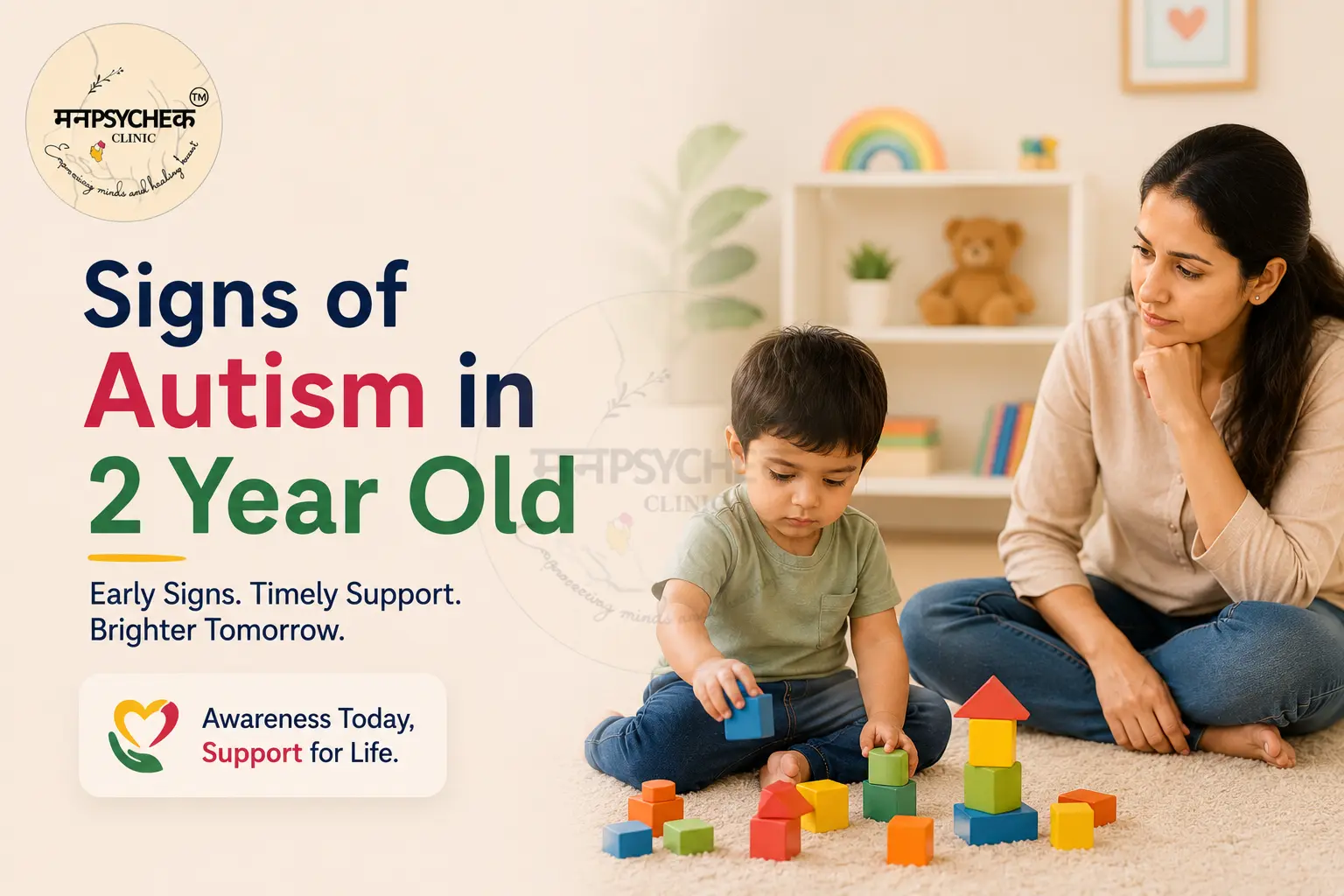
Is My 2 Year Old Showing Signs of Autism? Early Symptoms Parents Should Never Ignore
Answer
A 2-year-old showing signs of autism may have limited eye contact, delayed speech, reduced response to their name, repetitive behaviors, sensory sensitivities, or difficulty interacting socially. While these signs do not confirm autism, an early developmental assessment can help identify whether additional support is needed.
ADHD Symptoms in 3-Year-Olds: Signs, What’s Normal & When to Seek Help
Why Can't My Child Sit Still? Causes, ADHD Signs & What Parents Can Do
Introduction
Many parents notice small differences in their toddler's development and wonder:
"Is this normal, or could it be autism?"
Perhaps your child is not speaking as much as other children their age. Maybe they avoid eye contact, prefer playing alone, or become upset when routines change.
These concerns can feel overwhelming.
The good news is that early identification and intervention can make a significant difference in a child's development.
Understanding the signs of autism does not mean jumping to conclusions. It means being informed so you can seek support when necessary.
What is Autism Spectrum Disorder (ASD)?
Autism Spectrum Disorder (ASD) is a neurodevelopmental condition that affects:
- Communication
- Social interaction
- Behavior
- Sensory processing
According to the DSM-5, autism involves persistent challenges in social communication and restricted or repetitive patterns of behavior.
Autism exists on a spectrum, meaning every child presents differently.
Some children may have significant language delays, while others may speak well but struggle socially.
Child Development at Age 2: What is Typical?
Most 2-year-olds can:
Communication
- Use 50 or more words
- Combine two words together
- Follow simple instructions
Social Skills
- Respond to their name
- Show affection
- Imitate adults
Play Skills
- Engage in pretend play
- Point to objects of interest
- Share attention with caregivers
Not all children develop at the same pace, but major differences may require evaluation.
Early Signs of Autism in a 2 Year Old
1. Limited Eye Contact
Children with autism may avoid eye contact or use it less frequently than expected.
Examples:
- Looking away during conversations
- Rarely making eye contact while playing
2. Delayed Speech and Language
One of the most common concerns parents report.
Possible signs include:
- Few or no words
- Limited babbling history
- Difficulty combining words
- Repeating words without understanding (echolalia)
3. Not Responding to Their Name
A child may hear sounds normally but not consistently respond when called.
This is often one of the earliest concerns parents notice.
4. Limited Gestures
Your toddler may rarely:
- Point
- Wave
- Show objects
- Reach to be picked up
5. Difficulty Sharing Interest
Most toddlers enjoy showing parents interesting things.
Children with autism may not:
- Point to airplanes
- Bring toys to show
- Seek shared enjoyment
This is known as reduced joint attention.
6. Repetitive Behaviors
Examples include:
- Hand flapping
- Spinning objects
- Lining up toys
- Rocking repeatedly
7. Strong Need for Routine
Small changes may trigger distress.
Examples:
- Taking a different route
- Changing meal routines
- Rearranging toys
8. Sensory Sensitivities
Children may be unusually sensitive to:
- Loud sounds
- Bright lights
- Certain textures
- Food textures
Others may seek intense sensory experiences.
9. Limited Social Interest
The child may:
- Prefer playing alone
- Ignore peers
- Have difficulty engaging in social games
Autism Signs Checklist for Parents
| Sign | Present? |
|---|---|
| Poor eye contact | □ |
| Delayed speech | □ |
| Doesn't respond to name | □ |
| Limited pointing | □ |
| Repetitive behaviors | □ |
| Sensory sensitivities | □ |
| Limited pretend play | □ |
| Strong need for routine | □ |
| Difficulty socializing | □ |
Having one sign alone does not mean autism. Multiple signs warrant professional evaluation.
Why Does Autism Occur?
Scientists do not know a single cause.
Research suggests a combination of:
Genetic Factors
Genetics plays a major role in autism risk.
Brain Development Differences
Differences in neural connectivity may influence social communication and behavior.
Environmental Influences
Certain prenatal and perinatal factors may contribute, but autism is not caused by parenting style, vaccines, or lack of affection.
Risk Factors for Autism
Research has identified several risk factors:
- Family history of autism
- Advanced parental age
- Certain genetic conditions
- Premature birth
- Low birth weight
Risk factors increase probability but do not guarantee autism.
Real-Life Parent Example
Mrs. Sharma noticed her 24-month-old son rarely responded when called.
Although he loved spinning toy wheels, he spoke only a few words and avoided playing with cousins.
Family members reassured her that "boys talk late."
After an autism assessment, he began early intervention including speech therapy and ABA therapy.
Within a year, his communication and social engagement improved significantly.
This example highlights the importance of early action rather than waiting indefinitely.
Myths vs Facts About Autism
| Myth | Fact |
|---|---|
| Autism is caused by bad parenting | False |
| Vaccines cause autism | False |
| All autistic children are non-verbal | False |
| Autism can be identified early | True |
| Early intervention helps | True |
| Autism is lifelong | True, but outcomes improve with support |
Age-Wise Autism Warning Signs
By 12 Months
- No babbling
- No pointing
- Poor eye contact
By 18 Months
- Few words
- Limited gestures
- Reduced social interaction
By 24 Months
- No meaningful two-word phrases
- Doesn't respond to name consistently
- Repetitive behaviors
How Autism Can Affect a Child
Without support, difficulties may occur in:
Communication
Language delays and expressive difficulties.
Social Skills
Challenges forming friendships.
Learning
Difficulty participating in structured environments.
Behavior
Frustration due to communication barriers.
How is Autism Diagnosed?
There is no blood test for autism.
Assessment typically includes:
Developmental History
Parents share developmental milestones.
Behavioral Observation
Professionals observe social communication and behavior.
Standardized Assessments
Evidence-based autism screening tools may be used.
Multidisciplinary Evaluation
Can involve:
- Child Psychologist
- Developmental Pediatrician
- Speech Therapist
- Occupational Therapist
- Special Educator
Treatment and Intervention Options
1. ABA Therapy
Applied Behavior Analysis helps improve:
- Communication
- Social skills
- Adaptive behavior
2. Speech Therapy
Targets:
- Language development
- Communication skills
- Social communication
3. Occupational Therapy
Helps address:
- Sensory challenges
- Daily living skills
- Motor development
4. Special Education Support
Supports:
- Learning readiness
- Classroom adaptation
- Skill acquisition
5. Parent Training
Parents learn strategies to support development at home.
What Can Parents Do at Home?
Talk Frequently
Narrate daily activities.
Follow Your Child's Interests
Use preferred toys and activities.
Encourage Turn Taking
Simple games build social skills.
Limit Passive Screen Time
Increase face-to-face interaction.
Reinforce Communication Attempts
Reward gestures, sounds, and words.
Read Daily
Books improve language exposure.
When Should Parents Seek Professional Help?
Consult a professional if your child:
- Is not speaking as expected
- Doesn't respond to their name
- Avoids eye contact
- Shows repetitive behaviors
- Has developmental regression
Waiting rarely helps if developmental concerns are significant.
Early assessment provides clarity and access to support.
Autism Assessment and Therapy at MannPsycheK
At Mann Psyche, our multidisciplinary team provides:
- Autism Assessment
- Child Psychology Services
- ABA Therapy
- Speech Therapy
- Special Education
- ADHD Assessment
- Learning Disability Assessment
- Behavior Therapy
Our team works closely with families to create individualized intervention plans based on each child's strengths and needs.
For families looking for a Child Psychologist in Dwarka, early screening and intervention can make a meaningful difference in long-term outcomes.
Conclusion
If you are wondering whether your 2-year-old may be showing signs of autism, trust your observations.
Parents are often the first to notice developmental differences.
A diagnosis cannot be made from a checklist alone, but recognizing early signs can lead to timely support and better developmental outcomes.
The goal is not to label a child it is to understand their needs and provide the right support at the right time.
Book an Assessment Today
Concerned about your child's speech, social skills, behavior, or development?
Mann PsycheK – Child Development & Mental Health Center, Dwarka
Services Available:
- Autism Assessment
- ABA Therapy
- Speech Therapy
- Child Psychology
- Special Education
- Learning Disability Assessment
- ADHD Assessment
- Behavior Therapy
Early support can create lasting positive change.
Frequently Asked Questions
Q1. Can autism be detected at age 2?
A1. Yes. Many autism signs become noticeable between 18 and 24 months, especially social communication differences, language delays, and repetitive behaviors.
Q2. Does a speech delay mean my child has autism?
A2. No. Speech delay alone does not indicate autism. However, speech delay combined with social communication difficulties may warrant evaluation.
Q3. What is the earliest sign of autism?
A3. Reduced eye contact, limited social smiling, and lack of response to name are among the earliest commonly observed signs.
Q4. Can a child outgrow autism?
A4. Autism is lifelong, but early intervention can significantly improve communication, learning, and adaptive functioning.
Q5. What age should a child respond to their name?
A5. Most children consistently respond to their name by around 12 months of age.
Q6. Are boys more likely to have autism?
A6. Yes. Autism is diagnosed more frequently in boys, although girls may be under-diagnosed.
Q7. Is hand flapping always autism?
A7. No. Some repetitive movements occur in typical development. Frequency, intensity, and accompanying symptoms matter.
Q8. Can autism be cured?
A8. Autism is not cured, but evidence-based therapies help children build important life skills.
Q9. Which doctor diagnoses autism?
A9. Diagnosis may involve developmental pediatricians, child psychologists, psychiatrists, or multidisciplinary teams.
Q10. Is early intervention important?
A10. Absolutely. Earlier intervention is associated with better developmental outcomes.