Home › Speech Therapy › Is Your Child with Autism Struggling to Communicate? Here’s How Speech Therapy Can Help in 2026
Is Your Child with Autism Struggling to Communicate? Here’s How Speech Therapy Can Help in 2026

Communication is one of the most important parts of a child’s emotional, social, and cognitive development. However, many children with Autism Spectrum Disorder (ASD) experience difficulties with speech, language, social interaction, understanding instructions, or expressing their needs effectively.
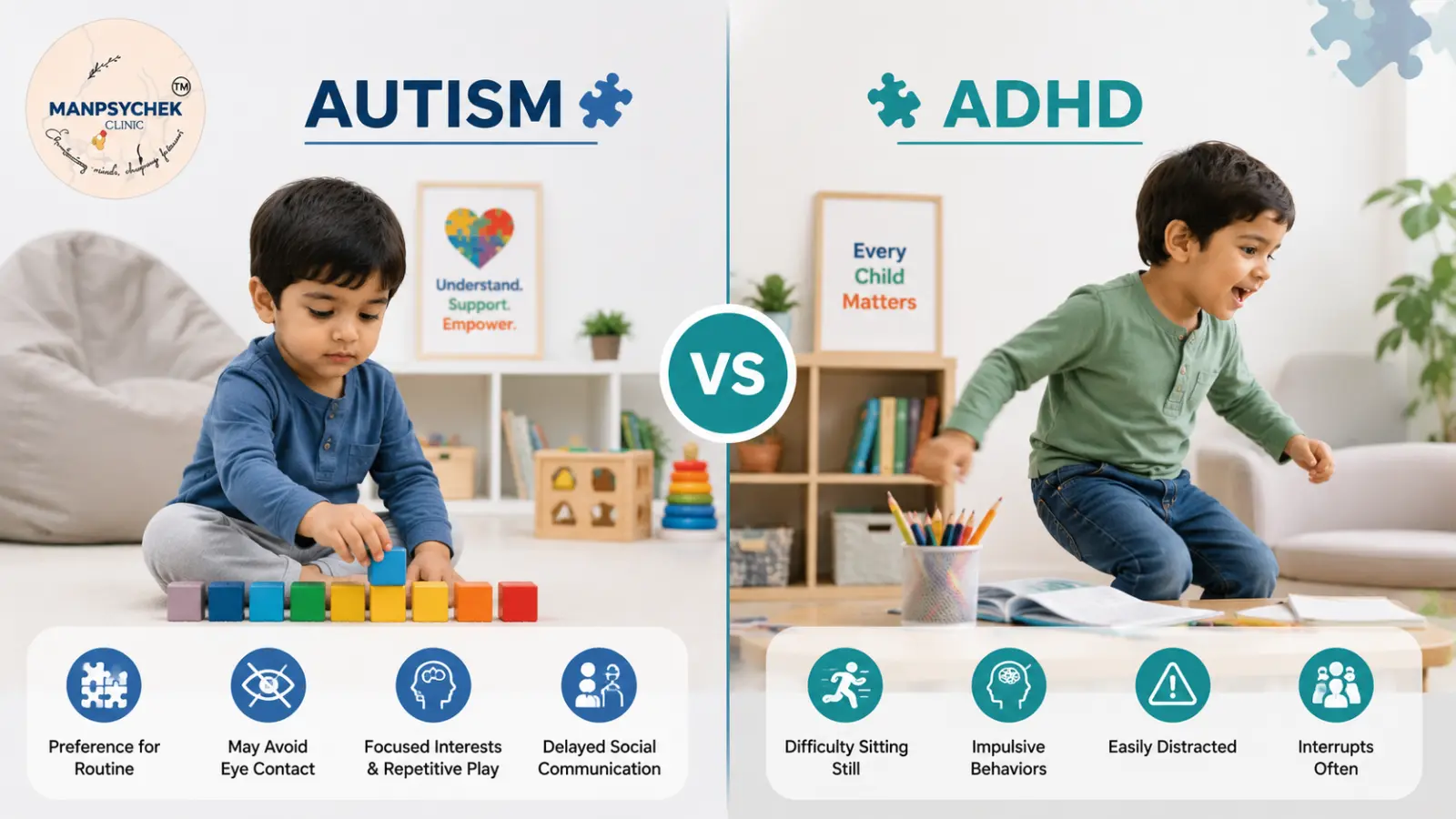
Recommended for youAutism vs ADHD: How Parents Can Tell the Difference
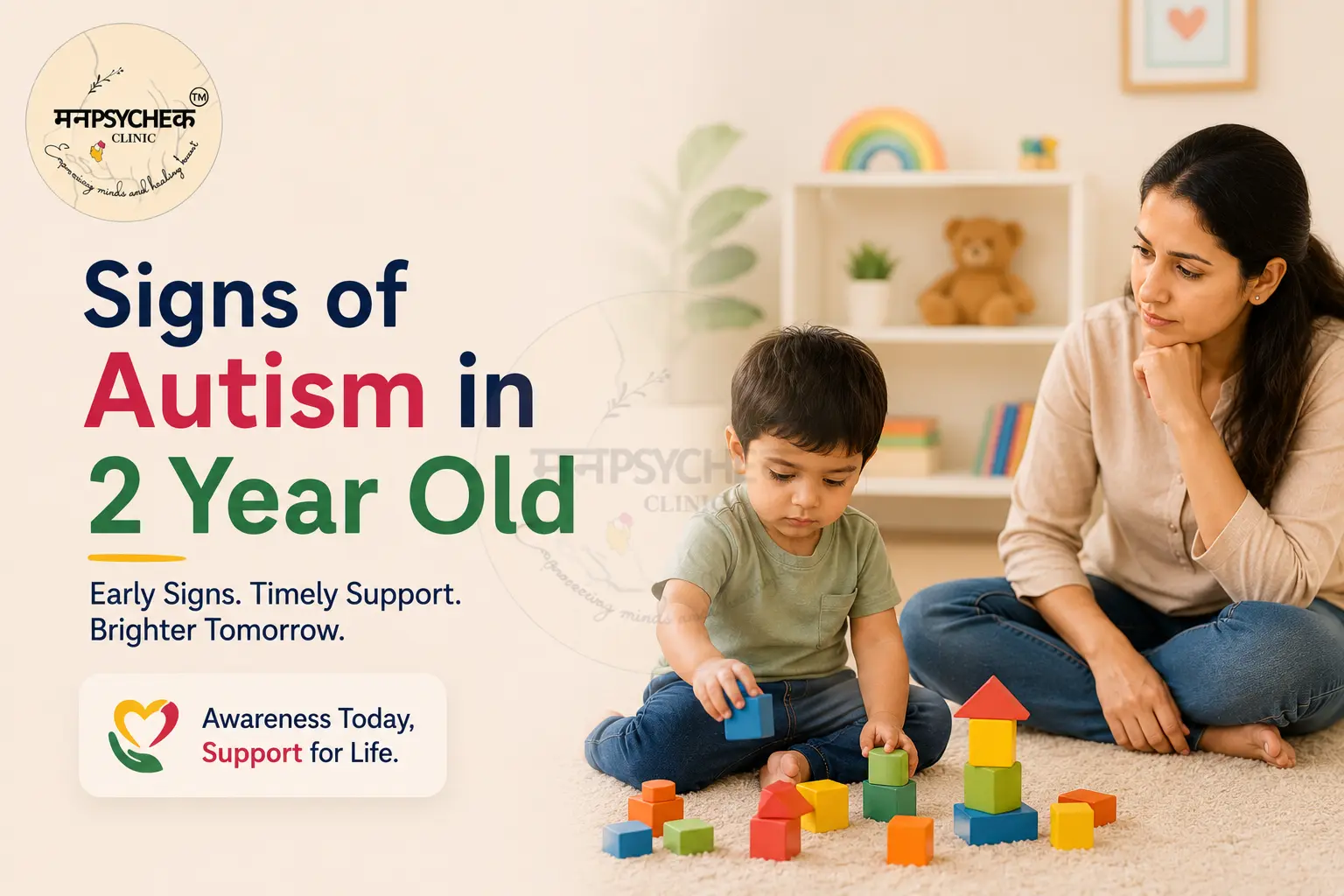
Is My 2 Year Old Showing Signs of Autism? Early Symptoms Parents Should Never Ignore
Some children may speak very little, while others may repeat words without meaningful communication. Certain children may struggle with eye contact, social conversations, emotional expression, or understanding non-verbal cues. These challenges can affect learning, behaviour, confidence, relationships, and everyday functioning.
In recent years, speech therapy has become one of the most important and effective intervention approaches for children with autism. With early support, structured therapy, and family involvement, many children can significantly improve communication skills and overall social development.
At MannpsycheK Clinic, individualized speech and communication support programs are designed for children with autism, speech delay, communication difficulties, and developmental concerns.
What Is Speech Therapy?
Speech therapy is a professional intervention that helps children improve:
- Speech clarity
- Language understanding
- Communication skills
- Social interaction
- Listening abilities
- Non-verbal communication
- Emotional expression
- Conversation skills
For children with autism, speech therapy often focuses not only on speaking words but also on helping the child communicate needs, emotions, thoughts, and social intentions more effectively.
Therapy approaches are individualized according to the child’s developmental level, communication abilities, behavioural profile, and sensory needs.
Why Do Many Children with Autism Need Speech Therapy?
Autism affects communication and social interaction differently in every child. Some children may be non-verbal, while others may have strong vocabulary but difficulty with social communication.
Common communication-related challenges in autism may include:
- Delayed speech development
- Difficulty expressing needs
- Limited vocabulary
- Echolalia (repeating words or phrases)
- Poor eye contact
- Difficulty understanding instructions
- Limited social interaction
- Difficulty maintaining conversations
- Problems understanding emotions or facial expressions
- Challenges with attention and listening skills
Speech therapy helps children develop functional communication skills that improve daily life and social participation.
Signs Your Child May Benefit from Speech Therapy
Parents should consider professional assessment if a child:
- Is not speaking according to developmental age
- Has difficulty responding to their name
- Repeats words without understanding meaning
- Struggles to express wants or emotions
- Shows frustration during communication
- Has unclear speech
- Avoids social interaction
- Faces difficulty understanding instructions
- Uses gestures more than words beyond expected age
- Shows delayed communication milestones
Early intervention is extremely important because the brain develops rapidly during childhood, especially in the early years.
How Speech Therapy Helps Children with Autism
1. Improves Functional Communication
The primary goal of therapy is helping children communicate effectively in real-life situations.
Children learn to:
- Request needs
- Express emotions
- Answer questions
- Participate in conversations
- Improve understanding of language
Functional communication often helps reduce frustration-related behavioural difficulties as well.
2. Supports Social Interaction Skills
Many children with autism struggle with social communication rather than speech alone.
Speech therapy may help improve:
- Eye contact
- Turn-taking
- Conversation skills
- Understanding social cues
- Emotional expression
- Peer interaction abilities
These skills are important for school, friendships, and emotional development.
3. Helps Reduce Communication-Related Frustration
Children who cannot express themselves properly may experience emotional outbursts, irritability, or behavioural difficulties.
Improving communication often helps children feel:
- More understood
- More confident
- Less frustrated
- More socially connected
4. Improves Language Understanding
Some children with autism may hear words clearly but struggle to understand meaning, instructions, or social language.
Speech therapy helps improve:
- Receptive language skills
- Listening abilities
- Understanding directions
- Vocabulary development
- Concept learning
5. Encourages Alternative Communication Methods
For non-verbal or minimally verbal children, therapists may introduce supportive communication systems such as:
- PECS (Picture Exchange Communication System)
- Visual communication supports
- Gestures and sign-based communication
- AAC-based communication methods when appropriate
The goal is always to help the child communicate effectively, regardless of the method used initially.
Importance of Early Intervention in Autism
Research and clinical experience consistently show that early intervention improves developmental outcomes for many children with autism.
Early speech therapy may help support:
- Brain development
- Social communication
- Emotional regulation
- School readiness
- Behaviour management
- Family interaction
- Confidence and independence
Delaying intervention often makes communication difficulties more challenging over time.
Speech Therapy Approaches Commonly Used for Autism
Depending on the child’s individual needs, therapy may include:
- Play-based communication therapy
- Behavioural communication training
- Oral motor exercises
- Social communication activities
- Parent-guided home programs
- Sensory-supported communication activities
- Language-building exercises
- Interactive learning tasks
At MannpsycheK Clinic, therapy plans are personalized according to each child’s developmental profile and communication goals.
Role of Parents in Speech Therapy Progress
Parental involvement plays a major role in therapy outcomes.
Parents are often guided on:
- Home communication strategies
- Reinforcement techniques
- Daily language-building activities
- Reducing communication pressure
- Improving interaction quality
- Behaviour management support
Consistency between therapy sessions and home environments significantly improves progress.
Can Children with Autism Become Verbal?
Every child with autism develops differently. Some children become fully verbal, some partially verbal, and others may continue using alternative communication methods effectively.
Progress depends on several factors including:
- Early intervention
- Consistency of therapy
- Cognitive abilities
- Social engagement
- Family support
- Individual developmental differences
The focus should not only be on speech quantity but on meaningful and functional communication.
Frequently Asked Questions
Q1. Can speech therapy really help children with autism?
A1. Yes. Speech therapy is one of the most important interventions for improving communication, social interaction, language development, and functional communication skills in children with autism.
Q2. What is the best age to start speech therapy?
A2. Early intervention is generally recommended. Therapy can begin as soon as communication delays or autism-related concerns are identified.
Q3. How many speech therapy sessions are needed?
A3. The number of sessions depends on the child’s developmental needs, communication goals, consistency, and progress over time.
Q4. Can non-verbal children benefit from speech therapy?
A4. Yes. Non-verbal children may benefit through alternative communication methods, social interaction training, visual supports, and communication-building activities.
Q5. Is speech delay always a sign of autism?
A5. No. Speech delay can occur due to multiple developmental or medical reasons. Professional assessment is important for accurate understanding and intervention planning.
Q6. Do parents need to participate in therapy?
A6. Yes. Parent involvement is extremely important because communication skills improve faster when strategies are consistently practiced at home.
Q7. Can online speech therapy sessions work for autism?
A7. Online parent guidance and speech support sessions may help certain children depending on age, attention span, communication level, and therapy goals.
Why Families Choose MannpsycheK Clinic
At MannpsycheK Clinic, intervention programs focus on improving communication, emotional regulation, behaviour, social interaction, and developmental functioning in children with autism and related conditions.
Services include:
- Speech Therapy
- Autism Intervention Support
- ABA-based strategies
- Behaviour Therapy
- Parent Guidance Sessions
- Social Skill Development
- Child Counselling
- Emotional Regulation Training
Therapy programs are individualized according to each child’s developmental and emotional needs.
Conclusion
Communication difficulties can deeply affect a child’s emotional development, confidence, learning abilities, behaviour, and social relationships. For children with autism, speech therapy is not only about learning words, it is about building meaningful communication, connection, understanding, and independence.
With early intervention, structured therapy, and supportive family involvement, many children can make significant progress in communication and social functioning.
Seeking professional support early can positively influence a child’s long-term developmental journey and overall quality of life.
For professional consultation and child development support, families may connect with:
MANNPSYCHEK CLINIC
📍 Dwarka Mor, Palam & Karol Bagh, Delhi NCR
📞 +91 9289102955
🌐 Official Website
Author
Saurav Deep
RCI Certified Psychologist
Consultant Clinical Psychologist
CBT Practitioner | ABA Therapist | Child Behaviour Specialist