Home › Child Development & Therapy › My Child Refuses to Go to School Every Morning | Causes & Treatment Guide
My Child Refuses to Go to School Every Morning | Causes & Treatment Guide
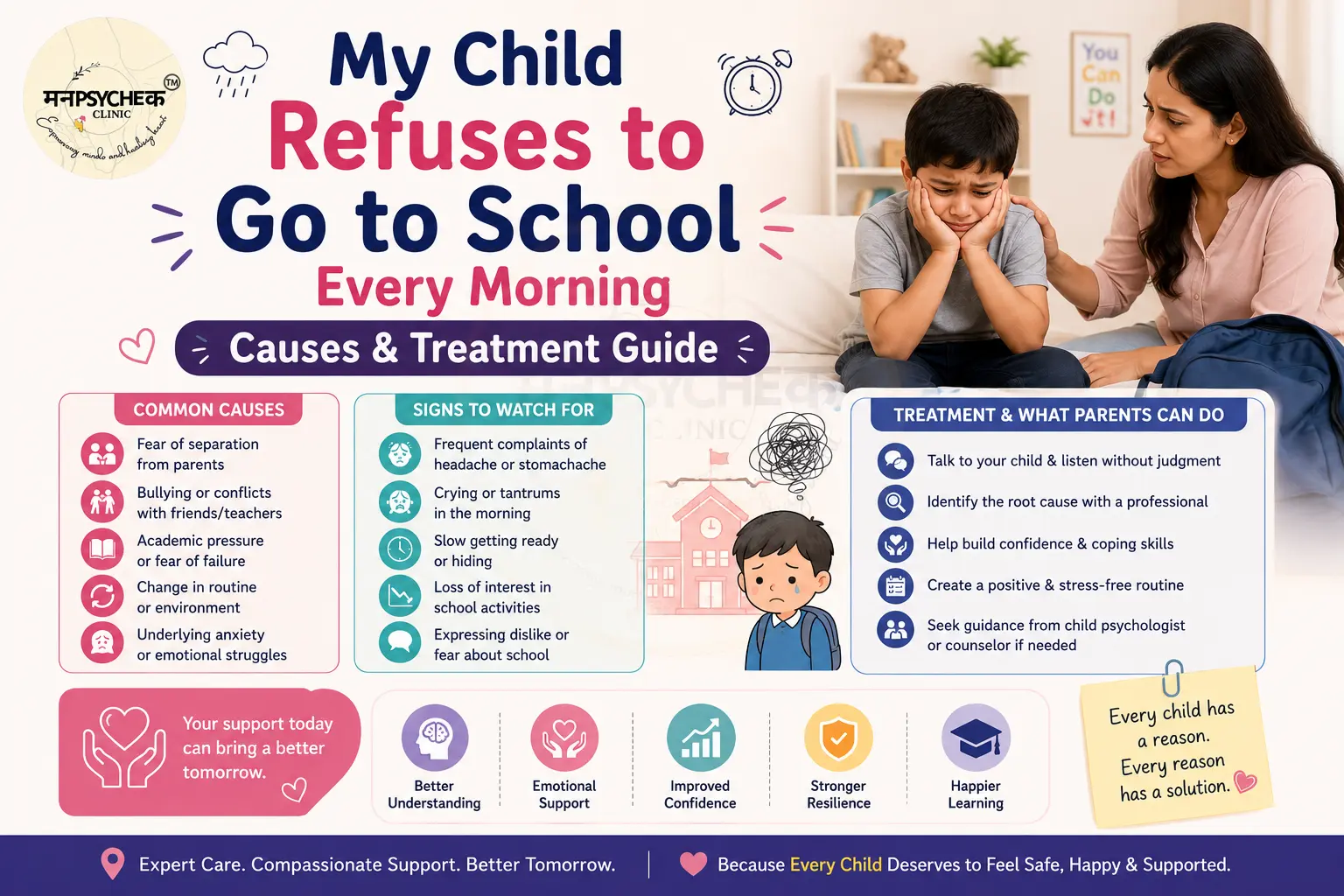
Does your child suddenly cry, complain of stomach aches, throw tantrums, or refuse to get ready for school?
Why Does My Child Lie About Small Things? Signs Parents Should Not Ignore
Why Do I Keep Overthinking Everything? How CBT Therapy Helps Rewire Anxious Thoughts in 2026
Do mornings feel like a daily battle?
Many parents search online asking:
- Why does my child refuse to go to school?
- My child cries before school every day.
- School refusal in children.
- How do I get my child back to school?
- Is school refusal a sign of anxiety?
If this sounds familiar, you are not alone.
School refusal is becoming increasingly common among children and teenagers. While many people assume the child is simply being stubborn or lazy, the reality is often much more complicated.
In many cases, school refusal is linked to emotional distress, anxiety, bullying, learning difficulties, social challenges, or underlying mental health concerns.
Understanding the real reason behind school refusal is the first step toward helping your child return to school confidently and successfully.
What Is School Refusal?
School refusal occurs when a child experiences significant emotional distress related to attending school and repeatedly avoids or refuses to attend.
Unlike truancy, school refusal is usually not associated with delinquent behaviour.
Children who refuse school often:
- Want to stay at home where they feel safe.
- Experience anxiety about attending school.
- Feel guilty about missing school.
- Show emotional distress when asked to attend.
School refusal can affect children of all ages, from preschool to adolescence.
Common Signs of School Refusal
Parents often notice:
Emotional Signs
- Crying before school
- Frequent tantrums
- Panic attacks
- Excessive clinginess
- Irritability
- Fearfulness
Physical Complaints
- Stomach aches
- Headaches
- Nausea
- Vomiting
- Dizziness
- Fatigue
Interestingly, these symptoms often improve when the child is allowed to stay home.
Behavioural Signs
- Refusing to get dressed
- Hiding school bags
- Locking themselves in rooms
- Excessive morning delays
- Begging parents not to send them to school
Why Does School Refusal Happen?
School refusal is usually a symptom rather than the actual problem.
Let's look at the most common causes.
1. Separation Anxiety
This is particularly common in younger children.
The child fears being separated from parents or caregivers.
You may hear statements such as:
- "What if something happens to you?"
- "I want you to stay with me."
- "Don't leave me."
The child may become extremely distressed during drop-offs.
2. School Anxiety
Some children experience intense anxiety related to:
- Classroom performance
- Teachers
- Examinations
- Presentations
- Making mistakes
They may worry excessively about being judged or embarrassed.
3. Bullying
Bullying remains one of the most overlooked causes of school refusal.
Children may avoid school because they are experiencing:
- Physical bullying
- Verbal bullying
- Social exclusion
- Cyberbullying
Many children do not openly tell parents about bullying due to fear or shame.
4. Learning Difficulties
Children struggling academically may begin avoiding school to escape feelings of failure.
Conditions that can contribute include:
- Dyslexia
- Dysgraphia
- Dyscalculia
- ADHD
- Intellectual difficulties
A child who appears "lazy" may actually be struggling to keep up academically.
5. Autism Spectrum Disorder (ASD)
Children with autism may experience difficulties related to:
- Social interactions
- Sensory overload
- Changes in routine
- Communication challenges
Busy classrooms can feel overwhelming and exhausting.
6. Social Anxiety
Older children and teenagers may fear:
- Being judged
- Speaking in class
- Making friends
- Participating in activities
They may desperately want friends but feel unable to cope socially.
7. Depression
School refusal can sometimes be an early sign of depression.
Warning signs include:
- Loss of interest
- Low mood
- Fatigue
- Sleep difficulties
- Social withdrawal
Professional evaluation is recommended when these symptoms persist.
8. Family Stress
Major life events can affect school attendance:
- Divorce
- Relocation
- Loss of a loved one
- Financial difficulties
- Family conflict
Children may struggle emotionally and express distress through school avoidance.
What Parents Should NOT Do
Many well-meaning parents unintentionally make school refusal worse.
Avoid:
1.Threatening the Child
Statements such as:
"If you don't go to school, I'll punish you."
often increase anxiety rather than solve the problem.
2.Giving Unlimited Time Off
Keeping children home repeatedly can strengthen avoidance behaviour.
The longer a child stays away from school, the harder returning becomes.
3.Dismissing Their Feelings
Avoid saying:
"There's nothing to worry about."
"Stop being dramatic."
"Just be brave."
Children need understanding before they can develop coping skills.
What Parents SHOULD Do
Stay Calm
Your emotional reaction influences your child's emotional state.
Remain supportive but firm.
1.Identify the Root Cause
Ask open-ended questions:
- What worries you about school?
- What is the hardest part of your day?
- Is anything happening at school that makes you uncomfortable?
Listen without immediately trying to fix the problem.
2.Maintain Routine
Keep regular:
- Wake-up times
- Bedtimes
- Study schedules
- School routines
Predictability helps reduce anxiety.
3.Work With Teachers
Teachers often notice patterns parents may miss.
- Collaborate to identify:
- Bullying concerns
- Academic struggles
- Social challenges
- Classroom triggers
4.Reinforce Small Successes
Celebrate progress.
Examples:
- Getting dressed independently
- Entering the school gate
- Staying for one lesson
- Completing a full day
Recovery often happens gradually.
Evidence-Based Treatment for School Refusal
Treatment depends on the underlying cause.
Research supports several interventions.
Cognitive Behaviour Therapy (CBT)
CBT helps children:
- Identify anxious thoughts
- Challenge fears
- Develop coping strategies
- Build confidence
CBT is considered one of the most effective treatments for anxiety-related school refusal.
Behaviour Therapy
Behavioural interventions help children gradually return to school through structured reinforcement and exposure techniques.
Parent Training
Parents learn:
- How to respond effectively
- How to reduce accommodation of anxiety
- How to support independence
School-Based Interventions
Schools may provide:
- Counselling support
- Modified schedules
- Safe spaces
- Academic accommodations
Occupational Therapy
When sensory processing difficulties contribute to school refusal, occupational therapy may help children regulate sensory challenges.
Special Education Support
Children with learning difficulties often benefit from individualized educational support.
When Should Parents Seek Professional Help?
Consult a professional if:
- School refusal lasts more than two weeks.
- Attendance continues declining.
- Anxiety appears severe.
- Panic attacks occur.
- Depression is suspected.
- Academic performance drops significantly.
- Family relationships become strained.
- Early intervention generally leads to better outcomes.
How a Child Psychologist in Dwarka Can Help
A child psychologist in Dwarka can assess:
- Anxiety disorders
- School refusal behaviour
- Emotional difficulties
- ADHD
- Autism Spectrum Disorder
- Learning difficulties
- Family stress factors
Assessment helps identify the real cause rather than simply addressing symptoms.
School Refusal Treatment in Dwarka
Families searching for school refusal treatment in Dwarka, child counselling in Dwarka, or behaviour therapy for children in Dwarka should look for services that offer:
- Child psychological assessment
- CBT
- Behaviour therapy
- Parent counseling
- Special education support
- Occupational therapy
- School consultation
A multidisciplinary approach often produces the best outcomes.
How KS Mannpsyche India Private Limited Supports Children
At KS Mannpsyche India Private Limited, children experiencing school refusal receive individualized support based on their specific needs.
Services may include:
- Child psychology consultation
- Behaviour therapy
- CBT
- Parent training
- Autism assessment
- ADHD assessment
- Occupational therapy guidance
- Special education support
Under the guidance of Saurav Deep, RCI Certified Psychologist and Behaviour Therapist, intervention plans focus on helping children regain confidence and successfully return to school.
Final Thoughts
School refusal is rarely about laziness, stubbornness, or a lack of discipline.
Behind school refusal, there is often fear, anxiety, frustration, overwhelm, or an unmet need.
The sooner parents identify the underlying cause, the sooner children can receive the support they need.
If your child is refusing school every morning, don't ignore the signs and don't assume they will simply "grow out of it."
With the right support, most children can overcome school refusal and return to learning with confidence.
Frequently Asked Questions
Q1. Is school refusal normal?
A1. Occasional reluctance is common, but persistent school refusal should be evaluated.
Q2. Can anxiety cause school refusal?
A2. Yes. Anxiety is one of the most common causes of school refusal.
Q3. Does school refusal mean my child is spoiled?
A3. No. School refusal is usually linked to emotional distress rather than poor behaviour.
Q4. Can ADHD cause school refusal?
A4. Yes. Children with ADHD may struggle academically and socially, increasing school avoidance.
Q5. Where can I get help for school refusal in Dwarka?
A5. Parents can consult a child psychologist in Dwarka or visit a child development centre in Dwarka for assessment and intervention planning.
Author:
Saurav Deep,
RCI Certified Psychologist
Saurav Deep is an RCI Certified Psychologist and Behaviour Therapist based in Dwarka, New Delhi. He specializes in child psychology, behavioural therapy, ADHD management, autism support, anxiety counseling, stress management, and family guidance. Through KS Mannpsyche India Private Limited, he provides both online and offline psychological services to children, adolescents, and adults.