Home › Autism › Why Does My Child Lie About Small Things? Signs Parents Should Not Ignore
Why Does My Child Lie About Small Things? Signs Parents Should Not Ignore
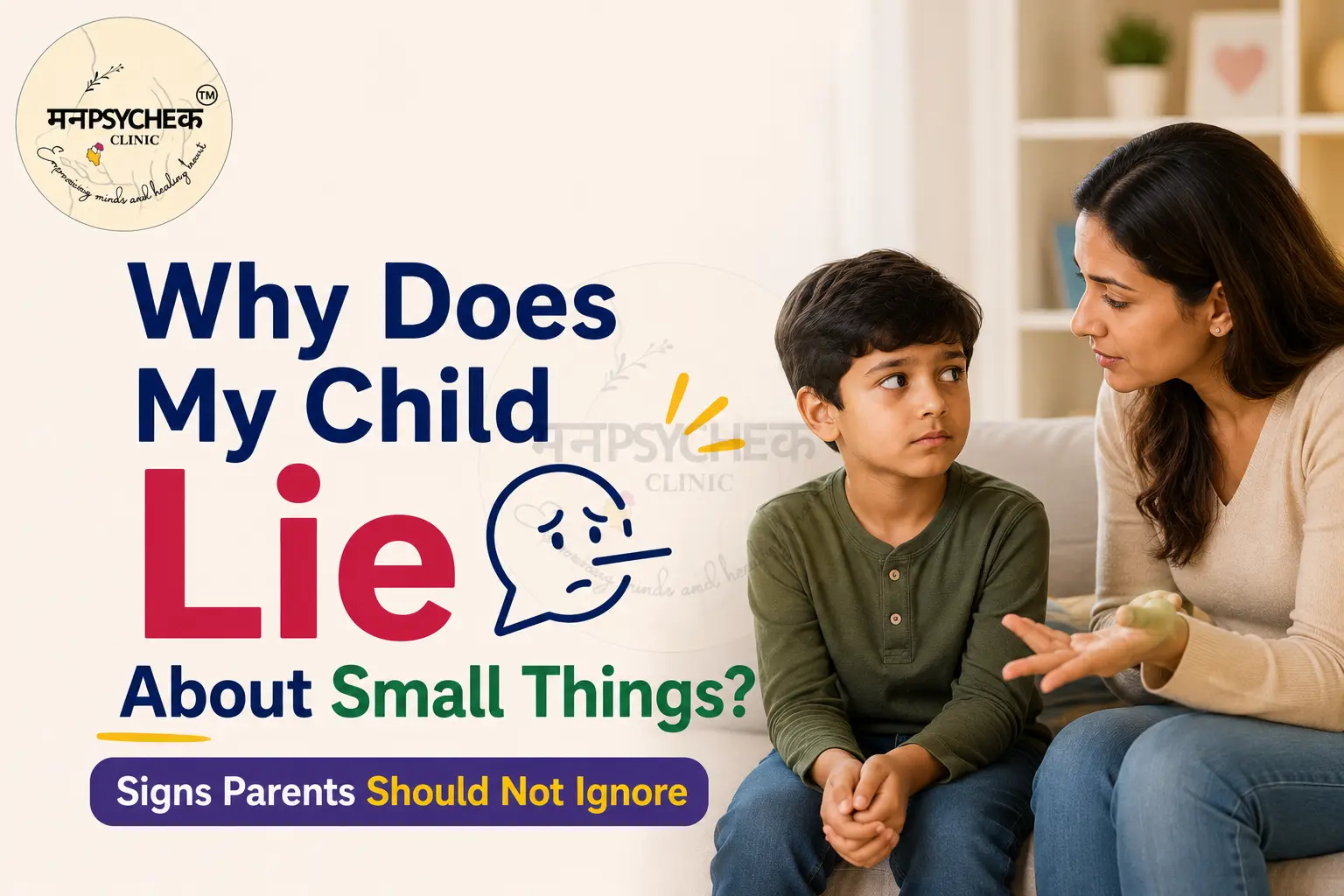
Why Does My Child Lie About Small Things? The Real Reasons May Surprise You
Many parents become worried when they catch their child lying about things that seem completely unnecessary.
My Child Refuses to Go to School Every Morning | Causes & Treatment Guide
Why Do I Keep Overthinking Everything? How CBT Therapy Helps Rewire Anxious Thoughts in 2026
You may have experienced situations like:
- Your child denies eating the chocolate while chocolate is still on their face.
- They insist they completed homework when they clearly did not.
- They blame a sibling for something you watched them do.
- They tell stories that are obviously untrue.
Parents often ask:
- "Why is my child lying so much?"
- "Is my child becoming dishonest?"
- "Should I punish lying?"
- "Does lying mean my child has behaviour problems?"
- "Could ADHD or anxiety be involved?"
These concerns are very common.
In fact, lying is one of the most frequent child behaviour problems that parents discuss with a child psychologist in Dwarka.
The good news is that most childhood lying is not a sign that a child is becoming a dishonest adult.
Instead, lying often tells us something important about a child's development, emotions, or coping skills.
Is Lying Normal in Childhood?
Surprisingly, yes.
Children begin experimenting with lying as their thinking abilities develop.
In fact, the ability to tell a lie requires certain cognitive skills, including:
- Imagination
- Perspective-taking
- Understanding what others know
- Problem-solving
This means occasional lying can actually reflect normal development.
The key issue is understanding:
Why is the child lying?
Developmental Reasons Children Lie
1. Young Children Struggle to Separate Fantasy from Reality
Preschool children often tell stories that seem untrue.
For example:
- "I saw a dinosaur in the garden."
- "I flew to the moon."
- These are usually not deliberate lies.
- Young children often mix imagination with reality.
- This is a normal part of development.
2. Avoiding Consequences
One of the most common reasons children lie is simple:
They want to avoid getting into trouble.
For example:
- "I didn't break it."
- "I didn't hit him."
- "I already did my homework."
This behaviour is often driven by fear rather than dishonesty.
3. Wanting Approval
Children sometimes lie because they want adults to be pleased with them.
Examples include:
- Claiming they completed work they haven't done
- Exaggerating achievements
- Saying what they think adults want to hear
The underlying need is often acceptance and approval.
Fear-Based Lying: The Most Common Cause
Many parents are surprised to learn that fear is one of the biggest causes of lying in children.
Children may lie because they fear:
- Punishment
- Criticism
- Disappointment
- Rejection
- Losing privileges
In these situations, the lie is often an attempt to escape emotional discomfort.
Signs of Fear-Based Lying
Parents may notice:
- Lying immediately after making a mistake
- Looking anxious while lying
- Becoming defensive
- Avoiding eye contact
- Changing stories repeatedly
The child is often trying to protect themselves rather than intentionally deceive others.
How Harsh Reactions Can Increase Lying
Many parents unintentionally strengthen lying by reacting too strongly.
If every mistake leads to:
- Yelling
- Humiliation
- Severe punishment
children may learn:
"Telling the truth feels unsafe."
As a result, lying becomes a coping strategy.
ADHD and Lying: An Overlooked Connection
Parents are often surprised when a professional explains that ADHD symptoms can sometimes contribute to lying.
This does not mean children with ADHD are dishonest.
Instead, ADHD can affect:
- Impulse control
- Emotional regulation
- Decision-making
ADHD Impulsivity and Quick Lies
Children with ADHD sometimes lie impulsively.
For example:
Parent:
"Did you finish your homework?"
Child:
"Yes."
The answer may come out automatically before they even think about it.
Later they may admit:
"Actually, I forgot."
This type of lying is often related to impulsivity rather than intentional deception.
ADHD and Forgetfulness
Some children genuinely believe they completed tasks because:
- They intended to do them
- They partially completed them
- They forgot what actually happened
Parents sometimes interpret this as lying when attention difficulties are part of the problem.
When Lying May Signal a Bigger Concern
Occasional lying is normal.
Parents should consider professional guidance if:
- Lying becomes frequent
- The behaviour worsens over time
- Lies become elaborate or manipulative
- The child shows significant emotional difficulties
- Behavioural concerns occur alongside lying
The goal is not simply stopping the behaviour but understanding the cause.
Common Parent Mistakes When Children Lie
Mistake 1:
Labeling the Child a Liar
Statements such as:
- "You're a liar."
- "You can never be trusted."
can damage self-esteem.
Focus on the behaviour rather than the child's identity.
Mistake 2:
Creating Fear Around Mistakes
Children should learn:
Mistakes are manageable.
Fear often increases dishonesty.
Mistake 3:
Demanding Confessions
Aggressive questioning often leads children to become more defensive.
A calm conversation is usually more effective.
Mistake 4:
Ignoring Honest Behaviour
Parents often focus on lies and forget to reinforce honesty.
Children need positive feedback when they tell the truth.
How Parents Should Respond to Lying
Stay Calm
Strong emotional reactions often make honesty less likely.
Focus on the Truth
Instead of:
"Why are you lying?"
Try:
"Let's figure out what really happened."
Praise Honesty
When children tell the truth, acknowledge it.
For example:
"Thank you for being honest. That was brave."
Create Psychological Safety
Children are more honest when they feel safe telling the truth.
Teach Problem-Solving
Help children understand:
Mistakes can be fixed
Problems have solutions
Honesty is valued
How a Child Psychologist in Dwarka Can Help
A child psychologist in Dwarka can assess:
- Child behaviour problems
- ADHD symptoms
- Anxiety
- Emotional regulation
- Family dynamics
- Behavioural concerns
Assessment helps identify why the child is lying rather than simply focusing on the behaviour itself.
Child Behaviour Support in Dwarka
Parents searching for:
- Child psychologist Dwarka
- Behaviour therapy Dwarka
- Child counselling Dwarka
- Child development centre Dwarka
often benefit from evidence-based support including:
- Behaviour Therapy
- Parent Counseling
- ADHD Assessment
- Emotional Regulation Training
- Child Behaviour Management Programs
Why Families Choose KS Mannpsyche India Private Limited
Many families seek support when children experience:
- Child behaviour problems
- Frequent lying
- ADHD symptoms
- Emotional difficulties
- Anxiety
- Parent-child conflicts
At KS Mannpsyche India Private Limited, children receive individualized assessments and intervention plans designed to improve emotional regulation, communication, honesty, and family relationships.
Services include:
- Child Psychology Consultation
- Behaviour Therapy
- Parent Counseling
- ADHD Assessment
- Emotional Regulation Programs
- Developmental Assessment
Under the guidance of Saurav Deep, RCI Certified Psychologist and Behaviour Therapist, families receive evidence-based support focused on helping children develop healthier coping skills and stronger emotional well-being.
Final Thoughts
Most children do not lie because they are bad.
They lie because they are:
Afraid
Impulsive
Embarrassed
Avoiding consequences
Still learning emotional skills
Instead of asking:
"Why is my child lying?"
A more useful question is:
"What is my child trying to avoid, protect, or communicate?"
Understanding the answer often leads to far better outcomes than punishment alone.
Frequently Asked Questions
Is lying normal in children?
Yes. Occasional lying is a normal part of development and often reflects growing cognitive skills.
Why does my child lie about obvious things?
Children often lie to avoid punishment, gain approval, reduce anxiety, or act impulsively.
Can ADHD cause lying?
ADHD does not cause dishonesty, but impulsivity, forgetfulness, and poor self-regulation can contribute to misleading statements.
Should I punish my child for lying?
Focus on understanding the reason behind the lie and encouraging honesty rather than relying solely on punishment.
When should I seek professional help?
Consider professional guidance if lying becomes frequent, affects relationships, or occurs alongside behavioural, emotional, or developmental concerns.