Home › ADHD › ADHD Symptoms in 5 Year Olds: 15 Early Signs Parents Should Know
ADHD Symptoms in 5 Year Olds: 15 Early Signs Parents Should Know
Is Your 5-Year-Old Always Moving?
Does your child jump from one activity to another, interrupt conversations, struggle to sit during meals, or seem unable to follow simple instructions?
ADHD Symptoms in Teenagers: 15 Signs Parents Should Know
ADHD Symptoms in 3-Year-Olds: Signs, What’s Normal & When to Seek Help
Perhaps their kindergarten teacher frequently reports that they leave their seat, disturb other children, or have difficulty completing classroom activities.
As a parent, you may wonder:
- Is my child simply energetic, or could these behaviours be signs of ADHD?
Attention-Deficit/Hyperactivity Disorder (ADHD) is a neurodevelopmental condition that can affect attention, activity regulation and impulse control. Although many five-year-olds are naturally active, children with ADHD may experience persistent difficulties that interfere with everyday functioning.
Recognising these difficulties early can help parents understand their child's needs and access appropriate support.
This guide explains the 15 common ADHD symptoms in 5 year olds, how ADHD differs from typical preschool behaviour, how assessment works, and what parents can do at home.
What Is ADHD in a 5-Year-Old Child?
Attention-Deficit/Hyperactivity Disorder (ADHD) is a neurodevelopmental disorder characterised by a persistent pattern of inattention and/or hyperactivity-impulsivity that interferes with development or daily functioning.
In a five-year-old, ADHD may appear as difficulty sustaining attention during play, excessive movement, interrupting, acting without considering consequences, or struggling to follow routines.
ADHD is not simply a lack of discipline, poor parenting, or a child deliberately refusing to listen.
According to DSM-5 diagnostic concepts, ADHD is described through three presentations:
Predominantly inattentive presentation: Attention-related symptoms are prominent.
Predominantly hyperactive-impulsive presentation: Hyperactivity and impulsivity are prominent.
Combined presentation: Both groups of symptoms are present.
The presentation may change as a child develops.
15 Common ADHD Symptoms in 5 Year Olds
Not every child with ADHD displays all these behaviours. Symptoms should be understood in the context of developmental age, frequency, duration and functional impact.
1. Difficulty Sustaining Attention
Your child may start drawing, colouring or playing with blocks but quickly move to another activity.
For example, they may begin a puzzle enthusiastically but leave it unfinished after a short period, even when the task is appropriate for their developmental level.
2. Constant Movement and Restlessness
A child may frequently:
- Run around indoors.
- Climb furniture.
- Wiggle while sitting.
- Move their hands or feet continuously.
- Struggle during quiet activities.
The concern is not movement alone, but movement that is unusually persistent and interferes with everyday activities.
3. Difficulty Following Instructions
You may give a simple instruction such as, "Keep your toys in the box."
Your child may complete the first step but become distracted before finishing.
However, language comprehension, hearing and attention should also be considered before interpreting this as an ADHD symptom.
4. Excessive Talking
Some children with ADHD talk continuously, change topics rapidly, or find it difficult to pause while others are speaking.
5. Interrupting Others
Your child may interrupt conversations, answer questions before they are completed, or struggle to wait for their turn.
This can affect interactions with siblings, classmates and adults.
6. Difficulty Waiting
Waiting in a queue, taking turns during games, or waiting for a preferred toy may lead to frustration or impulsive actions.
7. Easily Distracted
A minor sound, movement, toy or conversation may divert the child's attention from the current task.
8. Difficulty Playing Quietly
Your child may find quiet activities challenging and frequently increase the intensity or volume of play.
9. Frequently Losing Things
Toys, crayons, water bottles or school materials may be misplaced repeatedly.
At age five, some forgetfulness is normal. Persistent difficulties across routines deserve closer observation.
10. Moving From One Activity to Another
The child may begin several activities without completing them.
This may be especially noticeable during structured play, classroom tasks or daily routines.
11. Acting Without Thinking
Examples include:
- Running towards a road without checking.
- Grabbing objects from others.
- Climbing without considering safety.
- Suddenly leaving an activity.
Impulsivity can create safety concerns and should be addressed through supervision and environmental adjustments.
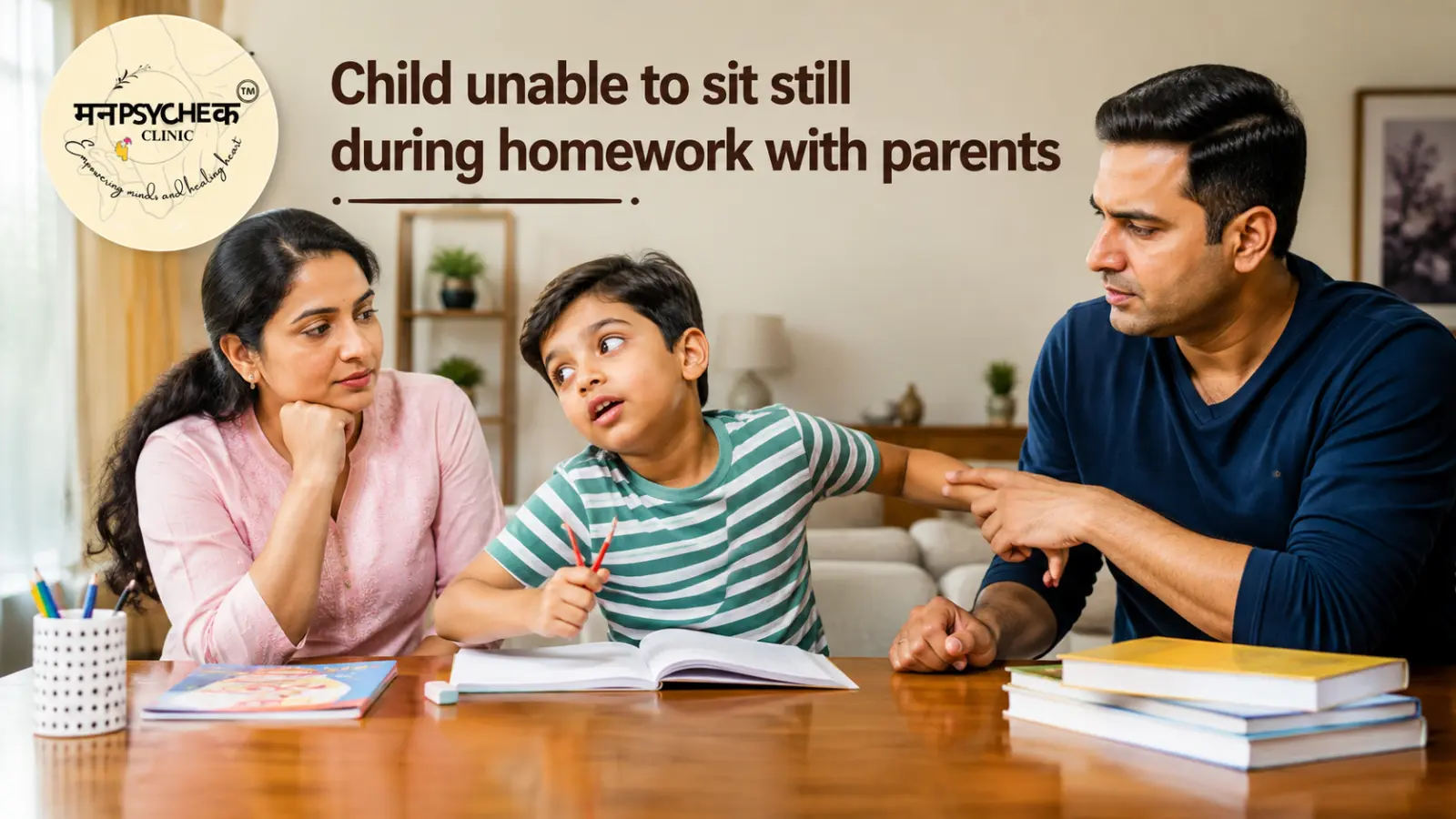
12. Difficulty Remaining Seated
Your child may leave their chair during meals, circle time, storytelling or classroom activities when remaining seated is expected.
13. Difficulty Organising Simple Tasks
Even basic routines such as getting dressed, packing a school bag or putting toys away may require repeated adult guidance.
14. Emotional Regulation Difficulties
Some children with ADHD experience difficulty managing frustration, waiting, disappointment or transitions.
They may cry, shout or become upset quickly.
Emotional dysregulation is not, by itself, a diagnostic criterion for ADHD. It can coexist with ADHD and other developmental or emotional difficulties.
15. Difficulty Completing Activities
Your child may need frequent reminders to finish age-appropriate activities.
For example, they may start eating, leave the table to play, return after repeated prompting and then become distracted again.
Important: A symptom checklist cannot diagnose ADHD. A trained professional must assess whether behaviours are developmentally atypical, persistent and impairing.
ADHD Symptoms in 5-Year-Old Boys and Girls
- ADHD can occur in children of any sex.
- Some boys are referred for assessment more frequently because disruptive or highly active behaviours are more noticeable in classrooms.
- Some girls may show less obvious attention difficulties, daydreaming or quiet distractibility.
- However, these are population-level patterns, not rules for individual children.
- Parents and teachers should pay attention to functional difficulties rather than relying on gender stereotypes.
ADHD vs Normal Behaviour in 5-Year-Olds
Five-year-olds are still developing attention, emotional regulation, waiting skills and impulse control.
Being energetic, occasionally distracted or unwilling to follow instructions does not automatically indicate ADHD.
| Typical developmental behaviour | Behaviour that may warrant assessment |
|---|---|
| Occasionally leaves a seat | Frequently leaves activities despite support |
| Sometimes forgets instructions | Persistent difficulty following age-appropriate directions |
| Becomes excited during play | Excessive activity across different situations |
| Occasionally interrupts | Repeated difficulty waiting or inhibiting responses |
| Has occasional tantrums | Persistent regulation difficulties affecting daily life |
| Gets distracted sometimes | Attention difficulties that repeatedly interfere with learning and routines |
When Should Parents Be Concerned?
Consider professional evaluation when:
- Symptoms have persisted for approximately six months or longer.
- Behaviour is inconsistent with developmental expectations.
- Difficulties occur in more than one setting.
- School participation, peer relationships or family routines are affected.
- Symptoms are not better explained by another developmental, emotional or medical condition.
- The purpose of assessment is not to label a child. It is to understand what support they need.
What Causes ADHD in 5-Year-Olds?
ADHD is a multifactorial neurodevelopmental condition. Research indicates that genetic influences and differences in brain development and functioning contribute to ADHD.
It is not caused simply by poor parenting, eating sugar, watching cartoons or a lack of discipline.
1. Genetic Influences
ADHD frequently runs in families. A child may have a higher likelihood of ADHD when close biological relatives have the condition.
2. Brain Development and Neurobiology
Research has identified differences in brain networks involved in attention, planning, inhibition and self-regulation.
These differences do not mean that every child with ADHD has the same brain pattern.
3. Environmental and Developmental Risk Factors
Certain prenatal and early-life factors have been associated with increased ADHD risk, including premature birth and exposure to some harmful substances during pregnancy.
An associated risk factor does not establish the cause of ADHD in an individual child.
What Happens in the Brain of a Child With ADHD?
Attention and behavioural regulation depend on interconnected brain networks.
These networks support:
- Sustained attention.
- Working memory.
- Response inhibition.
- Planning.
- Emotional regulation.
- Task switching.
Executive functions are still developing rapidly during early childhood.
In ADHD, regulation of these functions can be more difficult, making it harder for a child to pause, remember instructions, resist distractions or complete tasks.
This is why repeated scolding alone is unlikely to teach the skills the child is struggling to use.
Support should combine clear expectations, structured routines, reinforcement and developmentally appropriate teaching.
Real-Life Example : Understanding Behaviour Without Labelling
Consider a hypothetical child, Aarav, aged five.
His kindergarten teacher reports that he frequently leaves his seat, interrupts classmates and struggles to complete worksheets.
At home, his parents notice that he starts playing with toys but moves to another activity within minutes. Dressing for school also requires repeated reminders.
Instead of immediately concluding that Aarav has ADHD, the professional explores:
- Whether these behaviours are persistent.
- Whether similar difficulties occur at home and school.
- Whether instructions are understood.
- Whether sleep, hearing, language or emotional difficulties contribute.
- Whether the behaviour significantly affects everyday functioning.
The assessment may identify ADHD, another developmental concern, overlapping difficulties, or a need for behavioural support without an ADHD diagnosis.
The key principle is simple: understand the child's developmental profile before deciding what the behaviour means.
Myths vs Facts About ADHD
| Myth | Fact |
|---|---|
| ADHD means a child is naughty. | ADHD involves neurodevelopmental difficulties in attention and/or impulse regulation. |
| Only boys have ADHD. | ADHD occurs in girls and boys. |
| Poor parenting causes ADHD. | ADHD has substantial neurobiological and genetic influences. |
| Every hyperactive child has ADHD. | High activity alone is insufficient for diagnosis. |
| Sugar causes ADHD. | Sugar consumption is not established as the cause of ADHD. |
| Children with ADHD cannot learn. | Children with ADHD can learn, with appropriate support. |
| ADHD can be diagnosed through one IQ test. | Diagnosis requires comprehensive clinical information. |
| Medication is always the first step at age five. | Behavioural parent training and classroom interventions are recommended first-line approaches for preschool-aged children. |
ADHD Symptoms at Different Ages
ADHD is a developmental condition, and the way difficulties appear can change with age.
| Age | Possible signs |
|---|---|
| 3–4 years | Marked activity regulation difficulties, impulsive behaviour, trouble with routines |
| 5 years | Difficulty with structured play, attention, waiting, instructions and classroom participation |
| 6–7 years | Increasing difficulty with classroom tasks, organisation and learning routines |
| 8–10 years | Persistent inattention, incomplete work, forgetfulness and peer difficulties |
| Adolescence | Difficulties with planning, time management, organisation and impulse control |
Symptoms before age four require particularly careful developmental interpretation. Parent behaviour training can still be useful without assigning an ADHD diagnosis.
How ADHD Can Affect a 5-Year-Old Child
1. Learning and School Readiness
A child may understand an activity but struggle to remain engaged long enough to complete it.
This may affect early literacy, number activities, classroom participation and following group instructions.
2. Social Relationships
Interrupting, difficulty waiting and impulsive actions may create misunderstandings with peers.
Children may need direct teaching of turn-taking, cooperative play and social communication.
3. Emotional Well-Being
Repeated correction or negative feedback may contribute to frustration, low confidence or avoidance.
Adults should describe the behaviour rather than defining the child by it.
Instead of saying, "You are always naughty," use specific language such as, "Let's practise waiting for our turn."
4. Family Routines
Meals, dressing, bedtime and transitions may require additional structure.
Parents may feel exhausted when they have to repeat the same instructions throughout the day.
Consistent support can reduce conflict and improve predictability.
How Is ADHD Diagnosed in a 5-Year-Old?
ADHD can be assessed at age five. However, diagnosis requires a careful clinical process.
The DSM-5 framework generally requires:
- At least six symptoms in the relevant symptom domain for children under 17.
- Symptoms persisting for at least six months.
- Several symptoms present before age 12.
- Symptoms occurring in two or more settings.
- Clear interference with social, academic or developmental functioning.
- Symptoms not better explained by another condition.
- The exact diagnostic determination must be made by a qualified clinician.
Step 1: Developmental and Clinical History
The professional gathers information about:
- Pregnancy and birth history.
- Developmental milestones.
- Speech and language development.
- Behavioural concerns.
- Sleep and daily routines.
- Family and medical history.
- School functioning.
Step 2: Parent and Teacher Reports
Information from home and school helps establish whether the difficulties occur across settings.
Step 3: Behaviour Rating Scales
Validated ADHD rating scales may support assessment.
Depending on age and clinical context, tools may include:
- Conners rating scales.
- ADHD Rating Scale.
- Other validated DSM-based behavioural questionnaires.
- Rating scales are supporting tools, not stand-alone diagnostic tests.
Step 4: Developmental and Differential Assessment
The clinician considers other explanations and co-occurring conditions, including:
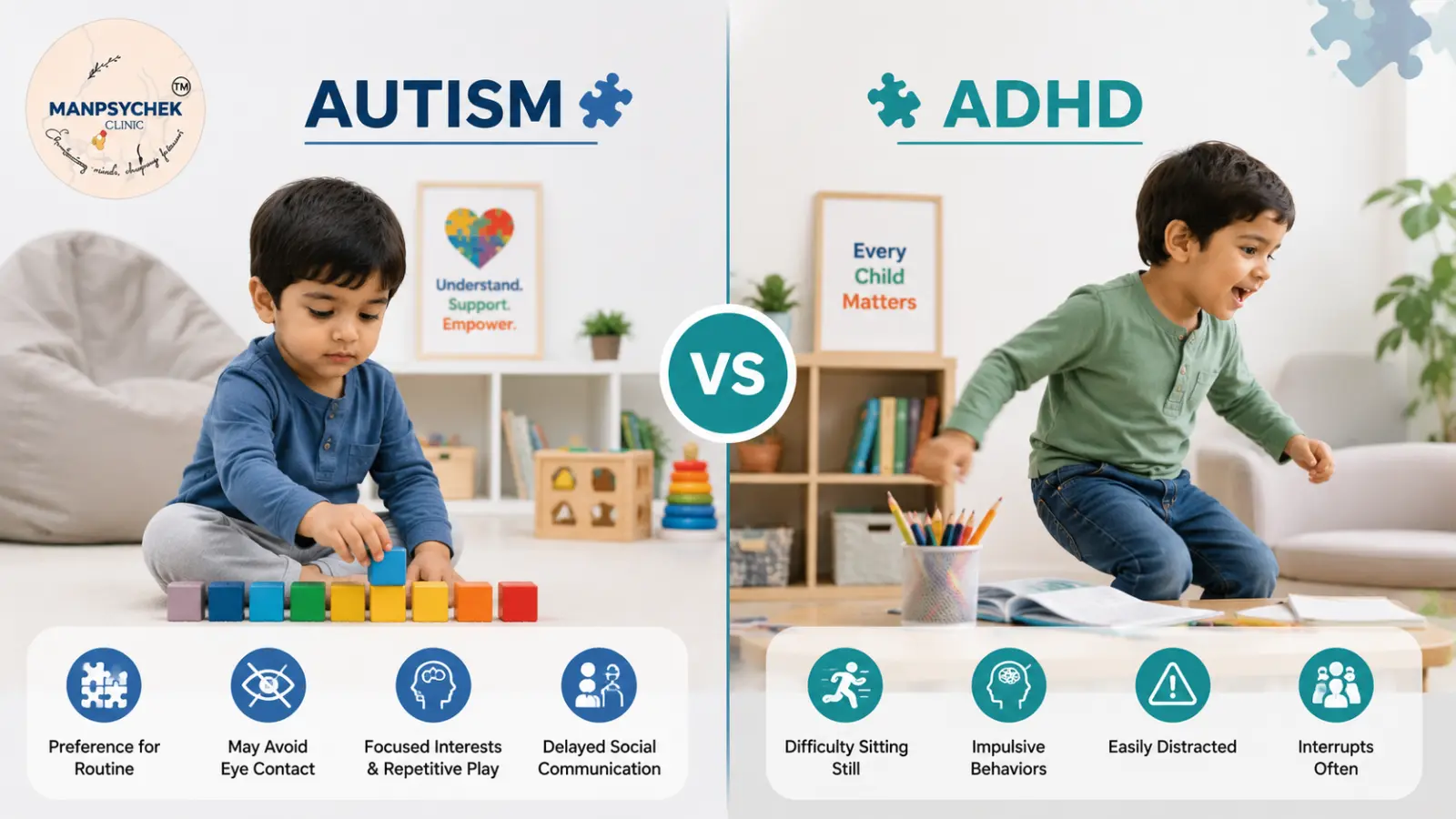
- Autism spectrum disorder.
- Speech and language difficulties.
- Anxiety.
- Sleep problems.
- Hearing or vision concerns.
- Developmental delays.
- Learning difficulties.
An IQ test, brain scan or computerised attention test is not routinely sufficient or necessary to establish ADHD.
ADHD Treatment for 5-Year-Old Children
Treatment should be individualised according to the child's needs, developmental level and functional difficulties.
1. Parent Training in Behaviour Management
For children aged four to five, evidence-based parent training and behavioural classroom interventions are recommended as first-line approaches when available.
Parents learn to:
- Give clear, short instructions.
- Reinforce desired behaviours.
- Establish predictable routines.
- Use consistent consequences.
- Respond to difficult behaviour without escalating conflict.
- Encourage positive parent-child interactions.
2. Behaviour Therapy
Behavioural intervention can help children practise attention, waiting, turn-taking, following instructions and self-regulation.
Intervention goals should be measurable and relevant to everyday life.
3. Classroom Support
Teachers may use:
- Short, structured activities.
- Visual schedules.
- Movement breaks.
- Clear classroom expectations.
- Positive reinforcement.
- Reduced distractions.
- Frequent feedback.
4. Medication
For preschool-aged children, medication decisions require particular care.
Clinical guidance places behavioural parent training and classroom interventions first. A paediatrician or child psychiatrist may consider medication in selected cases when significant impairment continues despite behavioural intervention.
Medication should never be started, stopped or adjusted without medical supervision.
10 Home Strategies for Parents
1. Use Short Instructions
Instead of giving five instructions at once, provide one or two simple steps.
Example: "Pick up your shoes. Now keep them near the door."
2. Establish a Predictable Routine
Create consistent times for waking, meals, play, learning and bedtime.
3. Use Visual Schedules
A visual routine can help a child understand what happens next.
Suggested sequence:
Wake up → Brush teeth → Bath → Get dressed → Breakfast → School.
4. Reinforce Positive Behaviour
Notice the behaviour you want to encourage.
Examples:
- "You waited for your turn."
- "You completed your puzzle."
- "You kept your toys in the box."
5. Break Tasks Into Smaller Steps
Large activities can feel difficult to organise.
Break them into smaller, manageable tasks and provide support as needed.
6. Schedule Movement Breaks
Movement opportunities can be incorporated between seated activities.
Try supervised jumping, dancing, stretching or outdoor play.
7. Reduce Unnecessary Distractions
Keep the immediate activity area simple.
Store unrelated toys away during structured tasks.
8. Use Consistent Rules
Set a few clear expectations and apply them consistently.
Avoid changing consequences according to adult mood.
9. Support Sleep
Maintain a regular bedtime and a calming bedtime routine.
Discuss persistent snoring, sleep disruption or excessive daytime sleepiness with a healthcare professional.
10. Coordinate With the Teacher
Share observations and agree on two or three realistic goals.
A consistent home-school approach makes progress easier to monitor.
Professional Intervention at MannpsycheK
At MannpsycheK, child development and behavioural concerns can be explored through an individualised assessment and intervention process.
Depending on the child's needs, services may include:
ADHD Assessment
Developmental history, behavioural observations, parent input, teacher feedback and appropriate assessment measures.
Behaviour Therapy
Support for attention, impulse control, task completion, routines and behavioural regulation.
Parent Training
Guidance for parents on positive reinforcement, structured instructions and managing challenging routines.
Special Education
Individualised learning support where attention, developmental or educational needs affect participation.
Speech Therapy
Assessment and intervention when speech, language or communication concerns are also present.
Autism Therapy and Developmental Support
Further evaluation and appropriate intervention where developmental concerns overlap or coexist.
The intervention plan should be based on the child's assessed needs rather than automatically assigning every child the same therapy package.
When Should You Consult a Child Psychologist?
Consider seeking professional guidance if your five-year-old:
- Frequently struggles to participate in kindergarten.
- Has persistent attention or impulse-control difficulties.
- Experiences repeated safety-related impulsive behaviours.
- Has difficulty completing everyday routines.
- Shows difficulties across home and school.
- Experiences significant frustration or social difficulties.
- You do not need to wait until school performance deteriorates substantially before seeking guidance.
Early assessment can clarify whether the child needs ADHD intervention, developmental support, parent guidance or another form of care.
Frequently Asked Questions
Q1. What are the first signs of ADHD in a 5-year-old?
A1. Early signs may include persistent difficulty sustaining attention, excessive movement, interrupting, impulsive actions, trouble waiting and difficulty following age-appropriate instructions. These behaviours become more concerning when they occur frequently, across settings and interfere with everyday functioning. A child psychologist or qualified healthcare professional can help distinguish ADHD from typical developmental behaviour.
Q2. Can a 5-year-old be diagnosed with ADHD?
A2. Yes. ADHD can be diagnosed in children aged five when appropriate diagnostic criteria are met. Assessment considers symptom duration, developmental expectations, impairment across settings, parent and teacher reports, and alternative explanations. A single questionnaire or observation is not enough to establish the diagnosis.
Q3. How do I know if my 5-year-old is hyperactive or has ADHD?
A3. High energy is common in preschool children. ADHD becomes a consideration when excessive activity, impulsivity or inattention is persistent, developmentally atypical and affects functioning at home, school or with peers. Look for patterns over time rather than isolated incidents. A professional assessment is necessary to clarify the cause.
Q4. Can ADHD in a 5-year-old improve without medication?
A4. Yes. For preschool-aged children, evidence-based parent training in behaviour management and behavioural classroom interventions are recommended first-line approaches. These can improve routines, attention-related behaviour and parent-child interactions. Some children with continuing significant impairment may require a medical review to consider additional treatment options.
Q5. Where can I get an ADHD assessment for my child in Dwarka, Delhi?
A5. Parents seeking an ADHD assessment in Dwarka can contact MannpsycheK Child Development & Mental Health Center for information about available assessment and consultation services. A comprehensive evaluation may include developmental history, parent and teacher observations, behavioural rating scales and screening for overlapping concerns. Contact the clinic to confirm current availability and appointment details.
Understanding Your Child Is the First Step
ADHD symptoms in five-year-olds may appear as persistent inattention, excessive movement, impulsivity and difficulties with everyday routines.
However, not every energetic or distracted child has ADHD.
The most important considerations are persistence, developmental expectations, difficulties across different settings and the impact on the child's functioning.
A supportive approach focuses on identifying strengths, understanding developmental needs and teaching practical skills rather than repeatedly punishing behaviour.
With appropriate assessment, parent guidance, behavioural intervention and school support, children can develop strategies that help them participate more confidently in everyday life.
Book an ADHD Consultation at MannpsycheK, Dwarka
Concerned about your child's attention, hyperactivity or impulsive behaviour?
MannpsycheK provides child development and psychological support in Dwarka, Delhi.
Consultation and intervention options may include:
- ADHD assessment
- Child psychology consultation
- Behaviour therapy
- Parent training
- ABA therapy
- Speech therapy
- Special education
- Developmental assessment
Clinical contact: Dr. Saurav D. S. Dogra
Centre: K.S. MannpsycheK, Dwarka Mor, Delhi
Website: https://www.mannpsyche.com/
Book a consultation to discuss your child's developmental and behavioural concerns.
Disclaimer: This article is for educational purposes and does not replace individual clinical assessment, diagnosis or medical advice.