Home › Guidance For Parents › Why Can’t My Child Sit Still? Causes, ADHD Signs & What Parents Can Do
Why Can’t My Child Sit Still? Causes, ADHD Signs & What Parents Can Do
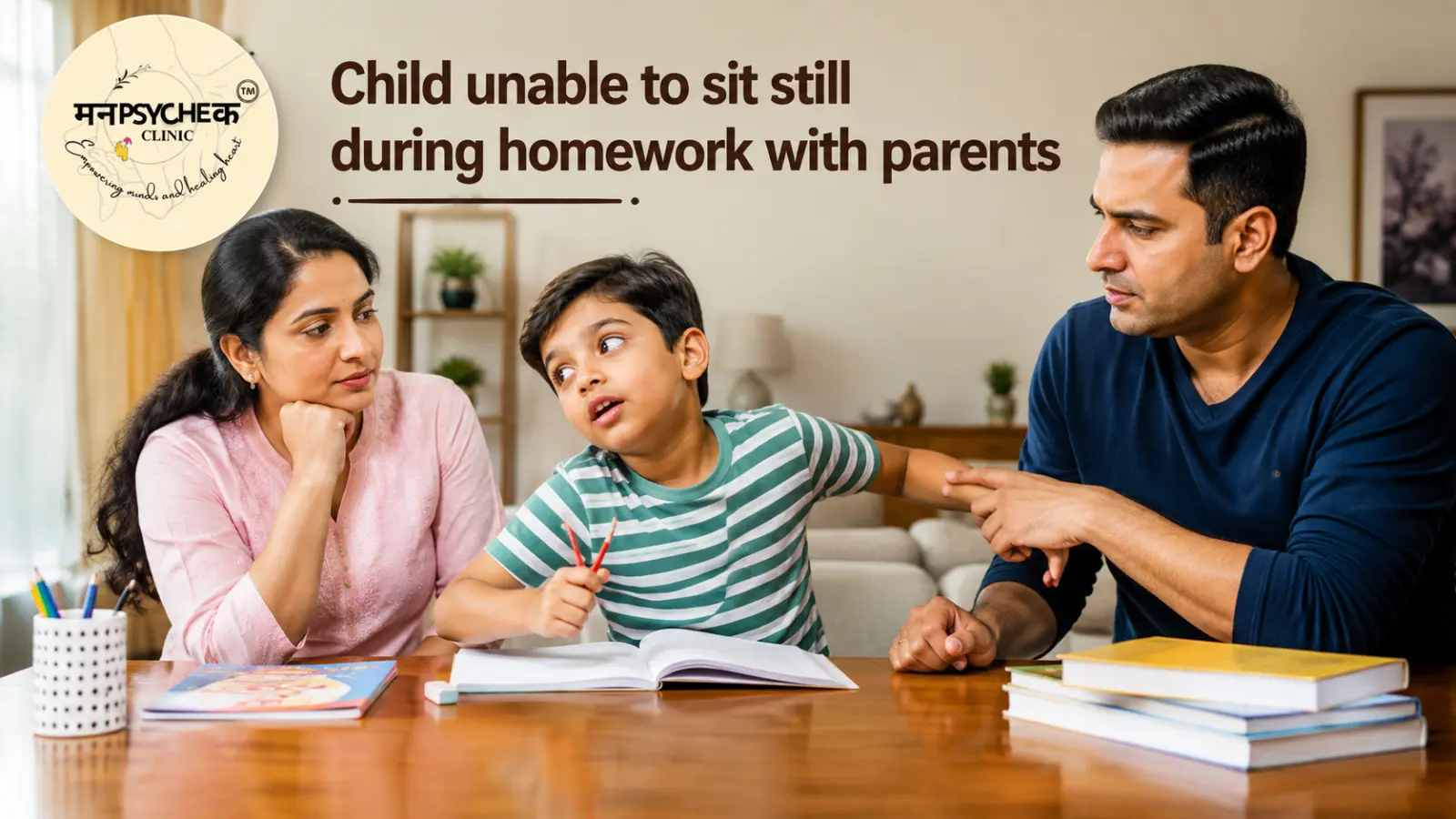
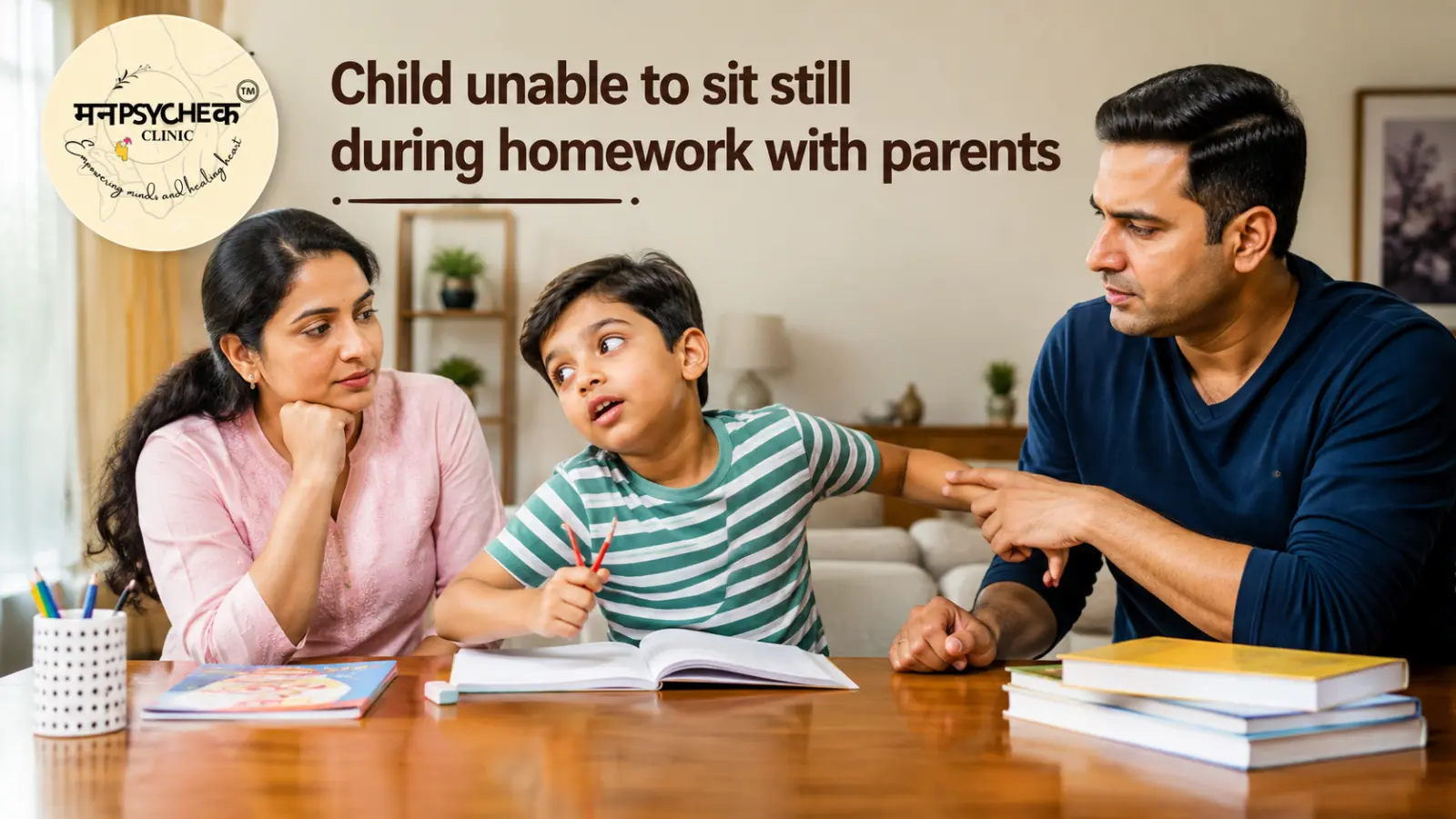
“Sit properly.”
“Stop getting up.”
“Pay attention.”
“Why can't you sit still for five minutes?”
ADHD Symptoms in 3-Year-Olds: Signs, What’s Normal & When to Seek Help
Why Is My Child Always Daydreaming? ADHD, Anxiety or Something Else?
If you find yourself saying these things repeatedly, you are not alone.
Many parents become concerned when their child constantly fidgets, leaves their seat, moves around during meals, interrupts conversations, struggles with homework, or finds it difficult to remain seated in class.
The immediate question is often:
“Does my child have ADHD?”
Sometimes ADHD may be part of the explanation. But a child who cannot sit still does not automatically have ADHD.
Restlessness can also be related to age, temperament, insufficient sleep, anxiety, boredom, learning difficulties, task demands, emotional regulation, or other developmental factors.
The more useful question is:
“Why is sitting still difficult for this particular child, in this particular situation?”
That distinction matters.
Quick Answer:-
Why Can't My Child Sit Still?
A child may have difficulty sitting still because of normal development, a naturally high activity level, boredom, poor sleep, anxiety, learning difficulties, emotional dysregulation, environmental distractions, or ADHD. Restlessness alone cannot diagnose ADHD. ADHD assessment considers a persistent pattern of symptoms, their impact on functioning, and whether difficulties are present across important settings.
Is It Normal for a Child to Have Trouble Sitting Still?
To some extent, yes.
Children are not expected to behave like miniature adults. A preschooler and a 12-year-old have very different abilities to regulate attention, movement and impulses.
Context also matters.
A child may:
- Sit quietly during a favourite game but struggle with homework.
- Listen to a story but become restless during a long lesson.
- Become much more active when tired or excited.
- Need frequent movement during learning activities.
None of these behaviours, by themselves, establishes ADHD.
Concern increases when difficulties are persistent, clearly greater than expected for the child's developmental level, occur across important settings, and interfere with everyday functioning. ADHD evaluation also requires consideration of other possible explanations.
Signs That Your Child May Need Further Evaluation
One behaviour such as fidgeting is not enough.
Look for a pattern.
A child may benefit from professional evaluation if they frequently show several of the following:
Hyperactivity
- Frequently leave their seat when expected to remain seated
- Fidget excessively
- Seem constantly “on the go”
- Talk excessively
- Have difficulty playing quietly
- Find it difficult to slow down
Impulsivity
- Interrupt others frequently
- Act before thinking
- Have difficulty waiting for their turn
- Shout out answers
- Grab things without asking
- Make impulsive decisions
Attention difficulties
- Become easily distracted
- Frequently lose things
- Forget instructions
- Make careless mistakes
- Struggle to complete tasks
- Have difficulty sustaining attention
- Appear not to listen when spoken to
These behaviours can occur in ADHD, but a checklist of behaviours is not the same as an ADHD diagnosis.
Why Can't My Child Sit Still? 8 Common Reasons
1. Normal Development
Young children naturally have shorter attention spans and less developed impulse control.
Expecting a preschooler to remain completely still for a long period may be unrealistic.
The goal should be developmentally appropriate participation, not perfect stillness.
2. Temperament and High Activity Level
Some children are simply more active than others.
They may love:
- Running
- Climbing
- Outdoor games
- Talking
- Exploring
- Frequent movement
High energy by itself is not a disorder.
The important question is whether the activity level is causing persistent problems with learning, relationships, routines or daily functioning.
3. ADHD
ADHD is a neurodevelopmental disorder involving a persistent pattern of inattention and/or hyperactivity-impulsivity that interferes with functioning or development.
Hyperactive-impulsive symptoms can include excessive movement, difficulty remaining seated, talking excessively, interrupting and difficulty waiting.
However:
Not every restless child has ADHD.
ADHD diagnosis requires a broader clinical evaluation. Current guidance recommends gathering information from parents and school or other relevant settings, using rating scales when appropriate, considering DSM-5 criteria, and checking for other conditions that may mimic or coexist with ADHD.
4. Anxiety or Emotional Stress
An anxious child may appear restless rather than simply “worried.”
They may:
- Fidget constantly
- Ask repeated questions
- Avoid certain situations
- Become irritable
- Have difficulty concentrating
- Struggle to settle down
In some cases, movement may reflect emotional arousal rather than ADHD.
This is why understanding what happens before and after the behaviour is important.
5. Poor Sleep
Sleep difficulties can affect:
- Attention
- Mood
- Behaviour
- Impulse control
- Learning
- Emotional regulation
A tired child does not always look sleepy. Some children become more irritable, restless or dysregulated when they are overtired.
If your child's behaviour changed after a significant change in sleep, discuss the sleep problem with an appropriate healthcare professional rather than assuming ADHD is the cause.
6. Learning or Language Difficulties
This is one of the most important possibilities parents can overlook.
Imagine a child is given a worksheet.
They struggle to understand the instructions.
Writing is difficult.
The mathematics is confusing.
The task feels overwhelming.
The child gets up repeatedly.
A parent may see:
“He can't sit still.”
But the underlying problem may actually be:
“He doesn't know how to do the task.”
Learning, language and developmental difficulties can produce behaviours that look like inattention or avoidance. ADHD assessment should therefore consider learning and language difficulties as well as other developmental conditions.
7. Boredom, Task Difficulty or Poor Task Fit
Children are more likely to move when an activity is:
- Too repetitive
- Too difficult
- Too easy
- Too long
- Poorly structured
- Not appropriately matched to their skills
Sometimes the answer is not:
“Make the child sit longer.”
It is:
“Change how the task is presented.”
Breaking a difficult activity into smaller steps can make participation easier.
8. Emotional Regulation and Sensory Factors
Some children struggle with:
- Waiting
- Frustration
- Transitions
- Disappointment
- Excitement
- Boredom
They may respond by moving, refusing, arguing or leaving the activity.
Some children also seek movement or respond differently to sensory input.
However, sensory-seeking behaviour alone does not diagnose ADHD or autism. A professional should consider the child's broader developmental and behavioural profile.
ADHD or Just a High Activity Level?
There is no single behaviour that separates ADHD from normal energy.
| More typical variation | Pattern that may warrant evaluation |
|---|---|
| Activity varies considerably by situation | Difficulties are persistent |
| Behaviour is generally age-appropriate | Behaviour is noticeably excessive for developmental level |
| Can participate in many structured activities | Repeated difficulty with participation |
| Limited functional impairment | Learning, family or social functioning is affected |
| Concerns may occur only in certain situations | Similar concerns occur across important settings |
| No broad pattern of inattention/impulsivity | Inattention and/or impulsivity may also be present |
This table is not a diagnostic test. It simply illustrates why context, persistence and functional impact matter.
Why “Just Sit Still” Often Doesn't Work
This is where many families get stuck.
The parent says:
“Sit down.”
The child sits.
Thirty seconds later, the child gets up.
The parent becomes frustrated. The child becomes frustrated. The instruction is repeated.
Eventually, homework becomes a daily battle.
The problem is that “sit still” does not teach the underlying skill.
If a child is struggling with attention, impulse control, task tolerance, emotional regulation or academic skills, repeatedly demanding stillness may not solve the actual problem.
The intervention should target why the child is getting up, not simply the movement itself.
What Can Parents Do at Home?
You do not need to turn your home into a classroom.
Start with simple changes.
1. Break large tasks into smaller steps
Instead of:
“Finish your homework.”
Try:
“Let's complete these five questions first.”
Then offer a short break.
2. Use planned movement breaks
Try:
- Stretching
- Walking
- Water breaks
- Carrying books
- Short physical games
The goal is to make movement planned and functional, rather than treating every movement as misbehaviour.
3. Give one instruction at a time
Instead of:
“Go to your room, get your books, sit down and finish your homework.”
Try:
“Get your maths book.”
Then:
“Open page 20.”
Then:
“Do questions 1–3.”
4. Reduce distractions
During homework:
- Turn off unnecessary screens.
- Remove distracting toys.
- Keep only required materials nearby.
- Use a consistent workspace.
5. Use a visual routine
For example:
Homework → Break → Homework → Snack → Play
Visual routines can make expectations clearer and transitions easier.
6. Reinforce successful behaviour
Instead of noticing only when your child gets up, notice when they successfully participate:
“You stayed with the activity until the timer finished. Well done.”
Specific praise is more useful than simply saying “Good job.”
7. Don't demand perfect stillness
A child may sometimes learn effectively while:
- Changing position
- Standing briefly
- Using an appropriate fidget
- Taking a planned movement break
The goal is not to produce a motionless child.
The goal is functional attention, self-regulation and successful participation.
When Should You Consider an ADHD Assessment?
Consider professional evaluation when difficulties are:
Persistent
They continue over time rather than occurring occasionally.
Present Across Important Settings
Similar concerns occur at home, school or other important environments.
Functionally Impairing
They affect:
- Learning
- Academic performance
- Friendships
- Family relationships
- Daily routines
- Participation
Developmentally Unusual
The level of activity, impulsivity or inattention appears substantially greater than expected for the child's developmental stage.
Difficult to Explain by One Situation
The behaviour cannot simply be explained by boredom, one difficult subject, occasional poor sleep or a specific environmental problem.
Current ADHD guidance emphasizes evaluating children in context, obtaining information from multiple relevant sources, documenting symptoms and considering other conditions that may coexist or produce similar difficulties.
How Is ADHD Diagnosed?
There is no single blood test, brain scan or questionnaire that independently diagnoses ADHD.
A comprehensive assessment may include:
- Developmental history
- Parent interview
- Teacher or school feedback
- Behavioural observation
- Standardized rating scales
- Assessment of attention, impulsivity and functioning
- Consideration of other conditions
Professionals may consider anxiety, sleep difficulties, learning or language disorders, autism spectrum disorder, emotional or behavioural difficulties and relevant physical or neurological concerns.
A rating scale can be useful, but a questionnaire should not be treated as the diagnosis by itself.
What Treatment Is Available If ADHD Is Diagnosed?
Treatment should be individualized according to the child's age, symptoms, impairment, coexisting conditions and family and school needs.
Depending on the child, support may include:
Behaviour Therapy
Behavioural interventions can help develop:
- Self-regulation
- Task completion
- Appropriate classroom behaviour
- Impulse control
- Routines
Parent Training
Parents can learn practical strategies for:
- Giving effective instructions
- Reinforcing desired behaviour
- Managing difficult behaviour
- Establishing structure
- Responding consistently
School-Based Support
Support may include:
- Shorter instructions
- Task chunking
- Movement opportunities
- Visual schedules
- Organizational support
- Appropriate classroom accommodations
Special Education
If ADHD coexists with a learning difficulty or another developmental condition, individualized educational support may be appropriate.
Medication
For some children, medication may be clinically appropriate and should be prescribed and monitored by a qualified medical professional.
For children younger than 6 with ADHD, CDC guidance recommends behaviour therapy particularly parent training in behaviour management as the first treatment before medication is considered. For school-age children and adolescents, evidence-based treatment may involve medication together with behavioural and school supports, depending on individual circumstances.
What About Autism, Learning Disability or Other Developmental Concerns?
Restlessness can occur alongside several developmental or emotional difficulties.
For example:
- ADHD: persistent inattention and/or hyperactivity-impulsivity with functional impairment
- Learning difficulties: academic tasks may become unusually difficult or frustrating
- Language difficulties: instructions may be difficult to understand
- Anxiety: worry and emotional arousal may appear as restlessness
- Autism: may involve differences in social communication and restricted or repetitive patterns of behaviour, with sensory or routine-related differences in some children
A child can also have more than one condition.
That is why the goal of assessment should be understanding the whole child rather than attaching a label to one behaviour.
How Much Sitting Still Is Reasonable?
There is no universal number of minutes that every child should be able to sit still.
Expectations should consider age, developmental level, activity, task difficulty and environment.
Toddlers
Focus on short activities, play, routines and frequent movement opportunities.
Preschoolers
Use short learning activities, songs, games, visual routines and hands-on tasks.
WHO guidance for children under 5 emphasizes balancing physical activity, sedentary time and sleep rather than simply demanding prolonged sitting.
School-Age Children
As classroom demands increase, persistent difficulty with staying on task, following instructions, remaining seated or completing work deserves closer attention—especially when teachers report similar concerns.
For children and adolescents aged 5–17, WHO recommends an average of at least 60 minutes of moderate-to-vigorous physical activity per day across the week.
Teenagers
Hyperactivity may become less obvious physically and may appear as:
- Inner restlessness
- Impatience
- Frequent movement
- Difficulty sitting through long activities
- Impulsive decisions
- Difficulty organizing work
A Simple Parent Checklist
Ask yourself:
- Is my child's activity level substantially higher than that of similar-age children?
- Does my child frequently leave their seat?
- Are impulsivity or interruptions also present?
- Are there attention difficulties?
- Does this happen at home and school?
- Has the pattern continued for a significant period?
- Is learning affected?
- Are friendships or family relationships affected?
- Is sleep adequate?
- Could the child be struggling with the academic task?
- Have teachers expressed similar concerns?
If several answers raise concern, consider discussing the pattern with a qualified professional.
What Parents Should Avoid
Don't label your child as “lazy.”
Behaviour is information.
Don't constantly compare your child with siblings.
Children develop differently.
Don't assume every restless child has ADHD.
That can lead to unnecessary labelling.
Don't rely on an online ADHD quiz.
A screening tool is not the same as a clinical diagnosis.
Don't punish every movement.
First understand what the behaviour is communicating.
Don't wait indefinitely when functioning is clearly affected.
Persistent difficulties deserve attention.
How a Child Psychologist Can Help
A Child Psychologist in Dwarka can look beyond the question of whether a child sits still and examine the broader pattern.
An assessment may explore:
- Attention
- Impulsivity
- Emotional regulation
- Behaviour
- Learning difficulties
- Development
- Anxiety
- Social functioning
- School performance
Depending on the child's needs, intervention may include:
- ADHD Assessment
- Behaviour Therapy
- Parent Training
- Special Education
- Learning Disability Assessment
- Autism Assessment
- Autism Therapy
- ABA Therapy
- Speech Therapy
- Developmental support
Support at MannpsycheK, Dwarka
Author: Dr. Saurav D. S. Dogra
Child Psychologist | Behaviour Therapist | Special Educator
Founder & Director, KS Mannpsyche India Pvt. Ltd.
Don't assess a child solely on whether they can sit still. Assess the child behind the behaviour.
Frequently Asked Questions
Q1. Why can't my child sit still?
A1. A child may have difficulty sitting still because of normal development, temperament, boredom, poor sleep, anxiety, learning difficulties, emotional regulation challenges, environmental demands or ADHD. The behaviour becomes more concerning when it is persistent, significantly different from age expectations, occurs across important settings and interferes with learning, relationships or daily functioning. A professional assessment can help identify the underlying reason.
Q2. Does not sitting still mean my child has ADHD?
A2. No. Not sitting still by itself does not mean a child has ADHD. ADHD involves a persistent pattern of inattention and/or hyperactivity-impulsivity that interferes with functioning. Assessment also considers developmental expectations, behaviour across settings and other possible explanations such as anxiety, sleep problems, learning difficulties and language or developmental concerns.
Q3. Why can my child sit still for TV but not homework?
A3. TV and homework place different demands on attention. A highly engaging activity may hold a child's attention more easily, while homework may require sustained mental effort, reading, writing, organization or skills the child finds difficult. Being able to watch TV for an extended period does not rule ADHD in or out. The child's behaviour should be considered across different tasks and settings.
Q4. When should I get my child assessed for ADHD?
A4. Consider an assessment when attention, hyperactivity or impulsivity are persistent, occur in more than one important setting and interfere with school, family life, friendships or daily functioning. A proper evaluation should also consider other possible or coexisting difficulties. ADHD should not be diagnosed solely from an online test or one rating scale.
Q5. How can I help my child sit still?
A5. Focus on functional participation rather than perfect stillness. Break tasks into smaller steps, give short instructions, reduce distractions, use visual routines, provide planned movement breaks and reinforce successful participation. If your child's difficulties remain significant despite reasonable support, professional assessment can help identify whether attention, learning, emotional regulation, developmental or behavioural factors are contributing.
Conclusion
When a child cannot sit still, it is tempting to say:
“He's hyperactive.”
Or:
“She probably has ADHD.”
But neither conclusion is automatically correct.
Your child's movement may be related to:
- Development
- Temperament
- A difficult task
- Boredom
- Poor sleep
- Anxiety
- Learning difficulties
- Emotional regulation
- Sensory factors
- ADHD
The goal is not to make a child sit perfectly still.
The goal is to help the child pay attention, regulate behaviour, participate successfully and function better at home, school and in relationships.
If your child's restlessness is persistent or interfering with daily life, don't spend months fighting the behaviour without understanding it.
Find out what is driving it.
Need Help Understanding Your Child's Behaviour?
If you are wondering:
“Is this normal for my child's age, or could it be ADHD?”
A professional assessment can help you move from guessing to understanding.
At MannpsycheK, Dwarka, support may include:
- ADHD Assessment
- Child Psychology Consultation
- Behaviour Therapy
- Parent Training
- Special Education
- Learning Disability Assessment
- Autism Therapy
- ABA Therapy
- Speech Therapy
- Developmental Assessment
Book an Assessment
If your child's attention, activity level, behaviour or learning is affecting everyday life, speak with a qualified professional and understand what support your child actually needs.
Visit MannpsycheK – Official Website
Author & Editorial Trust Box
Written by:
Dr. Saurav D. S. Dogra
Child Psychologist | Behaviour Therapist | Special Educator
Founder & Director, KS Mannpsyche India Pvt. Ltd.
Clinical note: This article is for educational purposes and does not replace an individualized psychological, developmental or medical assessment.
Last reviewed: August 2026