Home › Guidance For Parents › ADHD Symptoms in 3-Year-Olds: Signs, What’s Normal & When to Seek Help
ADHD Symptoms in 3-Year-Olds: Signs, What’s Normal & When to Seek Help
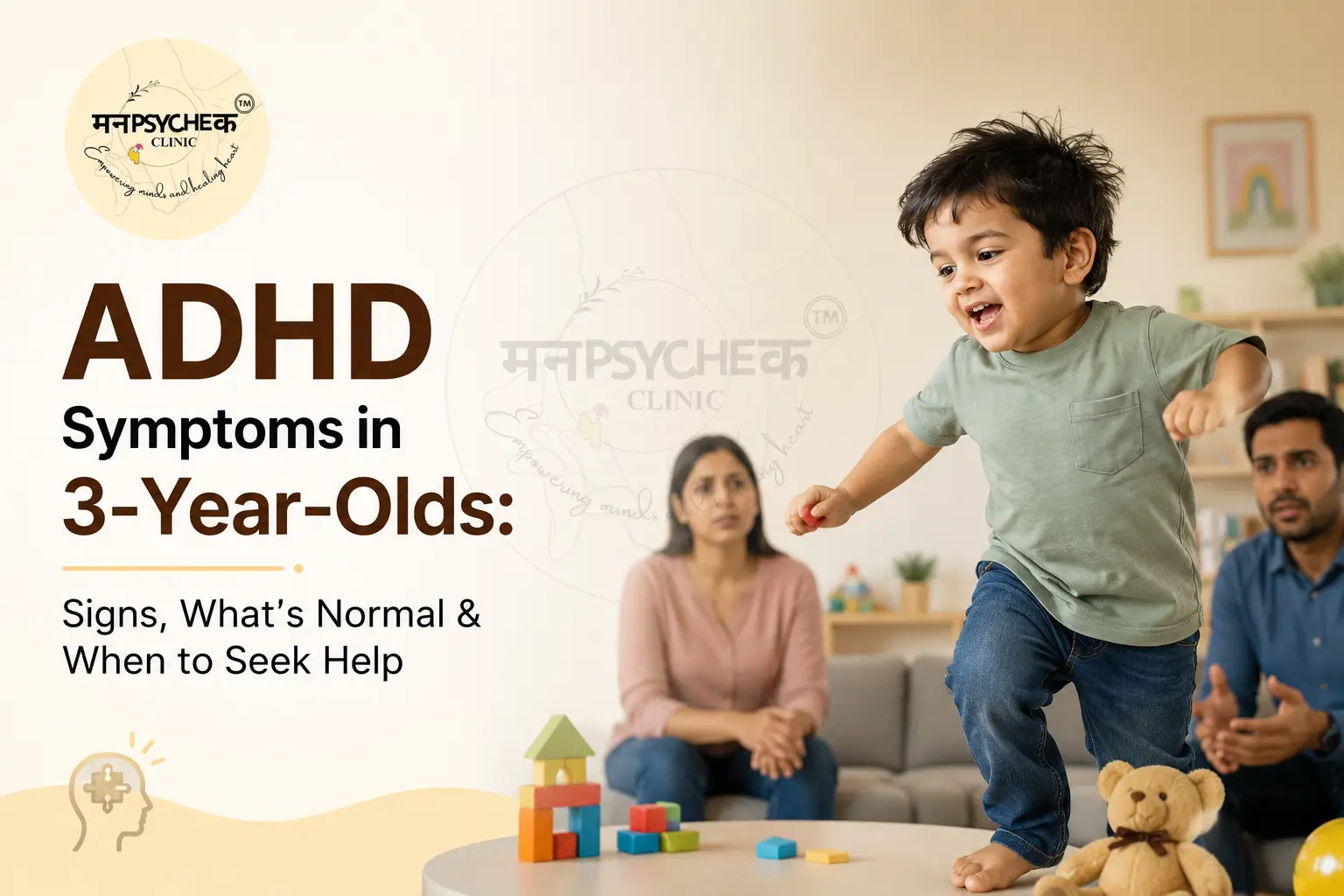
Is your 3-year-old constantly running, climbing, interrupting, refusing instructions, or moving quickly from one activity to another?
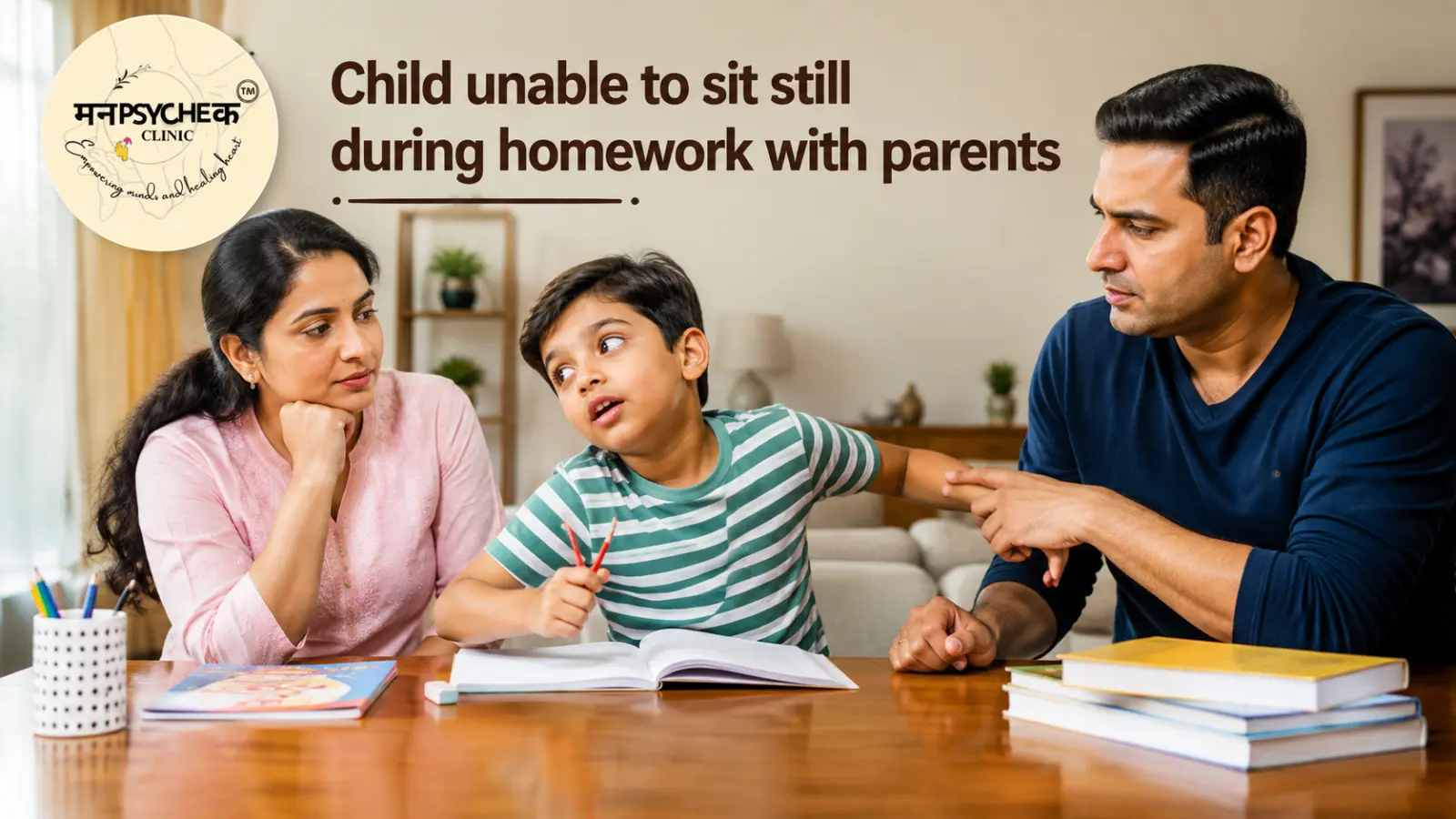
Why Can’t My Child Sit Still? Causes, ADHD Signs & What Parents Can Do
Many parents see these behaviours and wonder:
“Could my child have ADHD?”
At age 3, high energy, short attention spans, impulsive behaviour, and emotional outbursts can all be part of normal development. However, some children experience difficulties that are unusually intense, persistent, or disruptive.
The important question is not simply whether your child is active. It is whether their behaviour is significantly different from that of other children the same age and whether it affects safety, family life, preschool participation, communication, or social development.
Can a 3-Year-Old Have ADHD?
A 3-year-old can display behaviours that resemble ADHD, including:
- Constant movement
- Difficulty waiting
- Frequent interrupting
- Impulsive actions
- Short attention span
- Difficulty following instructions
- Strong emotional reactions
- Difficulty staying with activities
However, these behaviours do not by themselves confirm ADHD.
The American Academy of Pediatrics (AAP) clinical practice guideline addresses ADHD evaluation and treatment beginning at age 4, including specific guidance for preschool-aged children aged 4 to 5. For children younger than 4, there is less evidence to support routine ADHD diagnosis, so significant concerns are better approached through a broader developmental and behavioural assessment.
This does not mean parents of a 3-year-old should simply wait until the child turns 4.
If behaviour is severe, persistent, unsafe, or affecting development and daily functioning, professional guidance can be appropriate now.
The goal at age 3 should not be to force a diagnosis. It should be to understand the child's behaviour and identify the support they need.
What Are ADHD-Like Behaviours in a 3-Year-Old?
A 3-year-old may show excessive activity, impulsivity, difficulty waiting, frequent distraction, or difficulty following instructions.
The challenge is that many of these behaviours are also developmentally common at this age.
Professionals therefore consider:
- How intense the behaviour is
- How often it occurs
- How long it has been present
- Whether it occurs in more than one setting
- Whether it is different from what is expected for the child's developmental level
- Whether it causes meaningful impairment or safety concerns
- Whether another developmental, emotional, medical, or environmental factor could explain the behaviour
An online checklist cannot determine whether a 3-year-old has ADHD.
Possible Signs of ADHD-Like Behaviour
1. Unusually intense activity
Many 3-year-olds run, climb, jump, and move frequently.
Concern may increase when a child:
- Appears almost constantly active
- Rarely engages in quiet play
- Repeatedly climbs unsafe objects
- Leaves almost every activity very quickly
- Has extreme difficulty remaining at the table even briefly
- Continues excessive activity despite being tired
- Is significantly more active than children of a similar age
Being energetic does not automatically mean ADHD.
Professionals look at the child's overall developmental pattern and whether the level of activity is unusually intense, persistent, and impairing.
2. Difficulty sustaining attention
Short attention spans are common at age 3.
However, it may be worth discussing your concerns with a professional if your child:
- Rarely stays with even enjoyable activities
- Has extreme difficulty listening to a short story
- Moves constantly between toys without engaging with them
- Has difficulty engaging with adults during simple activities
- Loses interest in almost everything within moments
Attention should always be considered in context.
For example, a child who can focus for a reasonable period on building blocks, drawing, puzzles, or a favourite game but struggles with adult-directed activities does not necessarily have an attention disorder.
3. Impulsive behaviour
Impulsivity involves acting quickly without adequately considering consequences.
Examples may include:
- Running into unsafe areas
- Grabbing objects or toys
- Frequently interrupting
- Struggling to wait
- Touching everything nearby
- Taking toys from other children
- Finding it very difficult to stop once excited
Some impulsivity is expected at age 3.
It becomes more concerning when it is unusually frequent, intense, unsafe, difficult to manage, and associated with significant difficulties across settings.
4. Difficulty following instructions
A child may appear to ignore parents or teachers.
Before assuming ADHD, consider:
- Does your child understand the instruction?
- Is the instruction short and clear?
- Could there be a hearing or language difficulty?
- Is your child tired or hungry?
- Are they deeply involved in play?
- Can your child follow similar instructions in other situations?
Difficulty following instructions is a behaviour worth understanding, but it is not proof of ADHD.
Normal Toddler Behaviour vs Concerning Behaviour
| Behaviour | Often normal at age 3 | Worth discussing with a professional when... |
|---|---|---|
| Running around | Frequent physical activity is common | Activity is extreme, persistent, or unsafe |
| Short attention span | Brief attention is expected | Child rarely focuses even on enjoyable activities |
| Interrupting | Developmentally common | It happens constantly and causes significant problems |
| Emotional outbursts | Common at this age | Episodes are unusually intense, prolonged, or frequent |
| Difficulty waiting | Expected | Waiting remains extremely difficult even with appropriate adult support |
| Not following instructions | Common | Difficulty continues despite simple, appropriate instructions |
| Climbing | Common | It repeatedly creates serious safety risks |
| Changing activities | Common | Almost no activity can be sustained |
The overall developmental pattern matters more than one isolated behaviour.
Could It Be ADHD or Something Else?
ADHD-like behaviour can have several possible explanations.
A comprehensive assessment may consider:
Sleep difficulties
Poor sleep can contribute to irritability, emotional dysregulation, increased activity, and difficulties with attention.
If your child snores heavily, wakes frequently, has difficulty sleeping, or appears unusually tired during the day, discuss this with a pediatrician.
Language or communication difficulties
A child who does not fully understand what adults are saying may appear inattentive, defiant, or uncooperative.
Communication difficulties should therefore be considered before interpreting behaviour as ADHD.
Hearing or vision problems
Difficulty hearing or seeing can affect how a child responds to adults and participates in activities.
Autism or other developmental differences
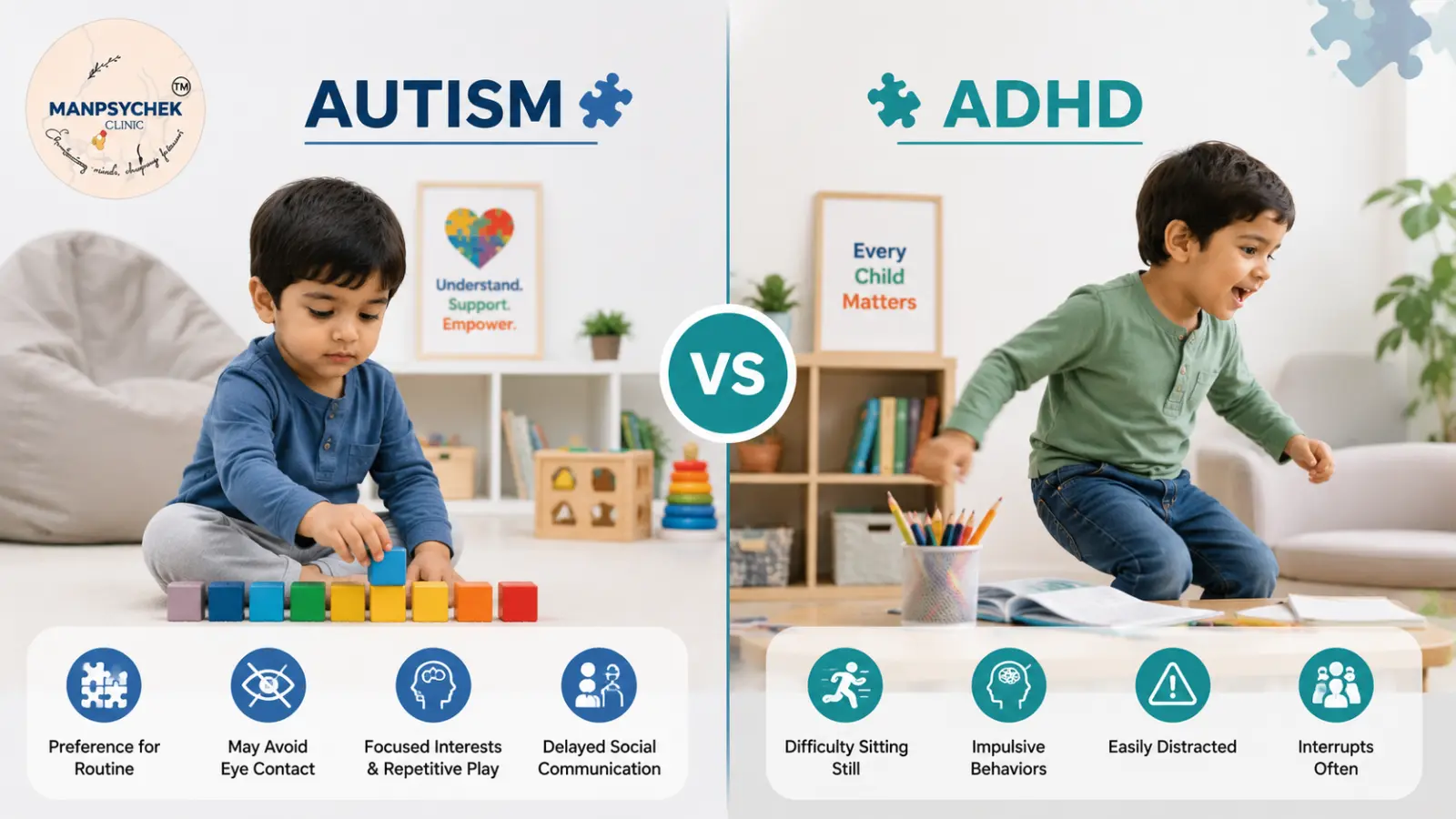
Autism and other developmental differences can involve difficulties with social interaction, shifting attention, repetitive behaviours, restricted interests, or differences in sensory responses.
These concerns require a broader developmental assessment rather than an ADHD checklist alone.
Anxiety or emotional stress
An anxious or emotionally overwhelmed child may appear restless, distracted, avoidant, or unusually emotional.
Sensory differences
Some children may seek movement or physical stimulation because they respond differently to sensory input.
A professional assessment can help determine whether sensory factors are contributing to the child's behaviour.
Environmental factors
Major family changes, inconsistent routines, excessive demands, limited structure, or a highly distracting environment can also affect behaviour.
This is why professional assessment should consider the child's overall development, environment, communication, sleep, behaviour, and functioning rather than focusing on ADHD symptoms alone.
Why Age 3 Requires Extra Caution
At age 3, children are still developing:
- Self-control
- Emotional regulation
- Waiting skills
- Sustained attention
- Flexible behaviour
- Social problem-solving
- Ability to follow multi-step instructions
They naturally require considerable adult support.
It is important not to treat every immature behaviour as a disorder.
At the same time, parents should not automatically dismiss persistent and severe difficulties by assuming the child will definitely "grow out of it."
Early support can be helpful even when a formal ADHD diagnosis is not appropriate.
When Should Parents Seek Professional Help?
Consider seeking developmental or behavioural guidance if:
- Your child is significantly more active than peers.
- Behaviour repeatedly creates safety risks.
- Difficulties occur at home and preschool.
- Your child cannot participate in age-appropriate activities.
- Communication or social development is also concerning.
- Behaviour causes significant family stress.
- Your child is frequently excluded from play or preschool activities.
- Significant sleep problems are present.
- Difficulties continue despite consistent routines and appropriate parenting strategies.
- You do not need to wait until your child turns 4 before asking for help.
For a 3-year-old, the assessment may focus on development, behaviour, communication, emotional regulation, adaptive functioning, and environmental factors rather than immediately assigning an ADHD diagnosis.
How Is ADHD or Developmental Difficulty Assessed?
There is no single blood test, brain scan, or questionnaire that diagnoses ADHD.
A professional assessment may include:
- Developmental and medical history
- Pregnancy and birth history where relevant
- Speech and language review
- Sleep and behaviour history
- Parent interview
- Observation of the child
- Preschool or caregiver feedback
- Cognitive and developmental assessment where appropriate
- Social and adaptive functioning assessment
- Screening for hearing, language, anxiety, autism, and other developmental concerns
Information from more than one setting can be particularly useful.
A child may behave very differently at home, preschool, and in a clinical setting.
The assessment should therefore look at the whole child, not just a list of ADHD symptoms.
What Support Is Available?
For young children with significant behavioural difficulties, parent training in behaviour management is an important evidence-based intervention.
Current guidance recommends behaviour therapy, particularly parent training, as the first-line treatment approach for children under 6 who have ADHD.
Parents may learn how to:
- Give short, clear instructions
- Reinforce positive behaviour
- Establish predictable routines
- Reduce unnecessary conflict
- Use consistent consequences
- Break larger tasks into smaller steps
- Respond calmly to difficult behaviour
- Encourage appropriate communication
- Provide appropriate choices
- Reinforce desired behaviour consistently
For children under 5 with ADHD, NICE also recommends an ADHD-focused parent-training programme as first-line treatment.
Medication decisions should always be made by an appropriately qualified medical professional following an individual assessment. For young children, behaviour therapy and parent training are generally prioritized before medication is considered.
Practical Strategies for Home
Give one instruction at a time
Instead of saying:
"Put your toys away, wash your hands and come for dinner."
Try:
"Put the blocks in the box."
Then give the next instruction.
Use simple language
Long explanations can be difficult for a 3-year-old to process.
Instead of:
"How many times have I told you not to run around during dinner?"
Try:
"Feet on the floor."
Keep instructions short, clear, and specific.
Praise positive behaviour
Notice and praise the behaviour you want to see.
For example:
"You sat at the table. Well done."
Specific praise helps children understand exactly what they did well.
Create predictable routines
Consistent routines for waking, meals, play, bath, and bedtime can reduce confusion and unnecessary conflict.
Reduce distractions
Turn off unnecessary background television, move closer to your child, and make sure they are attending to you before giving an important instruction.
Use visual schedules
A simple picture routine can help a young child understand what happens next:
Wake → Brush → Breakfast → Dress → School
Protect sleep
Adequate sleep supports attention, mood, and emotional regulation.
Discuss ongoing or significant sleep problems with your child's pediatrician.
Avoid physical punishment
Hitting, shouting, or humiliating a child may stop behaviour temporarily, but it does not teach the child what to do instead.
Effective behaviour support focuses on teaching appropriate behaviour, reinforcing positive responses, and responding consistently.
What Parents Should Ask Instead of "Does My Child Have ADHD?"
Sometimes the most useful question is not:
"Does my child have ADHD?"
but:
"What is contributing to my child's difficulty?"
A child's behaviour may be influenced by communication difficulties, autism, sleep problems, anxiety, sensory differences, developmental differences, environmental factors, or ADHD.
A comprehensive child-development assessment can help identify the child's underlying needs and guide appropriate support.
Support at MannpsycheK
At MannpsycheK, assessment and intervention are tailored to each child's developmental needs.
Depending on the child's concerns, support may include:
- Child psychological assessment
- Developmental assessment
- Behaviour therapy
- Parent training
- ADHD assessment when developmentally appropriate
- Speech and language support
- ABA-based intervention where clinically appropriate
- Autism assessment and intervention
- Special education
- Learning assessment
- Social skills training
- School-based recommendations
The purpose is not simply to provide a label.
It is to understand what the child is struggling with, why the difficulty may be occurring, and what practical support can help.
If you are concerned about your child's attention, activity level, communication, behaviour, or development, MannpsycheK in Dwarka, Delhi can help you determine what type of assessment or support may be appropriate.
Frequently Asked Questions
Q1. Can a 3-year-old have ADHD?
A1. A 3-year-old can show significant behaviours associated with ADHD, but routine ADHD evaluation guidelines focus on children aged 4 and older. For children under 4, significant behavioural concerns are generally better approached through a broader developmental and behavioural assessment.
If behaviour is severe, persistent, unsafe, or affecting family life, preschool participation, communication, or development, seek professional guidance rather than waiting for a particular birthday.
Q2. What are the early signs of ADHD in a 3-year-old?
A2. Possible ADHD-like behaviours include unusually high activity, frequent impulsivity, difficulty waiting, constant movement, difficulty following instructions, and difficulty sustaining attention.
However, these behaviours can also be normal at age 3. Professionals therefore consider their intensity, persistence, developmental appropriateness, impact, and occurrence across settings.
Q3. How do I know if my child is hyperactive or simply active?
A3. An active 3-year-old may still engage in enjoyable activities, respond to adult support, follow simple instructions, and settle at appropriate times.
Concern increases when activity is unusually intense, persistent, unsafe, and disruptive compared with other children of a similar developmental level.
Q4. When should I seek professional help for my 3-year-old?
A4. Consider seeking professional guidance when behaviour creates safety risks, significantly affects family life or preschool, interferes with age-appropriate activities, or occurs alongside concerns about communication, social development, sleep, or emotional regulation.
You do not need to wait for a formal ADHD diagnosis before seeking developmental support.
Q5. What treatment is recommended for young children?
A5. For young children with ADHD, behaviour therapy—particularly evidence-based parent training in behaviour management—is generally recommended as the first-line treatment approach. Medication decisions should be made by an appropriately qualified medical professional following careful assessment.
What Parents Should Remember
If your 3-year-old is constantly moving, interrupting, struggling to follow instructions, or having difficulty settling, do not panicmbut do not automatically dismiss your concerns either.
Many behaviours that resemble ADHD can be part of normal development.
However, persistent and unusually intense difficulties deserve attention when they affect:
- Safety
- Family life
- Preschool
- Communication
- Social interaction
- Daily routines
- Learning and development
The right response is neither:
"My child definitely has ADHD."
nor:
"They will definitely grow out of it."
A better approach is:
Understand the behaviour. Assess development. Identify contributing factors. Support the child early.
If your child's behaviour is becoming difficult to manage, you do not need to wait for a diagnosis before seeking guidance.
MannpsycheK — K.S. MannpsycheK, Dwarka Mor, Delhi
Services may include child psychological assessment, developmental assessment, behaviour therapy, parent training, speech therapy, special education, autism support, and ADHD assessment when developmentally appropriate.
About the Author
Dr. Saurav D. S. Dogra
Psychologist | Special Educator | Behaviour Therapist | PHD Scholar
MannpsycheK, Dwarka, Delhi
This article is intended for educational purposes and does not replace an individual psychological, developmental, or medical assessment.
Last updated: August 2026