Home › Learning Difficulties & Academic Performance › Why Does My Child Avoid Homework? Signs Parents Should Not Ignore
Why Does My Child Avoid Homework? Signs Parents Should Not Ignore

My Child Refuses to Do Homework Every Day – Is It Laziness or Something More?
Every evening, the same battle begins.
ADHD Symptoms in 3-Year-Olds: Signs, What’s Normal & When to Seek Help
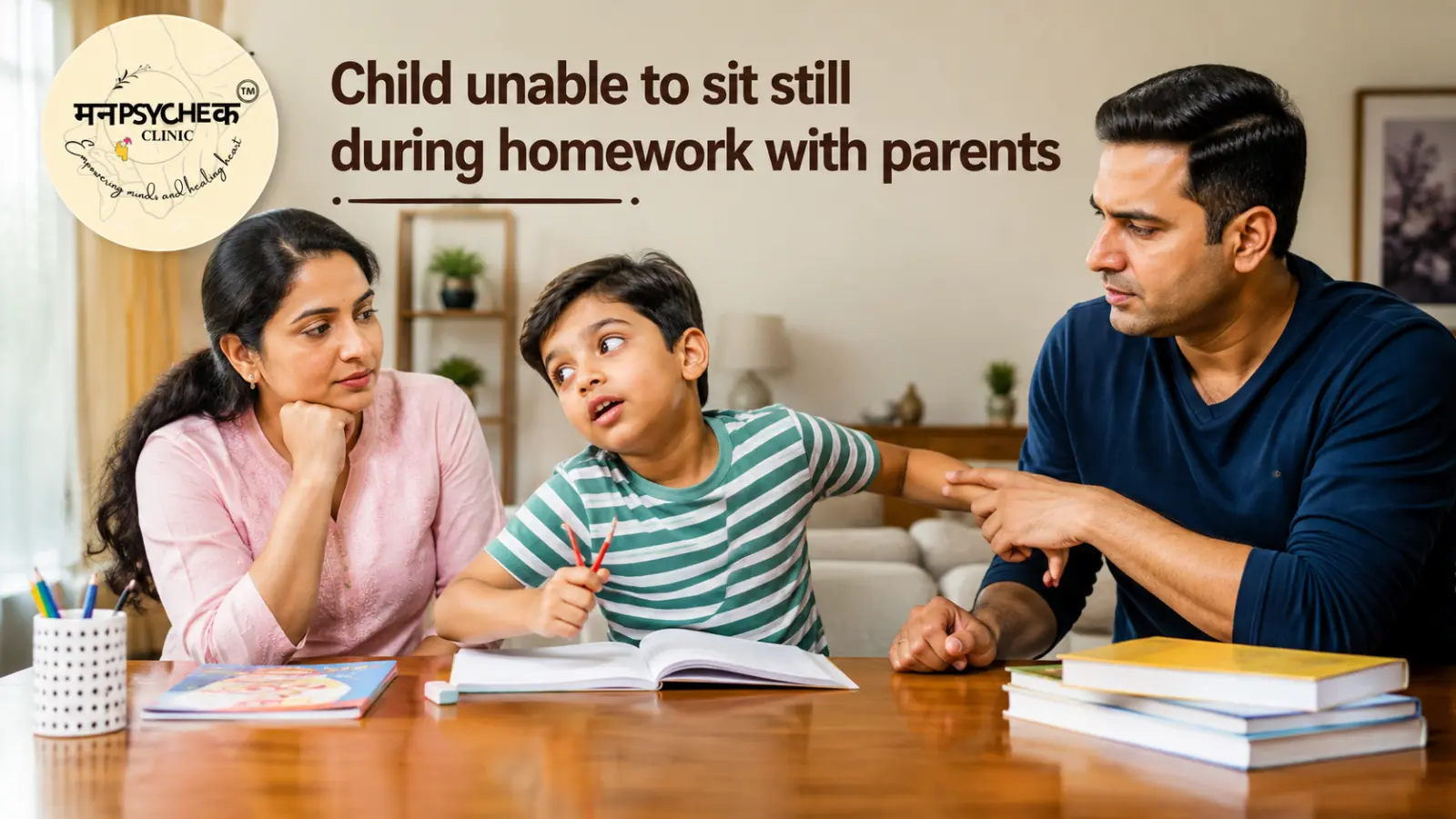
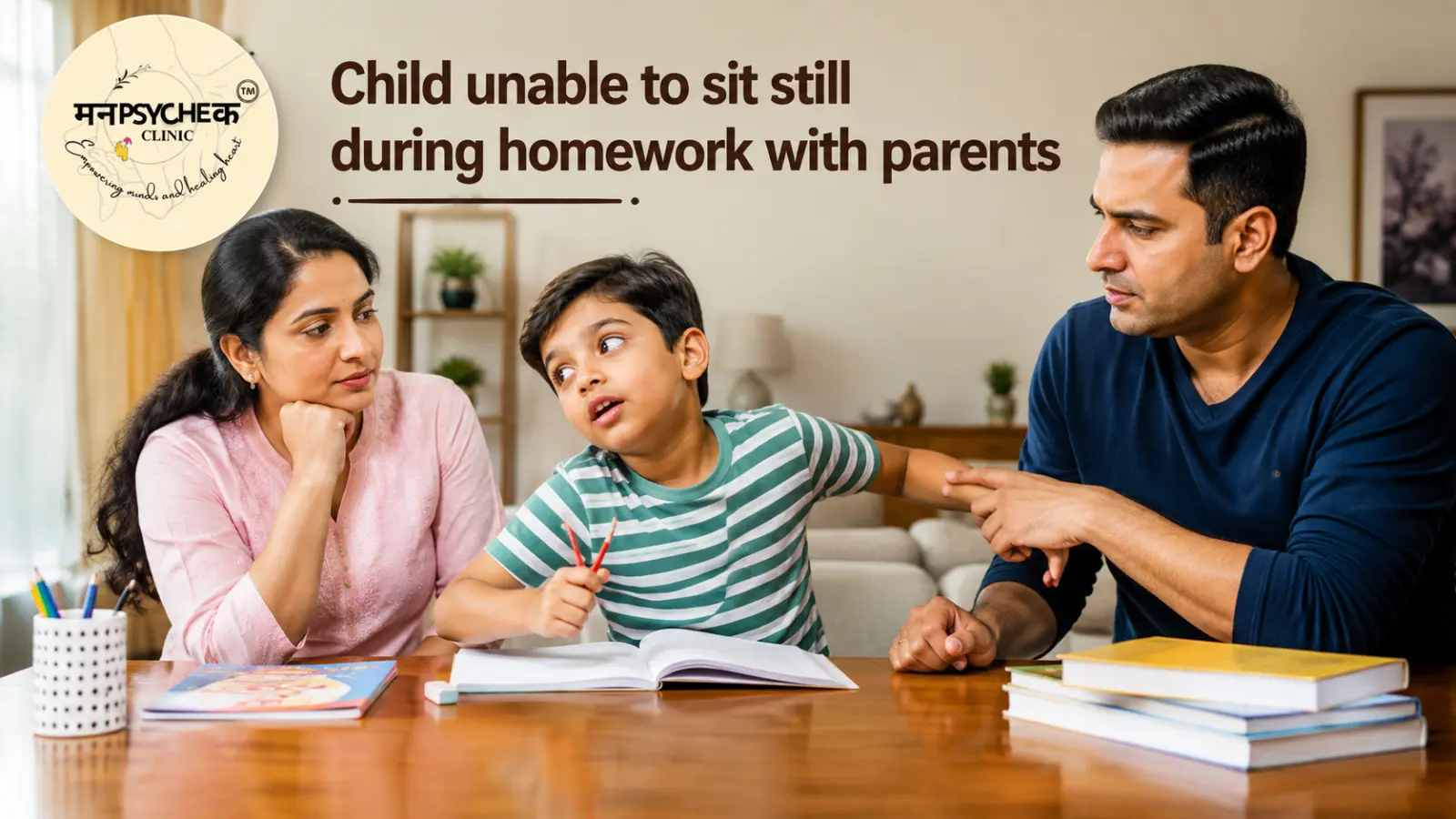
Why Can't My Child Sit Still? Causes, ADHD Signs & What Parents Can Do
You ask your child to sit for homework, and suddenly:
- They need water.
- They need the washroom.
- They become tired.
- They start arguing.
- They get distracted.
- They cry.
They complain of headaches or stomach aches.
Many parents become frustrated and ask:
- "Why does my child hate homework?"
- "Is my child lazy?"
- "Why does homework take hours?"
- "My child understands in class but refuses homework."
- "Could this be ADHD or a learning disability?"
These concerns are extremely common.
In fact, homework problems are one of the leading reasons parents seek support from a child psychologist in Dwarka, a special educator, or a child development centre in Dwarka.
The important thing to understand is this:
Children rarely avoid homework without a reason.
The behaviour you see is often a symptom of a deeper challenge.
Is My Child Being Lazy?
This is usually the first assumption parents make.
However, genuine laziness is often overestimated.
Ask yourself:
Does your child:
- Spend hours building Lego?
- Remember every cricket statistic?
- Focus on video games for long periods?
- Learn complex YouTube content?
If yes, motivation may not be the real issue.
The question becomes:
Why is homework different?
Understanding that answer is the key to solving the problem.
Common Reasons Children Avoid Homework
Several factors can contribute.
1. The Work Is Too Difficult
Many children avoid tasks that feel overwhelming.
If a child consistently struggles academically, homework can become emotionally exhausting.
Instead of feeling successful, they experience:
- Frustration
- Failure
- Embarrassment
- Stress
Avoidance becomes a coping strategy.
2. Learning Disabilities
A learning disability is one of the most overlooked causes of homework resistance.
Children with learning difficulties often work harder than their peers while achieving fewer results.
Common learning disabilities include:
Dyslexia
Difficulty with reading and spelling.
Dysgraphia
Difficulty with writing and written expression.
Dyscalculia
Difficulty understanding mathematics.
When every homework session feels like a struggle, avoidance becomes understandable.
Signs of Learning Difficulties
Parents may notice:
- Slow reading
- Poor spelling
- Homework taking unusually long
- Difficulty following written instructions
- Frequent mistakes despite effort
- Academic performance below expectations
These signs deserve professional attention.
3. ADHD and Homework Problems
ADHD is one of the most common reasons children struggle with homework.
Children with ADHD may:
- Get distracted easily
- Forget instructions
- Lose materials
- Start tasks but not finish them
- Avoid lengthy assignments
Parents often say:
"My child knows the answer but won't sit and do the work."
This is often related to attention and executive functioning rather than intelligence.
What Are Executive Function Skills?
These are the brain's management skills.
They help children:
- Plan tasks
- Stay organized
- Focus attention
- Manage time
- Complete work
Children with ADHD often struggle in these areas, making homework particularly challenging.
4. Anxiety and Homework Avoidance
Many parents are surprised to learn that anxiety can affect homework.
An anxious child may:
- Fear making mistakes
- Avoid difficult subjects
- Become perfectionistic
- Delay starting assignments
Some children appear unmotivated when they are actually afraid of failure.
Signs Homework Problems May Be Linked to Anxiety
Watch for:
- Excessive worry
- Frequent reassurance-seeking
- Emotional breakdowns during homework
- Fear of tests
- Avoiding challenging tasks
These children often need emotional support, not pressure.
5. Poor Attention and Concentration
Children who struggle to concentrate often find homework exhausting.
Common signs include:
- Daydreaming
- Easily distracted
- Difficulty staying seated
- Forgetting instructions
- Frequent mistakes
Parents often mistake attention problems for laziness.
6. Lack of Sleep
Sleep is essential for:
- Memory
- Learning
- Attention
- Emotional regulation
- Children who are tired often appear:
- Unmotivated
- Irritable
- Distracted
Improving sleep can significantly improve homework performance.
Parent Mistakes That Can Make Homework Problems Worse
Most parents make these mistakes because they are worried about their child's future.
Mistake 1: Labeling the Child as Lazy
Statements such as:
- "You're lazy."
- "You never try."
- "You don't care."
can damage confidence and motivation.
Focus on understanding the underlying problem.
Mistake 2: Turning Homework Into a Daily Battle
Constant conflict can create negative associations with learning.
Children begin to see homework as a source of stress rather than growth.
Mistake 3: Comparing Your Child to Others
Statements like:
- "Your cousin finishes in 20 minutes."
- often increase shame and anxiety.
- Every child learns differently.
Mistake 4: Doing the Homework for Them
While tempting, this prevents children from developing independence and problem-solving skills.
Practical Strategies Parents Can Use
Create a Homework Routine
Consistency helps children know what to expect.
Choose a regular:
- Time
- Location
- Structure
for homework each day.
Break Tasks Into Smaller Parts
- Large assignments can feel overwhelming.
- Divide work into manageable steps.
- Small successes build confidence.
Use Visual Schedules
Visual reminders help children stay organized and focused.
Reduce Distractions
During homework:
- Turn off television
- Limit mobile phone use
- Create a quiet workspace
Attention improves learning.
Focus on Effort, Not Perfection
Praise:
- Persistence
- Hard work
- Problem-solving
rather than only correct answers.
When Should Parents Seek Professional Help?
Consider professional evaluation if:
- Homework battles occur daily
- Academic performance is declining
- ADHD symptoms are present
- Learning difficulties are suspected
- Anxiety affects schoolwork
- Teachers report concerns
- Homework takes significantly longer than expected
Early intervention often prevents long-term academic frustration.
How a Child Psychologist in Dwarka Can Help
A child psychologist in Dwarka can assess:
- ADHD symptoms
- Learning difficulties
- Anxiety
- Emotional regulation
- Academic concerns
- Behavioural challenges
Assessment helps identify why homework has become difficult.
Learning Disability Assessment in Dwarka
Parents searching for:
- Learning disability assessment Dwarka
- Child psychologist Dwarka
- Child development centre Dwarka
- ADHD assessment Dwarka
- Special educator Dwarka
often benefit from comprehensive evaluation and support.
Services may include:
- Psychoeducational Assessment
- Behaviour Therapy
- Parent Counseling
- Academic Support Planning
- Special Education
- Attention and Executive Function Assessment
Why Families Choose KS Mannpsyche India Private Limited
Many families seek support when their child experiences:
- Homework problems
- Learning difficulties
- ADHD symptoms
- Concentration issues
- Academic stress
- School-related anxiety
At KS Mannpsyche India Private Limited, services include:
- Child Psychology Consultation
- Learning Difficulty Assessment
- ADHD Support Programs
- Behaviour Therapy
- Parent Counseling
- Special Education Support
- Developmental Assessment
Under the guidance of Saurav , RCI Certified Psychologist and Behaviour Therapist, families receive evidence-based intervention plans designed to improve learning, confidence, attention, and academic success.
Final Thoughts
When a child avoids homework, the issue is not always motivation.
Sometimes the real challenge is:
- ADHD
- Anxiety
- Learning difficulties
- Poor attention
- Academic frustration
Instead of asking:
"Why won't my child do homework?"
Try asking:
"What is making homework so difficult for my child?"
That single shift in perspective often leads to better solutions.
The earlier difficulties are identified, the easier it becomes to support children academically and emotionally.
Frequently Asked Questions
Q1. Why does my child avoid homework every day?
A1. Homework avoidance may be related to learning difficulties, ADHD, anxiety, attention problems, or academic frustration rather than laziness.
Q2. How do I know if my child is lazy or has a learning disability?
A2. Children with learning disabilities often struggle despite effort. Professional assessment can help identify the underlying cause.
Q3. Can ADHD cause homework problems?
A3. Yes. ADHD affects attention, organization, working memory, and task completion, all of which can make homework difficult.
Q4. Can anxiety make children avoid homework?
A4. Yes. Fear of mistakes, perfectionism, and academic pressure can lead to homework avoidance.
Q5. When should I consult a child psychologist in Dwarka?
A5. Consider professional support if homework difficulties are persistent, affecting school performance, or occurring alongside ADHD symptoms, anxiety, or learning concerns.
Author:
RCI Certified Psychologist
Saurav Deep is an RCI Certified Psychologist and Behaviour Therapist based in Dwarka, New Delhi. He specializes in child psychology, behavioural therapy, ADHD management, autism support, anxiety counseling, stress management, and family guidance. Through KS Mannpsyche India Private Limited, he provides both online and offline psychological services to children, adolescents, and adults.