Home › Guidance For Parents › Why Is My Child Always Angry? 10 Reasons Parents Should Know
Why Is My Child Always Angry? 10 Reasons Parents Should Know
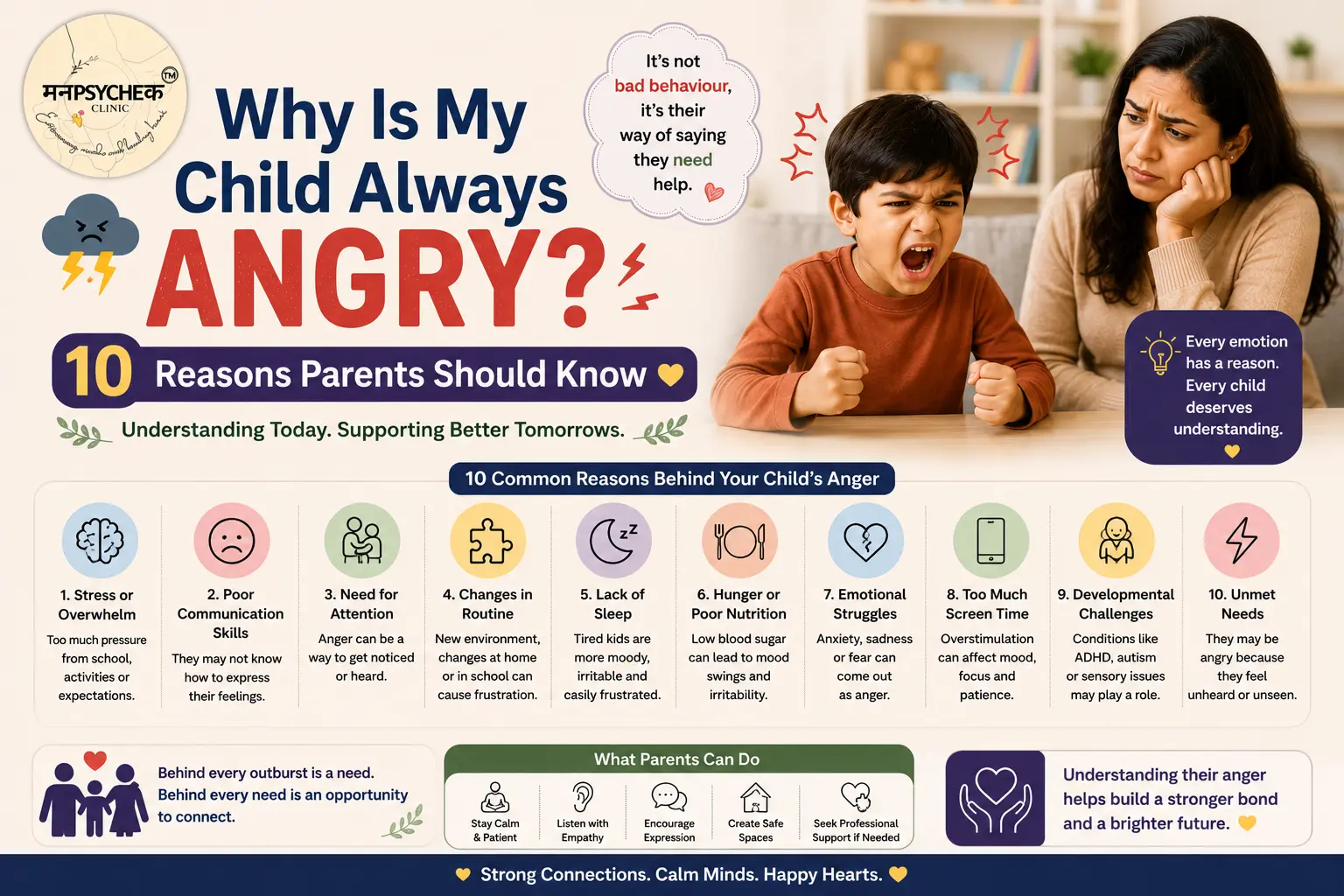
Many parents feel exhausted by the same daily struggle:
Why Is My Child Suddenly Not Talking? Causes, Warning Signs & Treatment
- My child gets angry over everything.
- Why does my child shout so much?
- Why is my child always irritated?
- My child becomes aggressive when things don't go their way.
- Is this normal behaviour or something more serious?
Every child experiences anger. It is a normal human emotion. However, when anger becomes frequent, intense, or starts affecting relationships, school performance, and family life, it is important to understand what may be causing it.
The good news is that anger is usually a signal, not the real problem. Most angry children are actually struggling with something underneath the behaviour.
In this guide, we'll explore why children get angry, warning signs parents should watch for, and practical ways to help.
Is It Normal for Children to Get Angry?
Yes.
Children are still learning how to:
- Manage emotions
- Handle disappointment
- Solve problems
- Express feelings appropriately
Young children often lack the emotional skills needed to cope with frustration.
Occasional anger is a normal part of development.
The concern arises when:
- Anger happens daily
- The child becomes aggressive
- School performance is affected
- Relationships suffer
- Parents feel unable to manage behaviour
1. Your Child May Not Know How to Express Emotions
Many children struggle to communicate feelings such as:
- Sadness
- Fear
- Anxiety
- Embarrassment
- Disappointment
Instead of expressing those emotions verbally, they show anger.
Parents often see the anger but miss the emotion hiding underneath.
2. Frustration Tolerance Is Low
Some children become upset very quickly when:
- They lose a game
- They hear "no"
- Things don't happen immediately
- They make mistakes
These children often have difficulty managing frustration and may need help developing coping skills.
3. Excessive Screen Time
Parents searching for:
- mobile addiction in children
- screen time effects on child development
- child behaviour problems
often notice increased irritability and emotional outbursts.
Children who spend excessive time on mobile phones, gaming, or videos may struggle with:
- Patience
- Emotional regulation
- Delayed gratification
This can increase anger and frustration.
4. Lack of Sleep
Sleep has a significant impact on emotional regulation.
Children who do not get enough sleep may become:
- Irritable
- Emotional
- Aggressive
- Easily frustrated
Poor sleep is one of the most overlooked causes of anger in children.
5. ADHD and Emotional Outbursts
Many children with ADHD struggle with:
- Impulsivity
- Emotional regulation
- Frustration tolerance
Parents often describe:
"My child goes from calm to angry within seconds."
Other ADHD symptoms may include:
- Hyperactivity
- Poor attention
- Forgetfulness
- Difficulty following instructions
6. Anxiety Can Look Like Anger
Many parents assume anxious children appear fearful or quiet.
In reality, anxiety can sometimes appear as:
- Irritability
- Defiance
- Emotional outbursts
- Frequent arguments
A child who feels overwhelmed may react with anger rather than fear.
7. Difficulty Managing Changes and Expectations
Some children become angry when:
- Routines change
- Plans change unexpectedly
- Rules feel unfair
- Transitions occur
This is especially common among children who prefer structure and predictability.
8. Social Difficulties
Children who struggle with:
- Friendships
- Bullying
- Social rejection
- Peer conflict
may bring those emotions home.
Parents often see anger without realizing the child is struggling socially.
9. Autism and Emotional Regulation Challenges
Children with autism sometimes experience difficulties with:
- Communication
- Sensory processing
- Understanding emotions
- Coping with change
Anger may be triggered by situations that others find manageable.
Parents searching for autism therapy in Dwarka often report frequent emotional outbursts before receiving support.
10. Family Stress and Environmental Factors
Children are highly sensitive to their environment.
Stressors such as:
- Family conflict
- Academic pressure
- Frequent criticism
- Major life changes
can contribute to emotional difficulties and increased anger.
Warning Signs Parents Should Not Ignore
Consider professional guidance if your child:
- Has daily anger outbursts
- Becomes physically aggressive
- Damages property
- Struggles at school
- Has difficulty making friends
- Frequently argues with adults
- Shows signs of anxiety or ADHD
- Experiences emotional difficulties that interfere with daily life
Early support often prevents problems from becoming more severe.
What Parents Should Avoid
When children become angry, parents often respond with strategies that unintentionally make the situation worse.
Avoid:
❌ Shouting back
❌ Long lectures during a meltdown
❌ Public humiliation
❌ Comparing your child with others
❌ Using anger to control anger
Children learn emotional regulation from the adults around them.
What Actually Helps?
1.Stay Calm
Your calmness helps regulate your child's nervous system.
2.Validate Feelings
You do not have to agree with the behaviour.
Instead of:
"Stop crying."
Try:
"I can see you're upset."
3.Teach Problem-Solving
Help children learn:
How to identify emotions
How to ask for help
How to cope with frustration
4.Create Predictable Routines
Structure often reduces emotional outbursts.
5.Limit Excessive Screen Time
Healthy routines support emotional regulation.
When Should Parents Seek Professional Help?
If anger is:
- Frequent
- Intense
- Affecting family life
- Impacting school performance
- Associated with ADHD symptoms
- Linked to anxiety or developmental concerns
a professional assessment may be beneficial.
A qualified child psychologist in Dwarka can help identify the underlying cause and create a personalized intervention plan.
How a Child Development Centre Can Help
Parents searching for:
- child psychologist in Dwarka
- behaviour therapy in Dwarka
- ADHD assessment in Dwarka
- child development centre in Dwarka
- autism therapy in Dwarka
often benefit from comprehensive developmental and behavioural support.
Services may include:
- Behaviour Therapy
- Parent Counseling
- Emotional Regulation Training
- ADHD Assessment
- Social Skills Training
- Developmental Assessment
- Child Psychology Services
Why Families Choose KS Mannpsyche India Private Limited
Many families looking for a child psychologist in Dwarka seek support when their child experiences anger, aggression, emotional outbursts, hyperactivity, anxiety, or behavioural difficulties.
At KS Mannpsyche India Private Limited, children receive individualized support through:
- Child Behaviour Therapy
- Parent Guidance Programs
- ADHD Support Services
- Emotional Regulation Programs
- Autism Support Services
- Social Skills Training
- Developmental Assessments
Under the guidance of Saurav Deep, RCI Certified Psychologist and Behaviour Therapist, families receive evidence-based strategies designed to improve emotional regulation, communication, behaviour, and overall child development.
Final Thoughts
When a child becomes angry easily, the anger itself is rarely the whole story.
Behind the behaviour may be frustration, anxiety, attention difficulties, developmental challenges, social struggles, or unmet emotional needs.
Instead of asking:
"How do I stop my child from getting angry?"
a more helpful question is:
"What is my child trying to communicate through this anger?"
Understanding the answer is often the first step toward lasting change.
Frequently Asked Questions
Q1. Why does my child get angry over small things?
A1. Children may have difficulty managing frustration, emotions, anxiety, attention difficulties, or developmental challenges.
Q2. Is anger a sign of ADHD?
A2. Some children with ADHD struggle with emotional regulation and may experience frequent anger outbursts.
Q3. Can excessive screen time cause anger issues?
A3. Excessive screen exposure may contribute to irritability, low frustration tolerance, and emotional dysregulation.
Q4. Should I punish my child for anger outbursts?
A4. Punishment alone rarely addresses the underlying cause. Understanding and teaching emotional regulation is usually more effective.
Q5. Where can I get help for my child's anger issues in Dwarka?
A5. Parents can seek support from a child psychologist in Dwarka or a child development centre in Dwarka for assessment, behaviour therapy, and parent guidance.
Author:
Saurav Deep,
RCI Certified Psychologist
Saurav Deep is an RCI Certified Psychologist and Behaviour Therapist based in Dwarka, New Delhi. He specializes in child psychology, behavioural therapy, ADHD management, autism support, anxiety counseling, stress management, and family guidance. Through KS Mannpsyche India Private Limited, he provides both online and offline psychological services to children, adolescents, and adults.