Home › Guidance For Parents › Why Is My Child Suddenly Not Talking? Causes, Warning Signs & Treatment
Why Is My Child Suddenly Not Talking? Causes, Warning Signs & Treatment
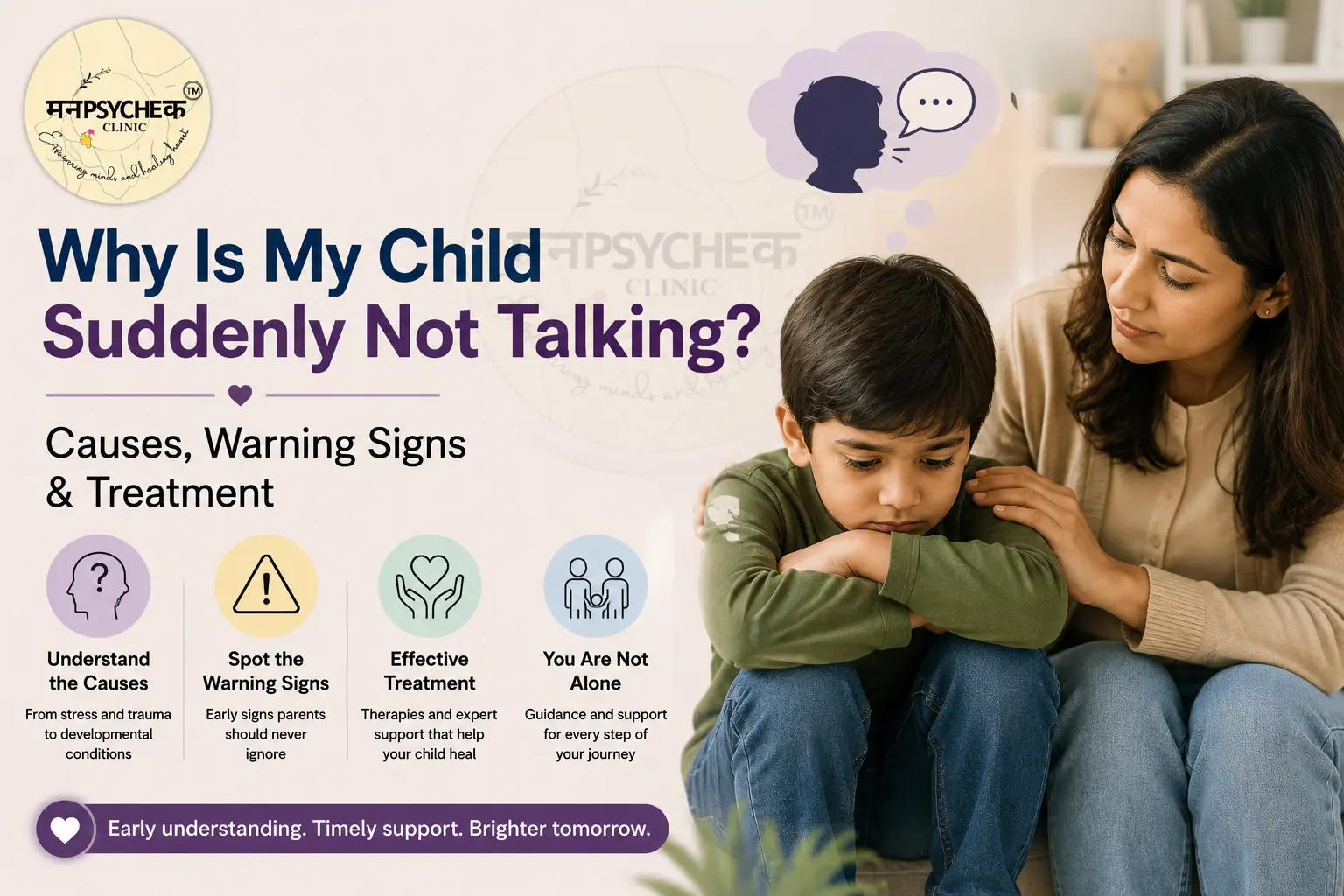
One of the most concerning moments for parents is noticing that their child is not talking as expected—or worse, that a child who was speaking has suddenly stopped using words.
Recommended for youIs My 2 Year Old Showing Signs of Autism? Early Symptoms Parents Should Never Ignore
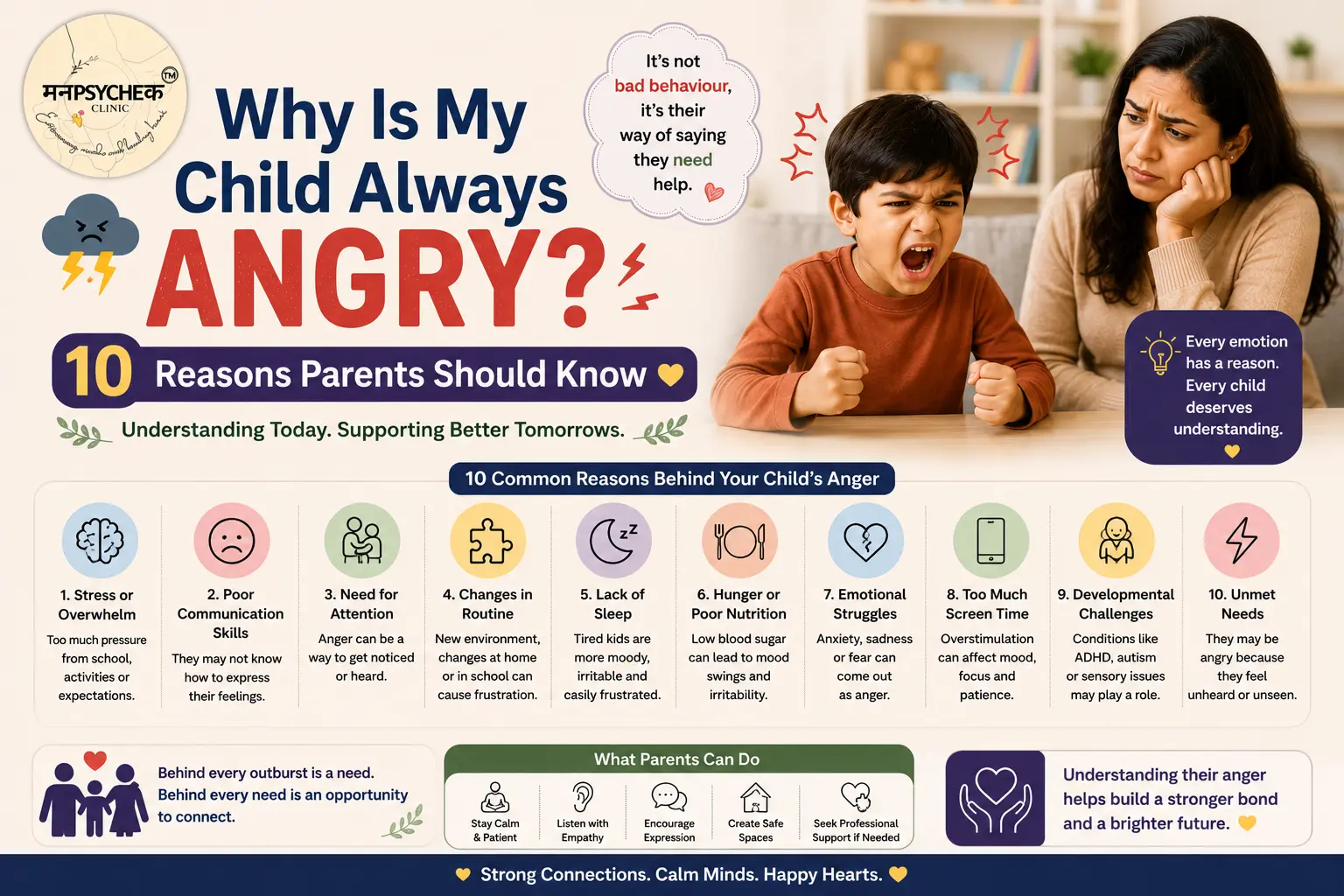
Why Is My Child Always Angry? 10 Reasons Parents Should Know
Questions such as:
- "Why is my child not talking?"
- "Is speech delay normal?"
- "Will my child start talking on their own?"
- "Should I consult a child psychologist?"
are common concerns among parents.
The good news is that speech and language difficulties can often improve significantly when identified early and addressed with the right support.
In this guide, we will explore the causes of speech delay, important warning signs, developmental milestones, and treatment options available for children.
Understanding Speech Delay
Speech delay occurs when a child's speech and language development is slower than expected for their age.
Every child develops at a different pace. However, there are general milestones that help professionals determine whether a child's communication skills are developing appropriately.
A speech delay does not automatically mean a child has a serious condition. However, it should never be ignored, especially if other developmental concerns are present.
Normal Speech Development Milestones
By 12 Months
Most children can:
- Respond to their name
- Babble frequently
- Use gestures such as waving
- Say simple words like "mama" or "dada"
By 18 Months
Most children:
- Use 10–20 words
- Follow simple instructions
- Point to objects they want
By 2 Years
Most children:
- Use 50 or more words
- Combine two-word phrases
- Ask for basic needs verbally
Examples:
- "Want water"
- "Mama come"
- "More juice"
By 3 Years
Most children:
- Speak in short sentences
- Follow multi-step instructions
- Are understood by family members and familiar adults
If your child is significantly behind these milestones, a professional assessment may be helpful.
Why Is My Child Suddenly Not Talking?
Sometimes parents notice a child who previously used words begins speaking less or stops talking altogether.
This situation requires careful evaluation.
Possible reasons include:
1. Speech Delay
Some children naturally develop speech later than peers.
However, persistent speech delay may affect:
- Communication
- Social interaction
- Learning
- Confidence
Early intervention can make a significant difference.
2. Hearing Difficulties
Children learn language by listening.
If a child has:
- Frequent ear infections
- Hearing loss
- Difficulty responding to sounds
speech development may be affected.
A hearing assessment is often one of the first evaluations recommended.
3. Autism Spectrum Disorder (ASD)
Speech delay is one of the early signs of autism in some children.
Additional signs may include:
- Limited eye contact
- Reduced social interaction
- Repetitive behaviours
- Difficulty understanding social cues
- Preference for routines
Not every child with speech delay has autism, but professional assessment can help identify underlying causes.
4. Developmental Delays
Some children experience broader developmental delays affecting:
- Communication
- Motor skills
- Cognitive development
- Social skills
- Early support often leads to better outcomes.
5. Excessive Screen Time
Research suggests excessive passive screen exposure may reduce opportunities for:
- Social interaction
- Conversation
- Language learning
Children learn language most effectively through direct interaction with caregivers.
6. Emotional Stress or Major Life Changes
Children sometimes reduce communication after:
- Moving homes
- Family conflict
- Loss of a loved one
- Significant changes in routine
Emotional difficulties can affect language use and social engagement.
Warning Signs Parents Should Not Ignore
Parents should consider professional evaluation if a child:
By 12 Months
- Does not respond to their name
- Rarely babbles
- Shows limited social engagement
By 18 Months
- Uses very few words
- Does not point or gesture
By 2 Years
- Uses fewer than 50 words
- Does not combine words
By 3 Years
- Is difficult to understand
- Struggles to communicate needs
- Shows limited social communication
At Any Age
- Loses previously acquired language skills
- Stops talking suddenly
- Avoids interaction with others
- Regression in language skills should always be assessed by a professional.
Can Speech Delay Resolve on Its Own?
This is one of the most common questions parents ask.
While some late talkers catch up naturally, waiting too long can delay important intervention.
It is impossible to determine without assessment whether a child is:
- A late talker
- Experiencing a language disorder
- Showing developmental concerns
- Experiencing hearing difficulties
- Displaying autism-related signs
Early evaluation provides clarity and reduces uncertainty.
How Is Speech Delay Evaluated?
Professionals may assess:
- Speech and language skills
- Developmental milestones
- Social communication
- Attention and behaviour
- Play skills
- Hearing ability
A comprehensive assessment helps identify the root cause rather than focusing only on symptoms.
Treatment Options for Speech Delay
The most effective treatment depends on the underlying cause.
Speech Therapy
Helps improve:
- Vocabulary
- Pronunciation
- Communication skills
- Language understanding
Behavioural Intervention
Can support:
- Communication development
- Attention skills
- Social engagement
Parent Training
Parents play a critical role in language development.
Professional guidance helps parents learn strategies to encourage communication throughout daily routines.
Developmental Support Programs
Children with broader developmental challenges may benefit from multidisciplinary intervention programs.
How Parents Can Encourage Language Development at Home
Simple daily activities can support communication growth:
Talk Frequently
Describe everyday activities and encourage interaction.
Read Together
Reading improves vocabulary and language comprehension.
Limit Passive Screen Time
Encourage real-life interaction instead.
Follow Your Child's Interests
Use favourite toys and activities to create communication opportunities.
Encourage Turn-Taking
Practice back-and-forth conversations, even if the child uses gestures or sounds.
When Should You Consult a Child Psychologist?
Parents often assume speech concerns only require speech therapy.
However, communication difficulties may sometimes be linked to:
- Behavioural challenges
- Attention difficulties
- Autism spectrum disorder
- Emotional concerns
- Developmental delays
A qualified child psychologist in Dwarka can assess the child's overall development, behaviour, communication patterns, and emotional functioning to determine appropriate support.
Finding the Right Child Development Centre in Dwarka
When seeking help for speech delay, it is important to choose a centre that offers comprehensive developmental support.
A quality child development centre in Dwarka should provide:
- Developmental assessments
- Child psychology services
- Parent guidance
- Behavioural intervention
- Speech and language support
- Individualized treatment planning
Early intervention services often produce the best outcomes for children experiencing developmental challenges.
Why Families Seek Support from Saurav Deep
Many parents looking for a child psychologist in Dwarka seek professional guidance when concerns arise regarding speech delay, behavioural difficulties, attention problems, autism signs, emotional regulation, or developmental milestones.
Saurav Deep, an RCI Certified Psychologist and Behaviour Therapist, works with children and families to identify developmental concerns, understand behavioural patterns, and create individualized intervention plans.
His areas of focus include:
- Child Behaviour Therapy
- Speech Delay Support Programs
- ADHD Behaviour Management
- Autism Support and Parent Training
- School Readiness Programs
- Social Skills Training
- Parent Guidance and Counseling
- Behaviour Modification Therapy
Through evidence-based assessment and intervention strategies, families receive practical guidance tailored to their child's specific needs.
Final Thoughts
Speech delay can be worrying for parents, but it is important to remember that delayed speech does not automatically mean a serious problem.
What matters most is early identification and appropriate intervention.
If your child is not meeting communication milestones, has stopped talking, or shows signs of developmental difficulties, seeking professional support can provide answers, guidance, and a clear path forward.
The earlier concerns are addressed, the greater the opportunity to support your child's communication, confidence, learning, and overall development.
Frequently Asked Questions
Q1. Is speech delay always a sign of autism?
A1. No. Speech delay can occur for many reasons, including hearing difficulties, developmental delays, language disorders, or environmental factors.
Q2. At what age should I worry about speech delay?
A2. Parents should consider professional evaluation if developmental language milestones are significantly delayed or if language skills regress.
Q3. Can a child with speech delay catch up?
A3. Many children make excellent progress with early intervention and appropriate support.
Q4. Should I consult a child psychologist for speech delay?
A4. A child psychologist can help evaluate developmental, behavioural, emotional, and communication-related factors that may be affecting speech development.
Q5. Where can I find support for speech delay in Dwarka?
A5. Parents may seek assistance from a qualified child psychologist in Dwarka or a multidisciplinary child development centre in Dwarka that provides developmental assessments and intervention services.