Home › Autism › Can Autism Be Detected Before Age 2? Early Signs Every Parent Should Know
Can Autism Be Detected Before Age 2? Early Signs Every Parent Should Know

Answer
Yes, autism can often be detected before age 2. Many children show early signs between 12 and 24 months, including reduced eye contact, delayed speech, limited social interaction, repetitive behaviors, and difficulty responding to their name. Early identification allows families to access intervention and support during a critical period of brain development.
Why Can't My Child Sit Still? Causes, ADHD Signs & What Parents Can Do
Introduction
One of the most common questions parents ask is:
Can autism be detected before age 2?
The short answer is yes.
In many children, early signs of Autism Spectrum Disorder (ASD) can be observed during infancy or toddlerhood. While every child develops differently, some developmental differences may suggest the need for further evaluation.
Parents are often the first people to notice these differences. A baby may seem less interested in faces, respond inconsistently to their name, or show delays in communication.
Recognizing these signs early can help families access assessment and support sooner.
What Is Autism Spectrum Disorder?
Autism Spectrum Disorder (ASD) is a neurodevelopmental condition that affects:
- Social communication
- Social interaction
- Behavior
- Sensory processing
According to DSM-5 criteria, autism is characterized by:
- Persistent differences in social communication and social interaction.
- Restricted, repetitive patterns of behavior, interests, or activities.
- Autism exists on a spectrum, meaning children can present with varying strengths and challenges.
Can Autism Really Be Detected Before Age 2?
Research suggests that autism-related differences can emerge during the first two years of life.
Many developmental specialists can identify warning signs between:
- 12 months
- 18 months
- 24 months
While a definitive diagnosis may be easier as children grow older, developmental screening and evaluation can begin much earlier.
The CDC recommends developmental monitoring and screening throughout early childhood, particularly if concerns arise.
Early Signs of Autism Before Age 2
Social Communication Signs
Limited Eye Contact
Babies typically seek eye contact during feeding, play, and interactions.
A possible warning sign includes:
- Reduced eye contact
- Brief eye gaze
- Avoiding looking at caregivers
Reduced Social Smiling
Most infants smile socially by around 2 months.
Concerns may arise if:
- Social smiles are limited
- Smiles are not shared during interaction
Limited Response to Name
Many babies consistently respond to their name by 9–12 months.
Children showing autism signs may:
- Not turn when called
- Respond inconsistently
Communication Signs
Delayed Babbling
Typical babies experiment with sounds during infancy.
Possible warning signs:
- Limited babbling
- Few vocalizations
- Reduced sound imitation
Delayed Gestures
Gestures help children communicate before words.
Examples include:
- Pointing
- Waving
- Reaching
- Showing objects
Reduced use of gestures may be an early indicator.
Behavioral Signs
Repetitive Behaviors
Examples include:
- Hand flapping
- Rocking
- Repetitive movements
- Spinning objects
Unusual Play Patterns
A child may:
- Focus on parts of toys
- Repeatedly spin wheels
- Line up objects
Sensory Differences
Some children may be unusually sensitive to:
- Sounds
- Lights
- Textures
- Smells
Others may actively seek sensory stimulation.
Early Autism Signs by Age
6–12 Months
Possible signs:
- Limited eye contact
- Reduced social smiling
- Less interest in people
- Few vocalizations
12–18 Months
Possible signs:
- Doesn't point
- Doesn't wave
- Limited imitation
- Doesn't consistently respond to name
18–24 Months
Possible signs:
- Delayed speech
- Lack of pretend play
- Repetitive behaviors
- Difficulty interacting socially
Why Early Detection Matters
The brain develops rapidly during the first years of life.
Early identification can help children receive:
- Speech Therapy
- Autism Therapy
- ABA Therapy
- Parent training
- Developmental support
Research consistently shows better outcomes when intervention begins early.
What Causes Autism?
Autism is not caused by parenting style.
Current evidence suggests multiple factors contribute, including:
Genetics
Genetics plays a significant role.
Brain Development
Differences in neural development appear early in life.
Environmental Influences
Certain prenatal and perinatal factors may increase risk, but no single factor causes autism.
Importantly, vaccines do not cause autism.
Risk Factors for Autism
Research has identified several risk factors:
- Family history of autism
- Premature birth
- Low birth weight
- Certain genetic syndromes
- Advanced parental age
Risk factors increase likelihood but do not determine outcomes.
Real-Life Parent Example
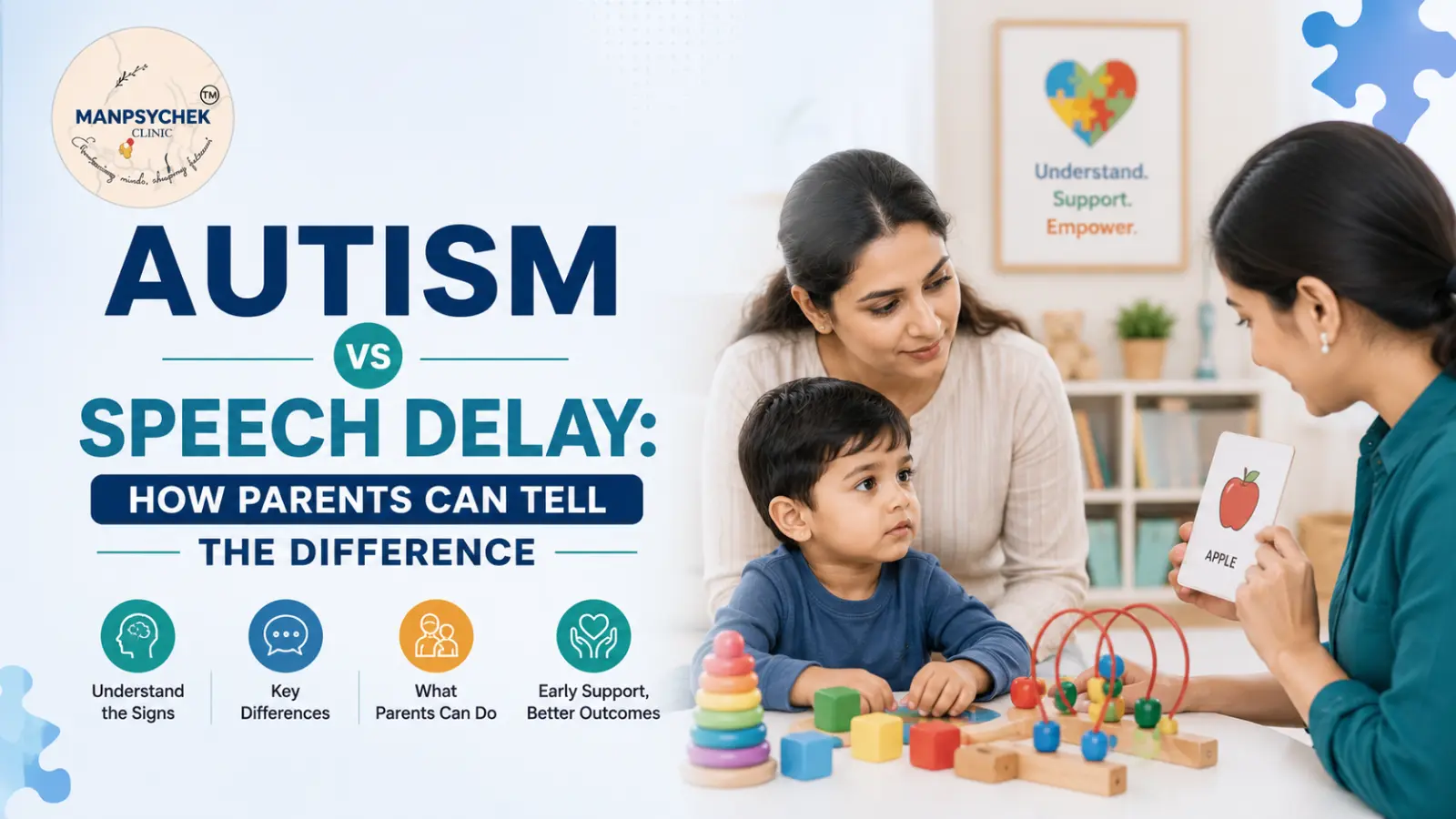
A family visited Mann Psyche after noticing that their 18-month-old daughter rarely responded when called.
She preferred playing alone, pointed infrequently, and had only a few words.
After a developmental assessment, she began Speech Therapy, parent coaching, and early intervention services.
Within months, her communication and engagement improved significantly.
This highlights the value of recognizing concerns early rather than adopting a "wait and see" approach.
Myths vs Facts
| Myth | Fact |
|---|---|
| Autism cannot be detected before age 2 | False |
| Vaccines cause autism | False |
| Autism is caused by parenting | False |
| Early intervention helps | True |
| Children with autism cannot communicate | False |
| Autism exists on a spectrum | True |
How Is Autism Assessed Before Age 2?
Assessment usually includes:
Parent Interview
Understanding developmental history.
Behavioral Observation
Observing communication and interaction.
Developmental Screening Tools
Professionals may use validated screening measures.
Multidisciplinary Evaluation
May involve:
- Child Psychologist
- Developmental Pediatrician
- Speech Therapist
- Occupational Therapist
- Special Educator
Treatment Options After Early Detection
Speech Therapy
Supports:
- Language
- Communication
- Social interaction
ABA Therapy
Focuses on:
- Learning skills
- Communication
- Adaptive behavior
Occupational Therapy
Addresses:
- Sensory processing
- Daily living skills
- Motor development
Special Education
Provides individualized developmental support.
Parent Training
Empowers caregivers to support learning at home.
Home Strategies for Parents
Follow Your Child's Interests
Join activities your child enjoys.
Encourage Communication
Respond positively to sounds, gestures, and words.
Read Every Day
Books promote language development.
Play Face-to-Face Games
Encourage interaction and turn-taking.
Limit Passive Screen Time
Increase real-life social experiences.
When Should Parents Seek Professional Help?
Consider an evaluation if your child:
- Does not respond to their name
- Has limited eye contact
- Is not using gestures
- Shows language delays
- Demonstrates repetitive behaviors
- Loses previously learned skills
Early assessment provides clarity and guidance.
Professional Support at MannpsycheK
At MannpsycheK, families can access:
- Autism Assessment
- Child Psychology Services
- ABA Therapy
- Speech Therapy
- Special Education
- Learning Disability Assessment
- ADHD Assessment
- Behavior Therapy
Our multidisciplinary team supports children and families through evidence-based developmental care.
For parents seeking a Child Psychologist in Dwarka, early developmental assessment can provide valuable answers and direction.
Conclusion
Autism can often be detected before age 2, particularly when parents and professionals pay close attention to developmental milestones and social communication skills.
Not every developmental difference indicates autism. However, early concerns should be explored rather than ignored.
The earlier a child receives appropriate support, the greater the opportunity to build communication, learning, and social skills.
If you have concerns about your child's development, seeking an assessment is a proactive and supportive step.
Book an Autism Assessment at MannpsycheK
If your child is showing developmental differences, delayed communication, reduced social engagement, or possible autism signs, professional guidance can help.
MannpsycheK offers:
- Autism Assessment
- Autism Therapy
- ABA Therapy
- Speech Therapy
- Child Psychology Services
- Learning Disability Assessment
- ADHD Assessment
- Behavior Therapy
- Special Education Support
Contact Mann Psyche today to schedule a developmental consultation and receive personalized recommendations for your child's growth and development.