Home › Child Development & Therapy › Is My Child Ready for School? A Complete School Readiness Checklist for Parents
Is My Child Ready for School? A Complete School Readiness Checklist for Parents
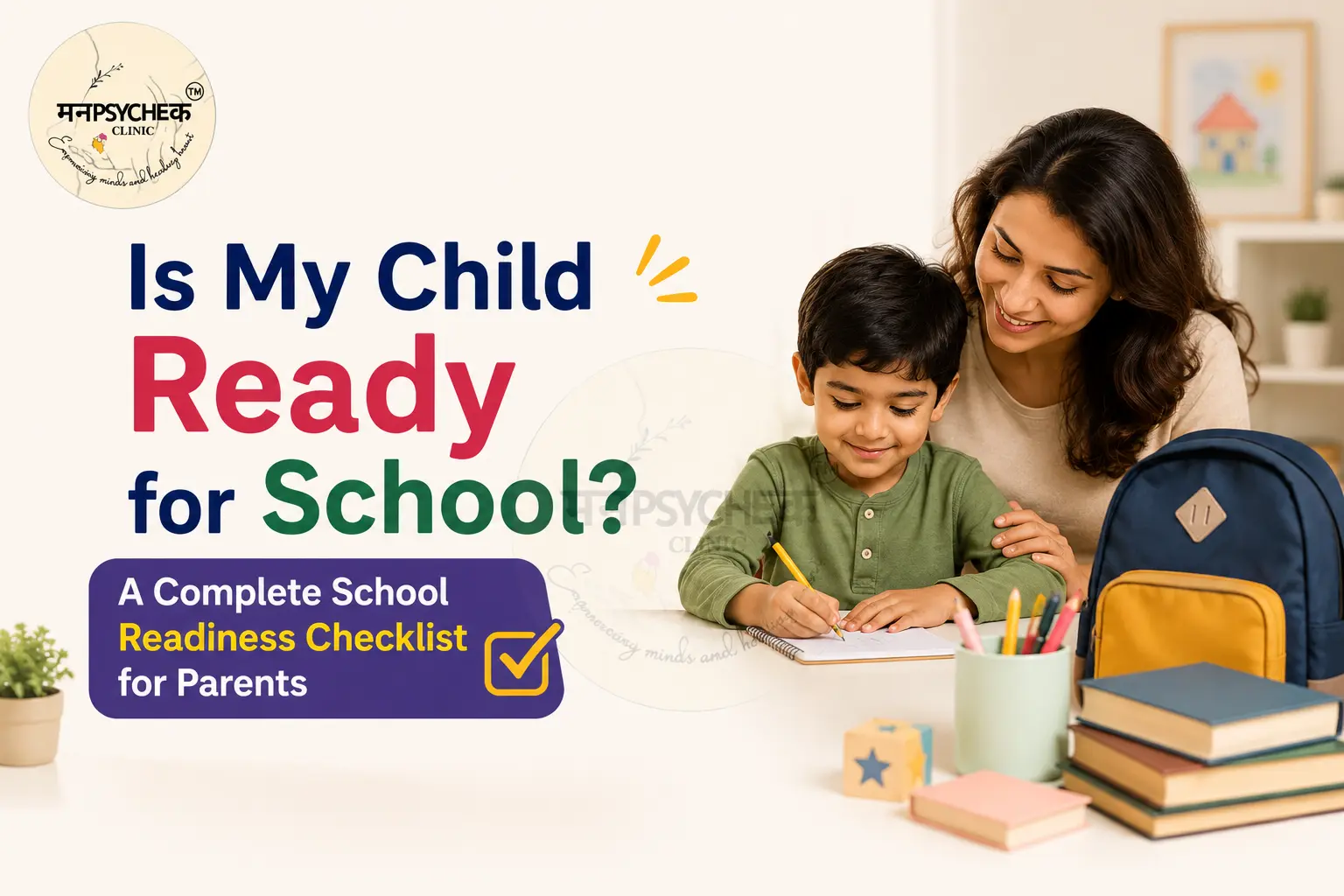
One of the biggest concerns parents face before school admission is:
ADHD Symptoms in 3-Year-Olds: Signs, What’s Normal & When to Seek Help
"Is my child actually ready for school?"
Many parents assume school readiness means:
- Knowing ABCs
- Counting numbers
- Writing their name
While academic skills are important, they are only a small part of the picture.
As a child psychologist, I often meet parents who say:
- "My child knows everything but cries in school."
- "My child refuses to sit in class."
- "My child cannot follow instructions."
- "My child struggles to make friends."
- "The teacher says my child is not school-ready."
The truth is that school readiness involves much more than academics.
Children need communication skills, attention skills, social abilities, emotional regulation, and independence to succeed in school.
Let's explore the signs parents should look for before starting formal education.
What Does School Readiness Mean?
School readiness refers to a child's ability to successfully participate in a classroom environment.
It includes:
✅ Communication Skills
✅ Attention and Concentration
✅ Social Skills
✅ Emotional Regulation
✅ Independence Skills
✅ Basic Learning Readiness
A child does not need to be perfect in all areas.
However, significant difficulties in multiple areas may indicate the need for additional support.
Why School Readiness Matters
Children who enter school without essential readiness skills may experience:
- Difficulty following instructions
- Classroom behaviour problems
- Academic frustration
- Social challenges
- Low confidence
- School refusal
Early identification helps children start school with greater confidence and success.
School Readiness Checklist for Parents
Use this checklist as a general guide.
1. Communication Skills
Communication is one of the strongest predictors of school success.
Ask yourself:
Can my child:
✅ Understand simple instructions?
✅ Answer simple questions?
✅ Express needs clearly?
✅ Speak in age-appropriate sentences?
✅ Communicate with unfamiliar adults?
Warning Signs
Parents should consider evaluation if a child:
- Has significant speech delay
- Struggles to understand instructions
- Rarely communicates needs
- Uses very limited language
Children with communication difficulties may benefit from assessment at a child development centre in Dwarka.
2. Attention and Concentration Skills
School requires children to focus on tasks for short periods.
Ask:
Can my child:
✅ Sit for a simple activity?
✅ Listen to a short story?
✅ Follow basic classroom instructions?
✅ Complete age-appropriate tasks?
Warning Signs
Watch for:
- Constant distraction
- Extreme restlessness
- Difficulty completing activities
- Inability to stay seated briefly
Persistent attention difficulties may require further assessment.
3. Social Skills
School is a social environment.
Children do not need dozens of friends, but they should demonstrate basic social abilities.
Can my child:
✅ Play alongside other children?
✅ Take turns?
✅ Share occasionally?
✅ Respond to their name?
✅ Participate in group activities?
Warning Signs
Parents should seek guidance if a child:
- Consistently avoids peers
- Has limited social interaction
- Struggles with turn-taking
- Shows significant social communication difficulties
4. Emotional Readiness
Many children know their numbers and letters but struggle emotionally when separated from parents.
Can my child:
✅ Separate from parents with manageable distress?
✅ Recover after becoming upset?
✅ Handle small frustrations?
✅ Follow basic rules?
Warning Signs
Consider support if your child:
- Experiences severe separation anxiety
- Has frequent emotional meltdowns
- Struggles significantly with change
5. Independence Skills
Schools expect children to manage some tasks independently.
Can my child:
✅ Eat independently?
✅ Use the toilet independently?
✅ Wash hands?
✅ Carry belongings?
✅ Follow simple routines?
Warning Signs
Difficulty with basic self-help skills may affect classroom adjustment.
6. Basic Learning Readiness
Academic skills are helpful but not the most important factor.
Can my child:
✅ Recognize some colours?
✅ Identify common objects?
✅ Listen during learning activities?
✅ Show curiosity and willingness to learn?
A motivated learner often progresses faster than a child who has memorized information without understanding.
School Readiness and Speech Delay
One of the most common concerns parents bring to a child development centre in Dwarka is speech delay.
Communication challenges can affect:
- Classroom participation
- Social interaction
- Learning
- Confidence
Children with speech delay may benefit from early intervention before entering school.
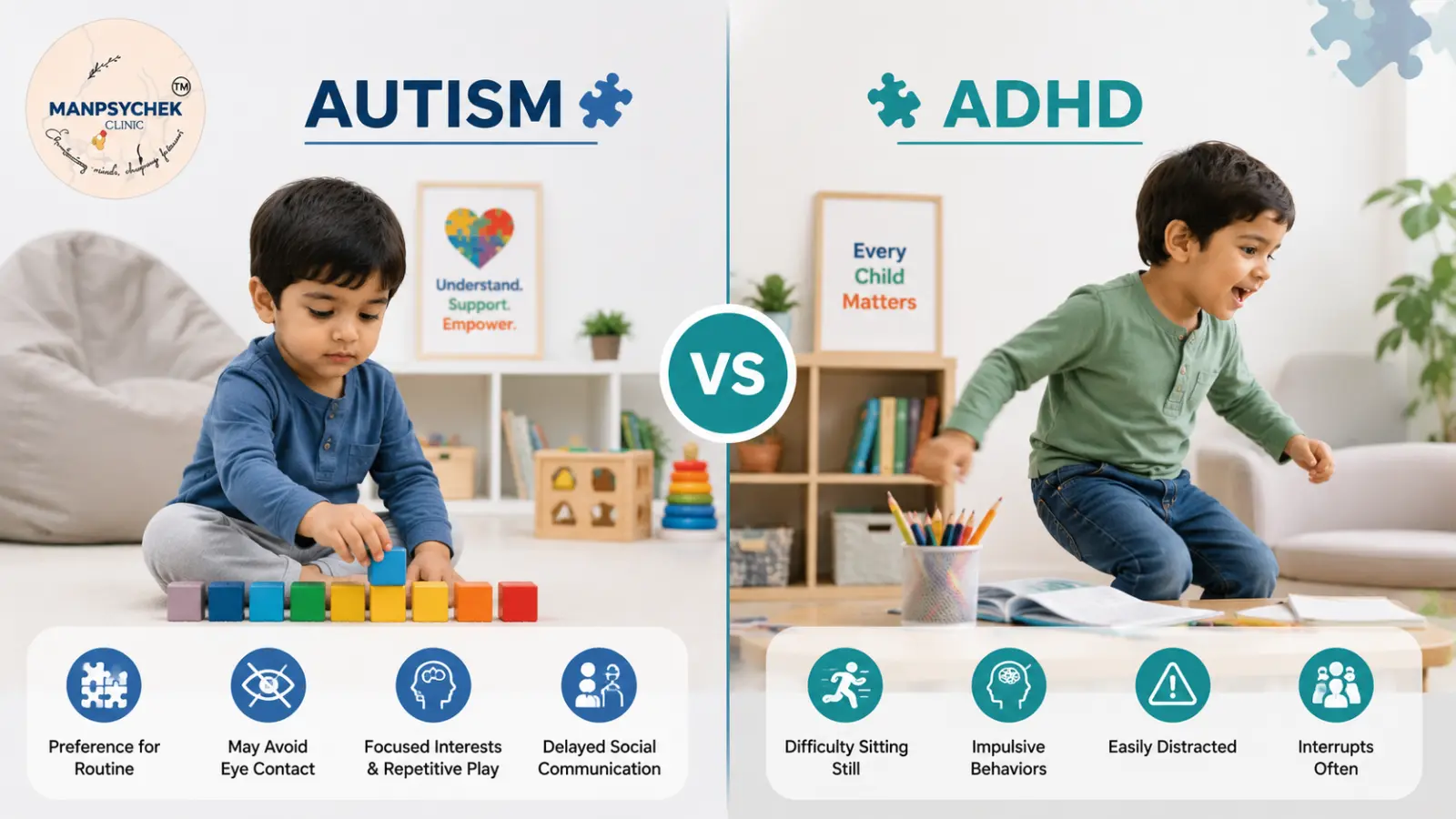
School Readiness and ADHD
Parents often ask:
"Can a child with ADHD be school-ready?"
The answer is yes.
However, children with ADHD may need support with:
- Attention
- Impulse control
- Following instructions
- Emotional regulation
Early identification helps schools and families provide appropriate support.
School Readiness and Autism
Some children may show:
- Social communication difficulties
- Limited peer interaction
- Repetitive behaviours
- Sensory challenges
These children can absolutely attend school successfully when their needs are understood and supported appropriately.
Common Myths About School Readiness
Myth 1:
Knowing ABCs Means School Ready
False.
A child may know letters but struggle with communication, attention, or social skills.
Myth 2:
Boys Always Mature Later
While development varies, significant delays should not be ignored.
Myth 3:
School Will Automatically Fix Delays
School can support development, but underlying challenges often require targeted intervention.
Myth 4:
Shyness Means Lack of Readiness
Many shy children adjust successfully to school.
The concern is severe anxiety that interferes with participation.
When Should Parents Seek Professional Help?
Consider professional assessment if your child:
- Has speech delay
- Struggles with social interaction
- Cannot follow simple instructions
- Shows significant attention difficulties
- Experiences severe separation anxiety
- Has developmental concerns
Early support often improves school adjustment and confidence.
How a Child Development Centre in Dwarka Can Help
A child development centre in Dwarka can assess:
- School readiness
- Communication skills
- Attention and concentration
- Social skills
- Behavioural concerns
- Developmental milestones
The goal is to identify strengths and provide support where needed.
School Readiness Assessment in Dwarka
Parents searching for:
- School readiness assessment Dwarka
- Child development centre Dwarka
- Child psychologist Dwarka
- Speech therapy Dwarka
- Behaviour therapy Dwarka
often benefit from comprehensive developmental evaluations.
Services may include:
- Developmental Assessment
- School Readiness Evaluation
- Speech and Language Screening
- Behaviour Therapy
- Parent Guidance
- Social Skills Training
Why Families Choose KS Mannpsyche India Private Limited
Many families seek support before school admission when they are concerned about:
- Speech delay
- Social skills
- Attention difficulties
- School readiness
- Separation anxiety
- Behavioural concerns
At KS Mannpsyche India Private Limited, children receive individualized assessments designed to identify strengths and areas requiring support before entering school.
Services include:
- School Readiness Assessment
- Child Psychology Consultation
- Speech and Communication Support
- Behaviour Therapy
- Parent Counseling
- Social Skills Training
- Developmental Assessment
Under the guidance of Saurav Deep, RCI Certified Psychologist and Behaviour Therapist, families receive evidence-based support focused on helping children enter school with confidence and readiness for learning.
Final Thoughts
Parents often focus heavily on academics when preparing children for school.
However, successful school adjustment depends just as much on:
Communication
Attention
Social skills
Emotional regulation
Independence
Instead of asking:
"Can my child count to 100?"
A better question may be:
"Can my child participate, communicate, and cope in a classroom environment?"
That is the true foundation of school readiness.
School Readiness Quick Parent Checklist
Before school admission, ask yourself:
✅ My child can communicate basic needs.
✅ My child can follow simple instructions.
✅ My child can interact with other children.
✅ My child can separate from parents reasonably well.
✅ My child can sit for short activities.
✅ My child can manage basic self-care tasks.
✅ My child shows curiosity and willingness to learn.
If several areas are challenging, a professional school readiness assessment may be beneficial.
Frequently Asked Questions
Q1. What age should a child be school-ready?
A1. School readiness depends on developmental skills rather than age alone. Most children develop readiness skills between 4 and 6 years of age.
Q2. Does my child need to know reading and writing before school?
A2. No. Communication, attention, social skills, and independence are often more important than early academic skills.
Q3. What are the most important school readiness skills?
A3. Communication, attention, emotional regulation, social interaction, and independence are key areas.
Q4. Can speech delay affect school readiness?
A4. Yes. Communication difficulties can affect learning, participation, and peer interaction.
Q5. Where can I get a school readiness assessment in Dwarka?
A5. Parents can consult a child psychologist in Dwarka or visit a child development centre in Dwarka for developmental and school readiness evaluation.