Home › Speech Therapy › My Child Can Talk But Doesn't Communicate – Early Signs Parents Should Know
My Child Can Talk But Doesn't Communicate – Early Signs Parents Should Know

My Child Can Talk, But Doesn't Communicate – Should I Be Worried?
Many parents feel confused when their child can speak words, numbers, songs, or even entire sentences but still struggles to communicate effectively.
ADHD Symptoms in 3-Year-Olds: Signs, What’s Normal & When to Seek Help
You may notice things like:
- My child can name animals, colours, and numbers but doesn't answer questions.
- My child talks a lot but doesn't have conversations.
- My child repeats phrases from YouTube videos.
- My child asks for things but doesn't interact socially.
- My child speaks clearly but doesn't seem interested in communication.
Parents often ask:
"If my child can talk, why does communication still seem difficult?"
This is an important question because speech and communication are not the same thing.
A child may have strong speech skills but still struggle with social communication, language understanding, or meaningful interaction.
Understanding this difference can help parents identify concerns early and seek the right support when needed.
Speech vs Communication: What's the Difference?
One of the biggest misconceptions parents have is assuming that speaking automatically means communicating.
In reality, these are different skills.
What Is Speech?
Speech refers to:
- Producing sounds
- Saying words
- Pronouncing language
- Speaking sentences
- Examples:
- Naming objects
- Reciting the alphabet
- Singing songs
- Counting numbers
A child can have excellent speech abilities.
What Is Communication?
Communication involves using language meaningfully to:
- Express needs
- Share ideas
- Ask questions
- Respond to others
- Build relationships
- Participate socially
Communication is about connection, not just talking.
For example:
A child who can count from 1 to 100 but cannot answer:
"What did you do today?"
may have stronger speech skills than communication skills.
Signs a Child Is Talking But Not Communicating
Parents often notice several of these behaviours.
Limited Back-and-Forth Conversation
Your child may:
- Talk at people instead of with people
- Not answer questions appropriately
- Change topics unexpectedly
- Struggle to continue conversations
Communication should involve interaction, not just speaking.
Repeating Questions Instead of Answering
Example:
Parent:
"What do you want to eat?"
Child:
"What do you want to eat?"
This is called echolalia and may be a sign of communication difficulties.
Talking Mainly About Favourite Topics
Some children speak extensively about:
- Numbers
- Trains
- Animals
- Cartoons
- Specific interests
but struggle to discuss everyday social topics.
Limited Social Interaction
Children may:
- Avoid conversations
- Prefer playing alone
- Show little interest in peers
- Have difficulty sharing experiences
Difficulty Understanding Social Language
Your child may:
- Take language literally
- Miss jokes
- Misunderstand emotions
- Struggle with social cues
Can a Child Have a Speech Delay Even If They Talk?
Yes.
Many parents are surprised to learn this.
Speech delay is not always about the number of words a child says.
Some children:
- Speak many words
- Recite songs
- Repeat videos
yet still struggle with:
- Functional communication
- Understanding language
- Social interaction
This is why professional assessment looks beyond vocabulary alone.
Red Flags Parents Should Not Ignore
Consider further evaluation if your child:
Communication Red Flags
- Rarely starts conversations
- Does not answer simple questions
- Struggles with back-and-forth interaction
- Uses language mainly to request items
Social Red Flags
- Limited eye contact
- Poor social engagement
- Limited interest in peers
- Difficulty sharing enjoyment
Language Red Flags
- Repeats phrases frequently
- Uses scripted language
- Has difficulty understanding instructions
- Struggles to express thoughts clearly
Behavioural Red Flags
- Becomes frustrated when communicating
- Has frequent meltdowns
- Shows repetitive behaviours
- Resists changes in routine
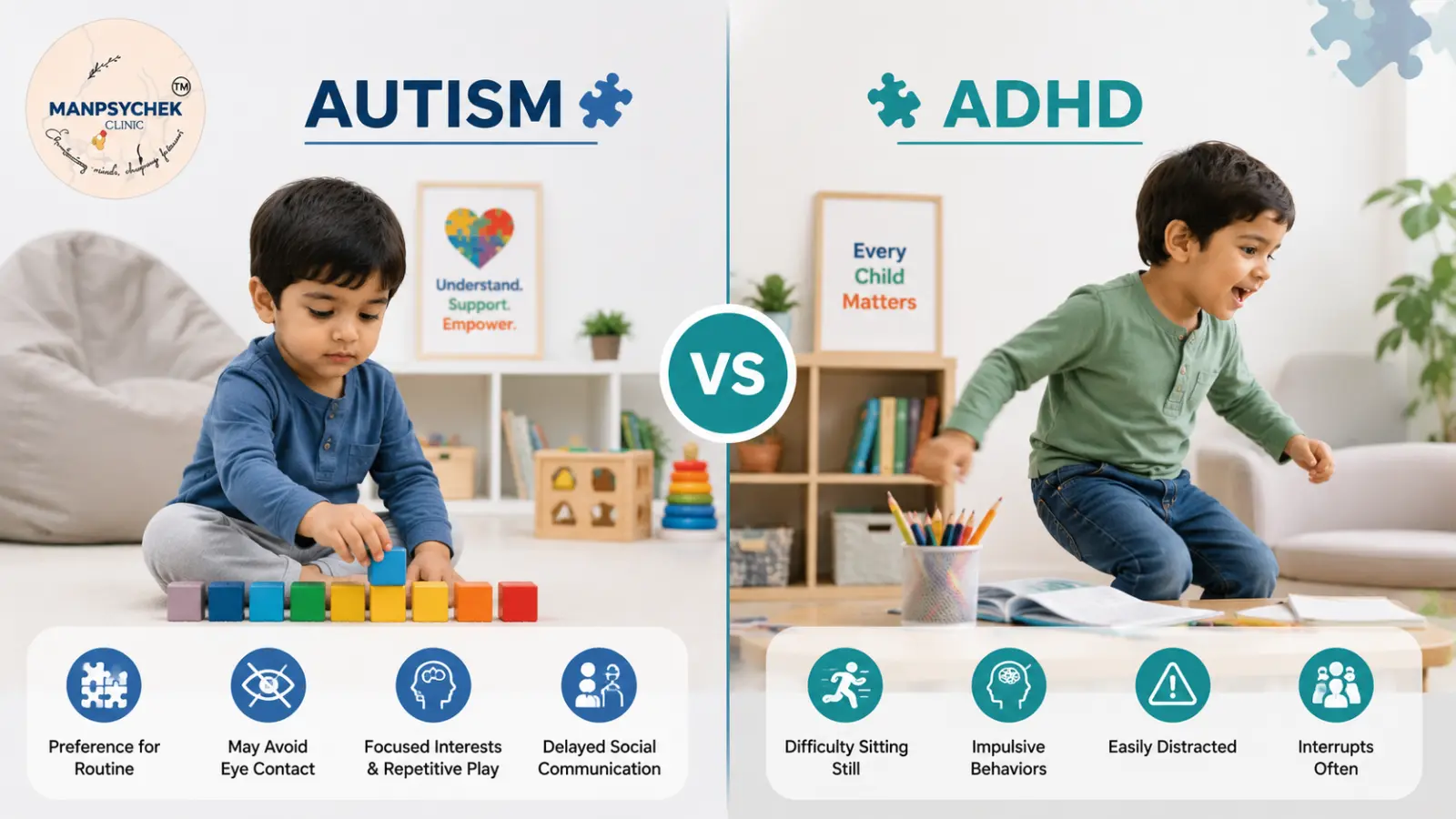
Could This Be a Sign of Autism?
Many parents worry about autism when they notice communication differences.
Autism symptoms may include:
1. Social Communication Difficulties
- Poor eye contact
- Difficulty engaging socially
- Reduced interest in interaction
2. Repetitive Behaviours
- Repeating words
- Repetitive play
- Strong preference for routines
3. Restricted Interests
- Intense focus on specific topics
- Unusual play patterns
However, it is important to remember:
Not every child with communication difficulties has autism.
A proper developmental assessment is necessary before drawing conclusions.
Common Autism Myths Parents Should Ignore
Myth 1:-
If My Child Talks, They Cannot Have Autism
False.
Many autistic children develop speech but still experience communication difficulties.
Myth 2:-
Good Vocabulary Means No Developmental Concern
False.
Vocabulary and social communication are different skills.
Myth 3:-
Delayed Communication Always Means Autism
False.
Communication difficulties can occur for many reasons including:
- Speech delays
- Language disorders
- ADHD
- Anxiety
- Social communication difficulties
Other Possible Causes of Communication Difficulties
1. Speech and Language Disorders
Children may struggle to understand or use language effectively.
2. ADHD
Children with ADHD may:
- Interrupt frequently
- Miss conversational cues
- Struggle to listen
3. Social Communication Disorder
Some children have difficulty with social use of language without meeting criteria for autism.
4. Anxiety
Anxious children may avoid communication even when language skills are intact.
How Parents Can Support Communication Development
1. Talk More Than You Question
Instead of constant questioning, comment on activities and experiences.
This encourages natural interaction.
2. Follow Your Child's Interests
Children communicate more when engaged in activities they enjoy.
3. Create Opportunities to Communicate
Pause during routines and encourage children to initiate communication.
4. Reduce Passive Screen Time
Excessive screen exposure can reduce opportunities for real-life interaction.
5. Encourage Turn-Taking Activities
Examples:
- Board games
- Pretend play
- Interactive reading
These help develop conversation skills.
When Should Parents Seek Professional Help?
Consider professional support if your child:
- Talks but rarely communicates meaningfully
- Has poor eye contact
- Shows autism symptoms
- Experiences speech delay
- Uses mostly repetitive language
- Struggles socially
- Becomes frustrated when communicating
Early intervention often leads to better outcomes.
How Speech Therapy in Dwarka Can Help
A qualified speech therapist in Dwarka can assess:
- Language understanding
- Communication skills
- Speech development
- Social communication abilities
Speech therapy often focuses not only on speaking but also on meaningful communication.
How a Child Psychologist in Dwarka Can Help
A child psychologist in Dwarka can evaluate:
- Autism symptoms
- Social communication skills
- Behavioural concerns
- Developmental milestones
- Parent-child interaction
Assessment helps identify the root cause of communication difficulties.
Child Development Services in Dwarka
Parents searching for:
- Speech therapy Dwarka
- Child psychologist Dwarka
- Child development centre Dwarka
- Autism assessment Dwarka
- Behaviour therapy Dwarka
often benefit from multidisciplinary support including:
- Speech Therapy
- Child Psychology Services
- Behaviour Therapy
- Parent Training
- Developmental Assessment
- Social Skills Training
Why Families Choose KS Mannpsyche India Private Limited
Many families seek support when they notice:
- Speech delay
- Communication difficulties
- Poor eye contact
- Autism symptoms
- Social interaction challenges
At KS Mannpsyche India Private Limited, children receive individualized assessment and intervention plans tailored to their developmental needs.
Services include:
- Child Psychology Consultation
- Speech and Communication Support
- Behaviour Therapy
- Parent Counseling
- Autism Support Programs
- Developmental Assessments
Under the guidance of Saurav Deep, RCI Certified Psychologist and Behaviour Therapist, families receive evidence-based support focused on improving communication, social interaction, and overall child development.
Final Thoughts
A child who talks is not necessarily communicating effectively.
Speech is the ability to produce words.
Communication is the ability to connect, share, respond, and interact meaningfully with others.
If your child speaks but struggles with social interaction, conversation, eye contact, or language understanding, it may be worth seeking professional guidance.
The earlier communication difficulties are identified, the sooner children can receive the support they need to thrive socially, emotionally, and academically.
Frequently Asked Questions
Q1. Can a child talk but still have communication difficulties?
A1. Yes. Some children develop speech but struggle with meaningful social communication.
Q2. Is talking the same as communication?
A2. No. Speech involves producing words, while communication involves using language effectively to interact with others.
Q3. Does repeating words mean autism?
A3. Not always. Repetitive language can occur for various reasons, but it should be evaluated if it significantly affects communication.
Q4. Can speech therapy help communication difficulties?
A4. Yes. Speech therapy focuses on improving both speech and functional communication skills.
Q5. When should I seek speech therapy in Dwarka?
A5. Consider professional evaluation if your child struggles with conversation, social communication, understanding language, or shows signs of speech delay.