Home › Speech Therapy › My Child Is Not Talking | Speech Delay Signs & Speech Therapy in Dwarka
My Child Is Not Talking | Speech Delay Signs & Speech Therapy in Dwarka
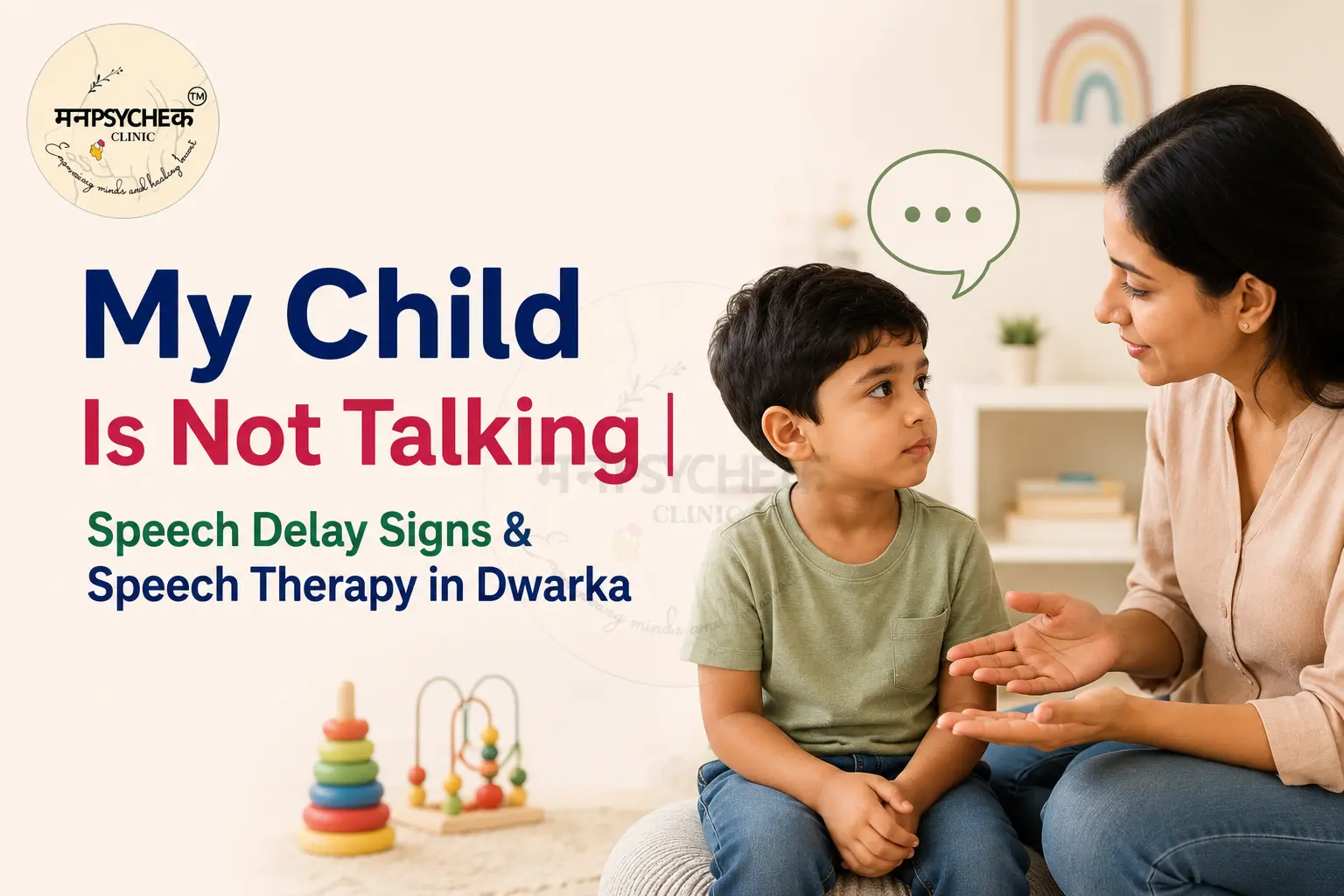
My Child Is Not Talking: Speech Delay Milestones, Red Flags & When to Seek Help
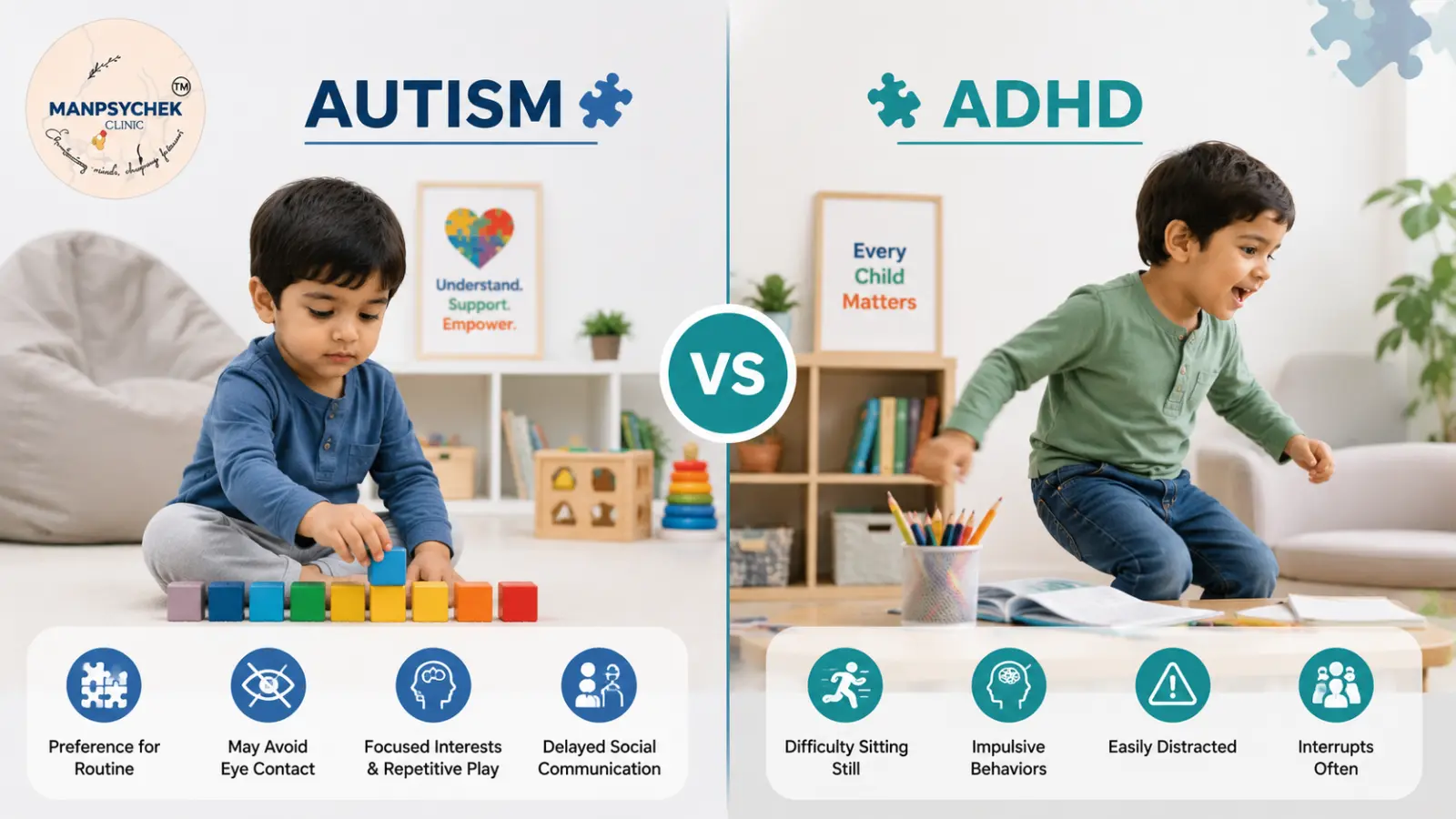
Autism vs ADHD: How Parents Can Tell the Difference
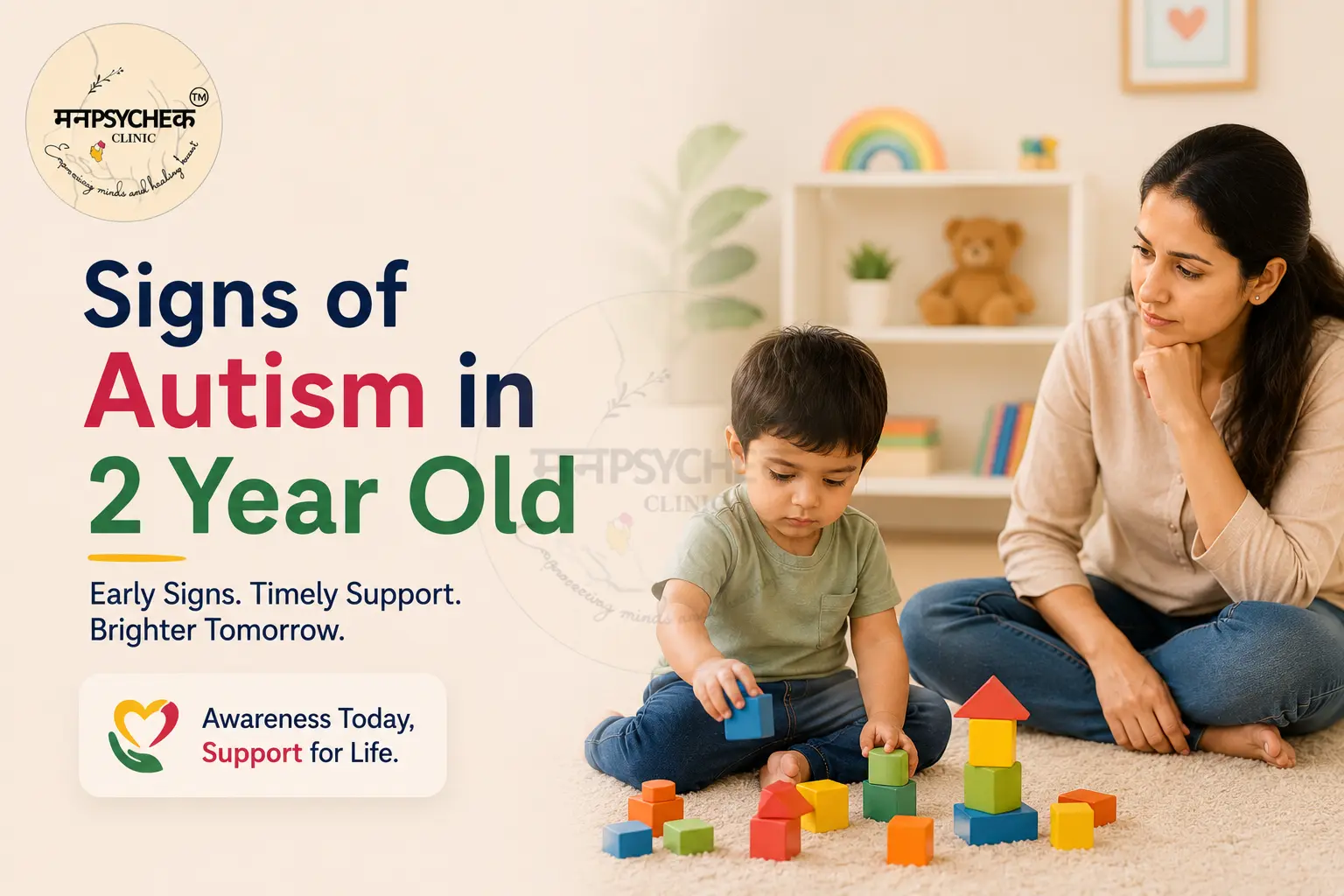
Is My 2 Year Old Showing Signs of Autism? Early Symptoms Parents Should Never Ignore
My Child Is Not Talking – Should I Be Worried?
If you've found yourself searching:
- My 2-year-old is not talking
- Why is my child not speaking?
- When should a child start talking?
- Does my child have a speech delay?
You're not alone.
Speech delay is one of the most common concerns parents bring to child psychologists and speech therapists.
While every child develops at their own pace, there are certain speech and language milestones that most children reach within a predictable age range.
Some late talkers catch up naturally. Others may need early intervention to develop communication skills effectively.
The good news?
Research consistently shows that children who receive early assessment and appropriate support often make significant progress.
In this guide, you'll learn:
✔ Month-by-month speech milestones
✔ Common causes of speech delay
✔ Red flags parents should never ignore
✔ When to seek professional assessment
✔ How speech therapy can help
What Is Speech Delay?
Speech delay occurs when a child develops spoken language skills later than expected for their age.
A child with speech delay may:
- Say very few words
- Start talking much later than peers
- Have difficulty combining words into sentences
- Struggle to communicate wants and needs
Speech delay can occur by itself or alongside developmental conditions such as Autism Spectrum Disorder (ASD), hearing difficulties, developmental language disorder, or intellectual developmental disabilities.
Month-by-Month Speech Milestones Parents Should Know
Birth to 3 Months
Most babies:
✅ Respond to loud sounds
✅ Recognize parents' voices
✅ Make cooing sounds
✅ Cry differently for different needs
Seek Assessment If:
❌ No reaction to loud sounds
❌ Very limited vocalization
4 to 6 Months
Most babies:
✅ Laugh and smile socially
✅ Babble sounds like "ba", "ma", "da"
✅ Turn toward sounds
✅ Enjoy interaction
Speech Delay Red Flag
❌ No babbling by 6 months
7 to 12 Months
Most babies:
✅ Respond to their name
✅ Wave goodbye
✅ Point to desired objects
✅ Say simple sounds
Seek Assessment If:
❌ Doesn't respond to name
❌ No pointing or gestures
❌ Poor social engagement
12 to 18 Months
Most toddlers:
✅ Use 5–20 meaningful words
✅ Follow simple instructions
✅ Point to familiar objects
Red Flags
❌ No words by 18 months
❌ Doesn't understand simple requests
18 to 24 Months
Most toddlers:
✅ Use at least 50 words
✅ Combine two words
Examples:
- Want water
- More juice
- Mama come
Major Speech Delay Warning Sign
❌ Fewer than 50 words by age 2
❌ No two-word phrases
2 to 3 Years
Most children:
✅ Use 200–500 words
✅ Speak in short sentences
✅ Ask simple questions
Seek Help If:
❌ Speech is difficult to understand
❌ Limited vocabulary
❌ Rarely communicates verbally
7 Common Causes of Speech Delay
1. Hearing Problems
Children learn language by listening.
Even mild hearing loss can affect speech development.
2. Autism Spectrum Disorder (ASD)
Some children with autism may:
- Speak late
- Repeat words (echolalia)
- Have difficulty with social communication
3. Developmental Language Disorder
Children understand and learn differently due to challenges in language processing.
4. Intellectual Developmental Disability
Learning delays may affect communication development.
5. Oral-Motor Difficulties
Speech muscles may not coordinate effectively.
6. Premature Birth
Some premature children achieve speech milestones later.
7. Excessive Screen Time
Studies suggest excessive screen exposure may reduce opportunities for meaningful communication and language learning.
Speech Delay Red Flags Parents Should Never Ignore
Contact a professional if your child:
❌ Does not respond to their name
❌ Has no meaningful words by 18 months
❌ Has fewer than 50 words by age 2
❌ Does not combine two words by age 2
❌ Has poor eye contact
❌ Shows limited social interaction
❌ Loses previously learned words
❌ Becomes frustrated when trying to communicate
These signs deserve prompt evaluation.
When Should You Seek a Speech Delay Assessment?
Many parents hear:
"Don't worry. Boys talk late."
Unfortunately, waiting without assessment can sometimes delay necessary support.
Seek a professional evaluation if:
- You feel concerned
- Your child misses multiple milestones
- Preschool teachers raise concerns
- Communication difficulties affect daily life
Trust your instincts.
Parents often notice concerns before anyone else.
How Speech Therapy Helps Children with Speech Delay
Speech therapy is tailored to each child's needs.
A speech therapist may help improve:
- Vocabulary development
- Sentence formation
- Understanding language
- Social communication skills
- Speech clarity
- Oral-motor coordination
Parents are also taught strategies to support communication at home.
Speech Therapy in Dwarka: Early Support Matters
If you're searching for:
- Speech Therapy in Dwarka
- Child Speech Assessment in Dwarka
- Speech Delay Treatment in Dwarka
- Child Psychologist in Dwarka
Early intervention can significantly improve communication outcomes.
Frequently Asked Questions
Q1. Is it normal for a 2-year-old not to talk?
A1. Most 2-year-olds use at least 50 words and combine two-word phrases. If this is not happening, an assessment is recommended.
Q2. Can speech delay go away on its own?
A2. Some children catch up naturally, but it is impossible to know which children will do so without professional evaluation.
Q3. Is speech delay a sign of autism?
A3. Not always. Speech delay can occur for many reasons. However, speech delay combined with social communication difficulties should be evaluated promptly.
Q4. Does screen time cause speech delay?
A4. Excessive screen exposure may contribute to delayed language development by reducing opportunities for interaction.
Q5. What age should speech therapy start?
A5. As soon as concerns are identified. Early intervention generally produces better outcomes.
Q6. Can bilingual children have speech delay?
A6. Learning two languages does not cause speech delay. However, significant communication delays should still be assessed.
Final Takeaway
If your child is not talking as expected, don't rely on "wait and see" advice alone.
Speech delay is common, but early identification is critical.
The earlier a child receives the right support, the better their chances of developing strong communication, learning, and social skills.
If you're concerned about your child's speech development, seeking a professional assessment today can provide clarity, reassurance, and a roadmap for progress.
Author