Home › Child Development & Therapy › Why Is My Child Not Listening? Common Causes and Solutions for Parents
Why Is My Child Not Listening? Common Causes and Solutions for Parents

Why Is My Child Not Listening?
Understanding the Real Reasons Behind Child Behaviour
One of the most common concerns parents bring up during counseling sessions is:
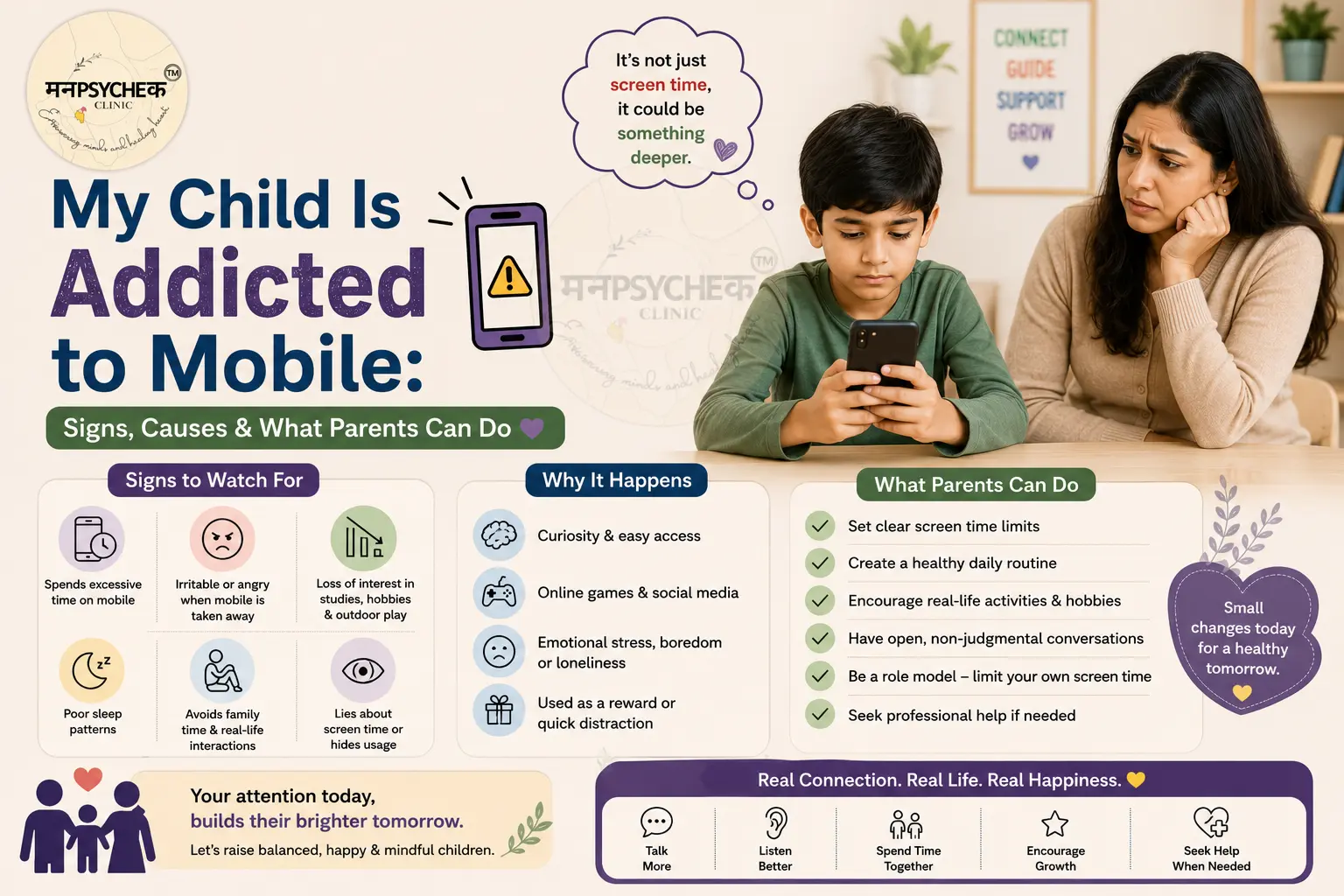
My Child Is Addicted to Mobile: Signs, Causes & What Parents Can Do
How Cognitive Therapy Helps Manage Anxiety, Stress, and Negative Thinking
"My child simply doesn't listen."
Whether it's getting ready for school, completing homework, turning off screens, or following simple instructions, many parents feel frustrated when their child seems to ignore them.
You may find yourself saying:
- I've told you ten times already.
- Why don't you ever listen?
- My child listens to everyone except me.
- Is this normal behaviour?
The truth is that children don't always ignore instructions because they are being stubborn or disrespectful. In many cases, there are underlying reasons that parents may not immediately recognize.
Understanding why your child isn't listening is the first step toward improving communication and behaviour.
Is It Normal for Children Not to Listen?
Yes, to some extent.
Children are naturally:
- Curious
- Distractible
- Emotional
- Impulsive
A toddler who ignores instructions while playing or a preschooler who becomes distracted is often displaying age-appropriate behaviour.
However, if listening difficulties are frequent, severe, or affecting daily life, it may be worth exploring deeper causes.
Common Reasons Children Don't Listen
1. Your Child Is Focused on Something Else
Children often become deeply absorbed in activities they enjoy.
Examples include:
- Playing games
- Watching cartoons
- Building with blocks
- Drawing
- Talking with friends
When parents give instructions while a child is fully engaged, the child may genuinely not process what was said.
What Helps?
- Gain eye contact first.
- Move closer before speaking.
- Use the child's name.
- Give one instruction at a time.
2. Instructions Are Too Long
Parents sometimes give several instructions at once:
❌ "Go to your room, change your clothes, put your bag away, wash your hands, and then come for dinner."
For many children, that's too much information to remember.
Better Approach
✅ "Please put your school bag away."
Once completed:
✅ "Now wash your hands."
Short instructions often lead to better compliance.
3. Your Child Doesn't Fully Understand
Sometimes children appear not to listen when they actually don't understand what is expected.
This may occur if:
- Language is too complex
- Instructions are unclear
- Expectations are inconsistent
Children generally respond better to simple, concrete directions.
4. Too Many Instructions Throughout the Day
Many children hear hundreds of corrections daily:
- Sit properly.
- Stop running.
- Finish your food.
- Don't touch that.
- Come here.
When every interaction becomes a command, children may begin tuning out.
Helpful Strategy
Balance instructions with:
- Praise
- Positive attention
- Encouragement
- Meaningful conversations
5. Seeking Attention
Some children discover that negative behaviour gets immediate attention.
Even repeated scolding can become a source of interaction.
Examples:
- Ignoring instructions intentionally
- Repeating unwanted behaviours
- Arguing frequently
In these situations, increasing positive attention for appropriate behaviour can often be more effective than constant correction.
6. Emotional Overload
Children struggling with emotions may find it difficult to process instructions.
This may occur when a child feels:
- Angry
- Frustrated
- Anxious
- Overwhelmed
- Tired
When emotions are high, listening skills often decrease.
Helping children regulate emotions first is usually more effective than repeating instructions.
Could It Be More Than Behaviour?
Sometimes listening difficulties may be related to developmental, behavioural, or psychological concerns.
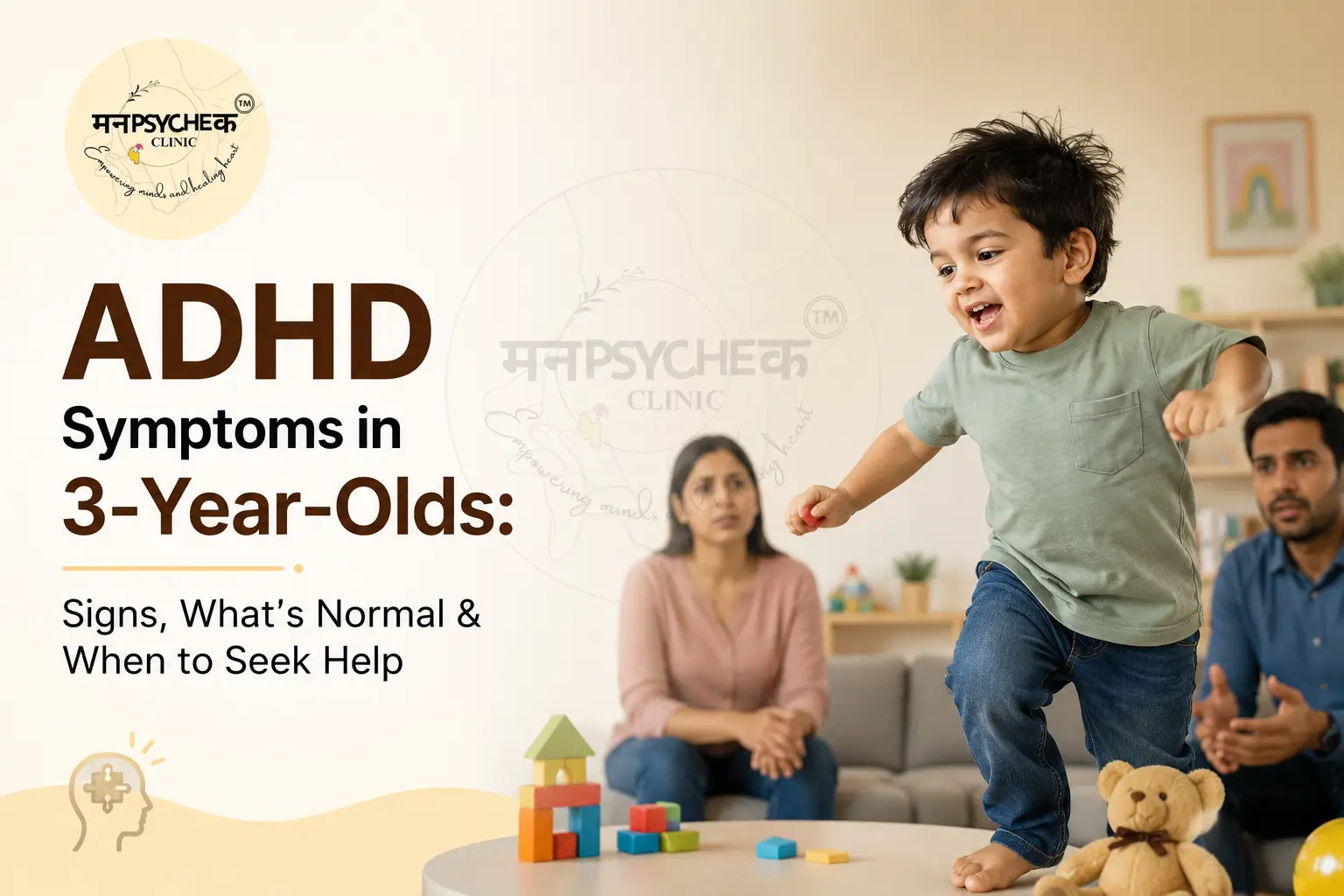
ADHD and Listening Problems
Children with ADHD often hear instructions but struggle to:
- Maintain attention
- Remember directions
- Complete tasks
- Stay organized
Parents frequently describe:
"It's like he hears me but nothing happens."
Other ADHD symptoms may include:
- Hyperactivity
- Impulsivity
- Forgetfulness
- Difficulty focusing
Autism and Following Instructions
Children with autism may struggle with:
- Language processing
- Social communication
- Understanding expectations
- Responding consistently to verbal instructions
Some children require additional visual supports or structured communication strategies.
Speech and Language Difficulties
Children with speech or language delays may not fully understand instructions.
Signs may include:
- Delayed speech
- Difficulty answering questions
- Limited vocabulary
- Trouble following directions
In such cases, speech therapy and developmental support may be beneficial.
Sensory Processing Challenges
Some children become overwhelmed by sensory information.
For example:
- Loud environments
- Bright lights
- Crowded places
- Certain textures
When sensory systems are overloaded, listening and attention often decrease.
Warning Signs Parents Should Not Ignore
Consider professional guidance if your child:
- Rarely follows instructions
- Struggles both at home and school
- Has significant attention difficulties
- Shows hyperactivity
- Experiences frequent emotional outbursts
- Has developmental delays
- Shows social communication difficulties
- Is falling behind academically
Early intervention often leads to better outcomes.
Practical Ways to Improve Listening Skills
Get Your Child's Attention First
Avoid shouting instructions from another room.
Move closer and make eye contact before speaking.
Keep Instructions Simple
Use short, clear statements.
Children process information more effectively when directions are straightforward.
Give One Instruction at a Time
Multiple instructions often lead to confusion.
Break tasks into smaller steps.
Use Positive Reinforcement
Notice and praise listening behaviour.
Examples:
- "Thank you for listening."
- "I liked how quickly you followed directions."
Positive reinforcement often works better than repeated criticism.
Create Consistent Routines
Children thrive when expectations are predictable.
Structured routines reduce conflict and improve cooperation.
When Should Parents Seek Professional Help?
If listening difficulties are affecting:
- School performance
- Family relationships
- Social interaction
- Daily functioning
a professional assessment may be beneficial.
A qualified child psychologist in Dwarka can help determine whether the difficulties are related to:
- Behavioural challenges
- ADHD
- Autism
- Emotional concerns
- Developmental delays
- Parenting and environmental factors
How a Child Development Centre Can Help
Parents searching for:
- Child psychologist in Dwarka
- Behaviour therapy in Dwarka
- ADHD assessment in Dwarka
- Child development centre in Dwarka
- Autism therapy in Dwarka
often benefit from a multidisciplinary evaluation.
Support may include:
- Behaviour Therapy
- Parent Training
- Developmental Assessment
- Speech Therapy
- Occupational Therapy
- Social Skills Training
The goal is to identify the underlying cause and create an effective intervention plan.
Why Families Choose KS Mannpsyche India Private Limited
Many parents looking for a child psychologist in Dwarka seek guidance when their child struggles with listening, attention, emotional regulation, hyperactivity, or behavioural concerns.
At KS Mannpsyche India Private Limited, children receive individualized support through:
- Child Behaviour Therapy
- ADHD Support Programs
- Parent Counseling
- Autism Support Services
- Developmental Assessments
- Social Skills Training
- Behaviour Modification Programs
Under the guidance of Saurav Deep, RCI Certified Psychologist and Behaviour Therapist, families receive practical, evidence-based strategies designed to improve communication, behaviour, attention, and overall child development.
Final Thoughts
When a child isn't listening, the issue is often more complex than simple disobedience.
Children may struggle with attention, communication, emotional regulation, developmental challenges, or simply understanding expectations.
Rather than asking:
- "Why won't my child listen?"
a more helpful question may be:
- "What is making it difficult for my child to listen?"
Understanding the reason behind the behaviour allows parents to respond more effectively and support their child's development in a positive way.
Frequently Asked Questions
Q1. Why does my child ignore me when I talk?
A1. Children may be distracted, emotionally overwhelmed, struggling with attention, or not fully understanding instructions.
Q2. Is not listening a sign of ADHD?
A2. Sometimes. Listening difficulties can be associated with ADHD, especially when accompanied by hyperactivity, impulsivity, and poor attention.
Q3. Can speech delay affect listening skills?
A3. Yes. Children with speech and language difficulties may struggle to understand or follow verbal instructions.
Q4. Should I punish my child for not listening?
A4. Punishment alone rarely addresses the underlying cause. Understanding why the behaviour occurs is usually more effective.
Q5. Where can I get help if my child is not listening?
A5. Parents can seek support from a child psychologist in Dwarka or a child development centre in Dwarka for assessment and guidance.